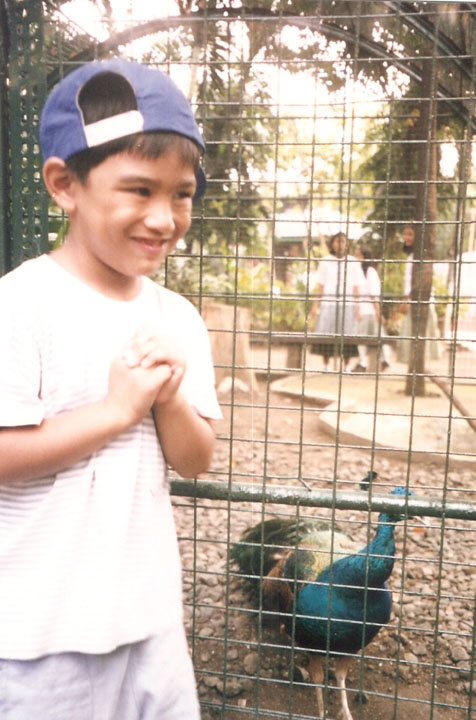
I miss my babies, my children.

my children

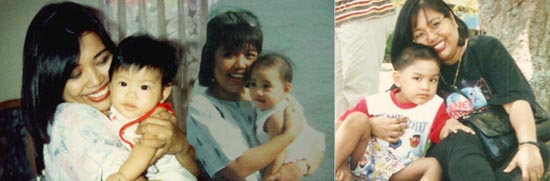
My home has been a semi-empty nest since 2010 when my second child flew to Australia to work then eventually taking her post-graduate studies. During college, they lived in dorms close to their school in Quezon City when we used to live in Makati. That wasn’t too bad because I saw them once a week.

Nothing hits hard when the last child finally leaves home. My eldest daughter moved to her condominium on May 1. She had been paying for her “shoebox” as she calls it since she was 22 years old. I am proud that she is a property owner at so young an age . The fact that she saved a huge portion of her salary to invest in this property the last three years or so is quite an achievement.

My second daughter moved to Germany on April 30 and is officially an OFW. I am just as proud of her academic achievements and getting a job in Europe for the next three years. At her age, I traveled around Europe. The difference is , she gets to work there. She is truly blessed.

I have been preparing for this but when the day finally came, it hits a raw nerve. I would always whine during their last few months at home…”Oh you are leaving me. I will miss you”.

Don’t get me wrong, I am happy for them. Children should learn to be independent from their parents as soon as they are able to. I wanted them to feel that they can survive on their own, yet having their parents close by. My mom died of breast cancer when I was a teen-ager. If that should have happened to me, I did not want them to feel helpless. Though I lived on my own after college, I felt my girls lived a sheltered life. I prepared them for it. They slept with me on the family bed till they left for college. It is a nice warm feeling having them close in my arms. The family bed ritual gave them a feeling of security as they ventured on their own.

I have long accepted that my children are riding off into their own future, maybe as shakily or as steadily as when they rode the first bike I gave them. Maybe it is my turn to have this shaky feeling at times.

I have no regrets. As a full-time homemaker , I gave up a career and took care of them during their growing years.

I am grateful for blogging which gives me an avenue to pursue a passion, doing something good for the country and the future of my children. It offers a distraction from the loneliness that hits me hard during this time of the month.
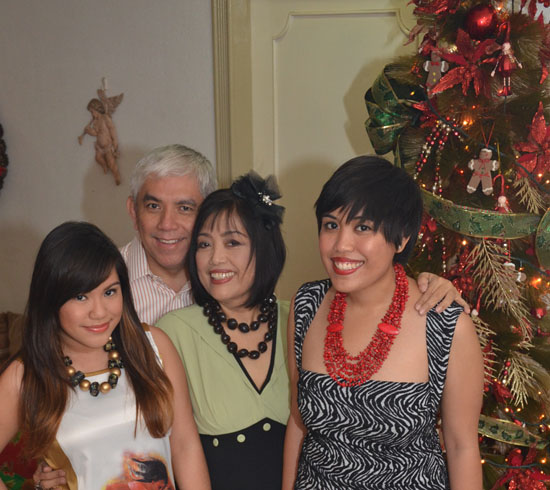
my-family-with-luijoe

I can’t suppress this pang of sadness and loneliness because it is Luijoe’s 13th angel date, today.

If Luijoe were alive, I would still have a child around the house because he would only be 19 years old.

If Luijoe were alive, he would probably be with me, hugging me every now and then till he is 23 years old until he decides to travel abroad like my second daughter did.

If Luijoe were alive, the sound of a child’s footsteps on the hallway and cries of “mom” would still fill the air.

If. if…it is my grief talking and knowing that love never dies … and the sadness of having no children at home at times like these. Oh well, there are my two cats, the two helpers and my husband to keep me company.

I know this crushing sense of grief is just for today.

Tomorrow will be better.

candle-lighting

luijoe-cross

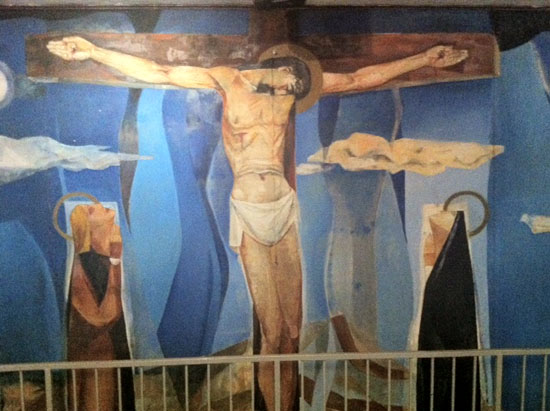
The Holy Week holds a special meaning in my heart as it’s during this time that my precious son talked about eternal life. How would I have known that he was preparing himself for his death?

When I die, I will be alive again“,
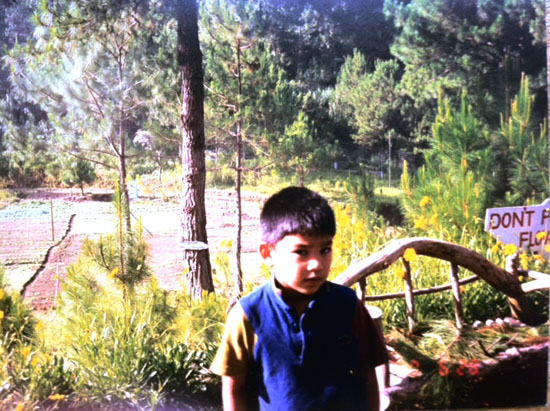
Luijoe (with excitement), a month before he became an angel.

A month or so before Luijoe went to heaven, he asked me questions about angels, death, heaven and graves. I don’t exactly remember when Luijoe started to ask me those things.

luijoe-at-luijoe-meadow1

This is what I wrote two weeks after Luijoe died.

Read More →

1998christmas.jpg

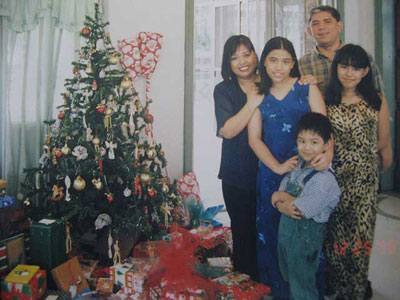
For many years, my family greeted the Christmas season with great joy and heavy despair. Every Christmas without my son, I sensed my husband saying “I’m not ready yet….”I’m not ready for the annual flood of memories without Luijoe. “ Butch dreaded the sight of the cheerful Christmas decorations especially Santa Claus. I wasn’t ready either but I had two surviving children who wanted to celebrate Christmas. They experienced many magical Christmas memories so my daughter once wrote in a Christmas greeting card. How could I take that away from them? I tried to figure out how to handle the holidays I’m never going to be ready for in places I may never be settled in. I thought…as long as we have the stockings up and Christmas tree and cookies ready, then let the holidays come!

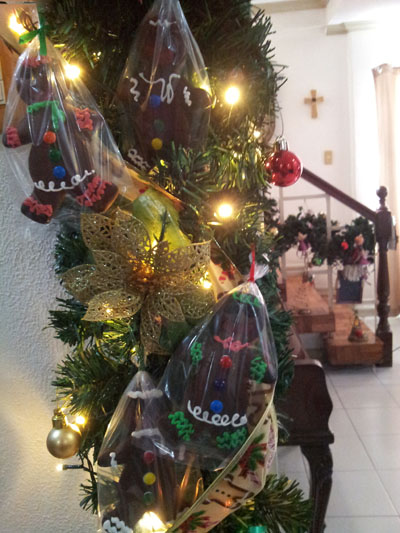
gingerbread garland

I decorated our new home (our new normal?) with the treasures that speak of our Christmas history, finding joy in the memories they sparked. As I caressed Luijoe’s stockings on my cheeks , the flood of memories spill out. It was even more stressful during the first Christmas without my son. I wasn’t ready for the clutch of pain that wrapped my heart in grief as I placed the ornaments on our tree. Oh yes, I have learned through the years. I brought some of the old, added a few pieces of new and practiced the art of blending yesterday with today in hopes of creating another memory for tomorrow. That’s how the “Christmas Angels theme” evolved in our home, in honor of our own angel, Luijoe.

christmas-tree

I created two color themes for our Christmas decors, the traditional red and green for the informal family den and burgundy, purple and silver theme in the formal living area. Maybe I just wanted to be creative and innovated for the sake of my new normal , my new life without my son. I never got the chance to be in total despair because I baked Christmas goodies like sugar cookies , food for the gods, fruit cake and the Gingerbread man cookies. I started the Christmas Angel themes as a symbol that Luijoe is not far from home, that he lives with us. Joyful activities like baking and decorating proved therapeutic as it evoked feelings of love for my children. I continued to survive because of that love. The spicy aroma of cinnamon, nutmeg and mace that wafted our house brought warm childhood memories. Blending this old tradition with new tradition helped me cope with grief during the holidays.

I notice the difference in my husband’s grief during the holidays. Butch is more cheerful. There are less tears yet I know the pain is still there. The heart never forgets, even when the world does. It looks like we’re getting better, improving either with time and patience. Or maybe because it is simply becoming a thread in the continuing fabric of our new normal. The fact that Butch bought Christmas Lanterns is a huge step in the grief journey during the dreaded holidays.

The change in mood happened six years ago. It came as a surprise when my husband wanted to go to Divisoria. I asked “what will we do there?”

His reply “buy ribbons”. I raised my eyebrows. We have never been to Divisoria together in the longest time. . Then he added “I noticed you are running out of red and green ribbons” . Wow, he noticed these minute details when in the past he was oblivious to anything that glittered in the household. I believe I learned to be more creative because of the artistic streak from my husband. He wanted me to have my usual supply of beautiful, color-coordinated ribbons to adorn our Christmas presents and cookie baskets. (Remember I have two sets of Christmas color themes?)

christmasdecorations

I look forward to the holiday season more than ever. I smile and sigh that finally my husband is able to handle the holidays a little bit better. I gather in my blessings and count them all. I count the blessings of the most important people in my life and I find the peace that comes with counting a holiday of joy remembered and love shared. Love never dies, and the light always shines in our hearts and home.

christmas family 2011

Other Articles on Coping with Grief during the Holidays
Handling the Holidays
How To Help Yourself Through The Holidays
Do I Celebrate the Holidays or Not?


Communities across the globe are joining in The Compassionate Friends on its 16th Annual Worldwide Candle Lighting on December 9, 2012.


16th Worldwide Compassionate Friends Worldwide Candle Lighting
 Where: Kiosk area of the Church of the Risen Lord,
 Laurel Avenue, UP Campus, QC
 Map : Check this google map:http://goo.gl/maps/fXzmQ
 When Date: Sunday , December 9, 2012
Time: 5:00 to 8:00 PM
Contact me here.

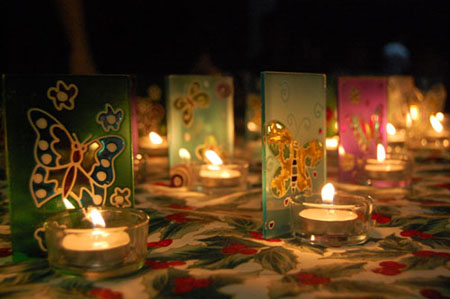
Here is a simple memorial which you can do at home with four candles.


Memory Candles


Read More →

I was four months pregnant in 1985 with my eldest child when I heard the devastating news that my father suffered a serious stroke at the age of 55 years old. Being in Manila while dad was in Cebu, I didn’t know if he’d recover from the massive stroke. I took a leave from work and flew to Cebu, crying all the way to the airport. I thought dad was going to die anytime soon so I needed to be there.

Dad did recover but he was not the father I knew. He had a foul temper. The stroke left him with a speech impairment called aphasia. He had difficulty expressing himself or comprehending spoken words. Words he spewed out could not be understood. When he meant a thousand pesos, he’s blurt out “A million pesos”. The good news was he could understand written words.

Looking at my once active father reduced to a frail man depressed me. I felt my father died because his personality changed. When a loved one dies, we mourn our loss and learn to move on with our new life soon after the funeral. Rituals of letting go help us in coping with the loss. Tears are shared during the wake. A eulogy helps us treasure memories. There are the anniversary dates to celebrate in the coming years. In the normal process of loss through death, most of us are able to support a bereaved friend or family member and help them find closure over their loss.

Ambiguous loss

Ambiguous loss is defined as ” the uncertainty that occurs when people must deal with the unresolvable physical or mental absence of a family member. ” According to social scientist Pauline Boss , there are “two kinds of ambiguity according to Boss. One kind is where the body is missing, as in a plane crash, and the other kind is where the mind is gone, as in Alzheimer’s disease.”

My dad was not struck with mental illness . The serious stroke that left him with a speech disability and at times his mental faculties appeared to be gone at times. We all experienced a loss of the dad we once knew. My siblings and I were left to cope with learning how to live with a father “who is physically present, but psychologically and emotionally different”. The question that often lurked in my mind was “What social rituals exist to deal with this loss that is so real, yet so difficult to grasp?”

I saw for myself how the number of “friends” slowly drifted apart. Dad was just too difficult to understand. Perhaps they did not have the patience to understand him. The few remaining friends (bless them) were always around when dad called for a birthday celebration or a small party at home. One indeed knows their friends when we are at our lowest.

Our energies were now focused on understanding aphasia and learning how to teach my father on how to communicate with us through written words instead of verbal communication.

This ‘ambiguous loss’ I felt in witnessing my dad grapple with his speech was mainly the loss of dealing with his ability to speak and coping with the pain of how his friends slowly left him. Feelings of sadness, anger and uncertainty overwhelmed me. I hovered between the hope and hopelessness of dad’s situation. Dad was there but not really there.

I never knew how my father felt but one thing he taught us was that there is life after a speech disability. While we coped with our ambiguous loss, dad helped us deal with it by learning to live a new life. This life now revolved around his grandchildren and our bakeshop, activities he would be too busy to handle if he were still an active businessman.

Dad lived for 18 more years after he suffered a stroke.

Most of us may face “everyday life and catastrophic versions of ambiguity”. For instance, family members may be mentally absent because they are busy with their computer work or addicted with computer games. The unncertainty is ” the stress of not knowing if a member is in or out of the family.”

Where is Robredo?

Now I see it in the news. The family members are dealing with the uncertainty of Sec. Robredo’s whereabouts. There is a feeling of hope and hopelessness because there is no closure yet. The nature of the loss is such that there is no possibility of closure or completion. No body has been found. At this point, presence of friends is comforting. Prayers offer consolation not only for the family members but for those who loved him. After posting the prayers of tweeps in BlogWatch.tv, I can see how concerned the citizens are over the safety of Sec. Robredo and the two pilots. It is the third day and hope is dimming fast.

Today I can only offer prayers of hope and a miracle.

My friend Cathy sent me this beautiful article , Butterfly Miracles, from Chicken Soup for the Soul: Grieving and Recovery by Jeanne Wilhelm. I know some of you who read my blog lost someone in their lives. I often use the butterfly as a symbol of hope . There is always a chance of a new life out there. This is what I often call the new normal, the life without our loved one. It takes time but life does move on to a new normal. These days you will catch me wear butterfly necklaces, butterfly earrings, butterfly on my dress or shirts.

To live in hearts we leave behind Is not to die.
~Thomas Campbell, “Hallowed Ground”

I rummaged through the small cardboard box that passed for my jewelry box. On a mission to get rid of anything unworn, I gasped as my hand touched the metal butterfly — no bigger than a half dollar. Clutching it to my aching chest, the tears streamed down my face as I remembered.

Vivid images of the day my eight-year-old son presented the butterfly pin he’d made for me — my Mother’s Day gift — rushed to mind. I could picture Mark, round face, straight blond hair, as he smiled up at me. “Here, Mom, I made this for you in art class. I painted a design on it, but they baked it and the paint all ran together. I think it turned out neat!”

I prepared myself to receive a gift of love more than beauty as I unfolded the paper wrapped by childish fingers. A witty, personable, and fun-loving child, Mark did not seem to possess artistic talent. The butterfly, to my surprise, emerged a masterpiece of swirling copper, blue and beige hues.

“It’s beautiful,” I said with complete honesty. He accepted my hug with eyes rolling, as I murmured, “Thank you, honey. I love it.” He beamed with pride. I wore the pin frequently for years, often receiving compliments on its artistry.

One day, the back fell from the butterfly as I rushed to pin it to my lapel. I dropped the butterfly into the box in my drawer as I hurried to my appointment. I’ll have it repaired later, I thought.

Life was filled with family, school and work. The butterfly rested, forgotten, in the bottom of the box for more than ten years.

This day, the full force of the painful loss pressed into my chest. Eighteen months earlier, as I cradled my husband in my arms, I felt half of me slip away as he died. Now, the rest of my heart had been ripped from my chest as my 22-year-old son died while I held his hand — helpless again to keep cancer from taking one I loved. Mark had fought the disease with great courage and confidence. In the end his body betrayed him when his spirit would have kept on fighting. The deep, painful cavity inside me screamed for relief.

How I’d longed for a part of Mark to keep near. His cap, his keychain — none of his possessions had provided comfort — only more pain. But this butterfly, a gift made by his loving hands, held the promise of his continued presence with me. His life changed, like the caterpillar to the butterfly. He was no longer bound by ill health and earthly trials. The butterfly reminded me of this truth. The miracle of this gift, rediscovered after so many years, soothed my grieving heart.

The butterfly, coupled with a gold cross and attached to a delicate gold chain (a gift from my daughter), traveled the journey through grief with me. I wore it constantly, even in the shower. Along the way, sometimes the telling of the story brought comfort to another traveler. It also held the promise of change and healing for me, but in some irrational way, I felt to take it off would be to forget Mark and stall the healing.

One night, about a year after his death, I, who almost never remember a dream, had a startling and memorable one. I found myself standing on my front porch looking for someone. I saw a young man in the distance and as he trudged nearer, I recognized Mark — tired, sick and dirty — but Mark without a doubt. Stunned, unable to move at first, I threw my arms around him as he came up onto the porch.

Holding tight, I cried, “Mark, oh Mark, it is so good to see you. You’re not dead. I thought you were dead and you’re not. Oh Mark, Mark, I love you son,” I babbled.

He pulled back from me and said, “Mom, I love you. I have to go now and you must let me go. You must let me go, Mom. You can’t keep hanging onto me. Let me go now.” With that, for just a second, he appeared healthy and vigorous — almost glowing — then vanished.

I woke up feeling his embrace and hearing his words echo in my mind. I clutched the butterfly as tears streamed down my face. I raced to the front door to look for him and saw only an empty street. I started to grasp it was only a dream, but a strange peace crept into my darkness.

As I pondered the dream, I realized that in order to heal, to move on, I had to let Mark go — not forget, but refuse to cling to what might have been. The butterfly became the symbol. I started by taking it off to shower, then to sleep. Little by little I accepted my son’s departure from my life, but never forgetting what we’d shared. The awful pain and emptiness declined as I persisted in enjoying the memories of the occasions we’d spent together — not dwelling on the times we’d never have.

As my journey continued, the butterfly reminded me of the new life that awaited me. But when would that lingering ache in my chest depart? Five years passed. I believed that as long as I lived, the ache would remain. After all, I’d shed tears with women who buried children 60 years before.

On a walk one day, as I mulled over this “fact,” a butterfly fluttered toward me as if heaven-sent. Healing in his wings, I thought. And suddenly the ache was gone, replaced by joy for Mark reveling in all the glories of heaven.

Do I miss him? Yes. Is there sadness or a tear now and then? Yes. But there is a difference. The sadness no longer steals the joy away. Now when I wear the butterfly it is a symbol of victory over death and a new life not just for Mark, but for me as well. Clearly, more than one butterfly miracle came my way.

Source : You can subscribe the best of the Chicken Soup for the Soul

I had a falling out with two friends a year ago. It doesn’t matter who they are. It started because I felt the need to confront them about their accusations on a certain issue
. But no, they refused confrontation and eventually distanced themselves from me.

I grew up in an environment where direct communication is important. I feel safe around direct, honest people. They speak their minds, and we know where we stand with them. The problem with non-confrontational people are they want us to speak in circles before getting to the point. Perhaps, I am not an acrobat of words but going straight to the point comes out rude and disrespectful to them.

Just recently, I met up with these friends. Funny how time heal wounds. Perhaps because I busied myself with pertinent matters instead of delving in those issues. Perhaps because I stopped gossip from entering my life. We talked animatedly as if nothing happened. Dedma? I think so.

Dedma is the attenuated form of the English words dead malice. Dead malice, in turn, is the literal translation of the Tagalog expression, patay malisya. It is conjugated thus: dedma, dinedma, dededmahin.

Source: Dedma 101

For the sake of diplomatic relations , I practice dedma. Is it being a hypocrite? Let’s look at the definition of dedma

1) To completely ignore/feign ignorance of the existence/presence of someone/something.
2) To snub, reject, or toss in the trash.
3) To pretend deafness or blindness in order to escape a sticky situation.

Definition 1 is more appropriate to my case. There are occasions when the best way to deal with a problem is to pretend it doesn’t exist. On such occasions the practical thing is to practice the art of dedma. I believe it is an effective tool when one wants to preserve family peace. I’ve always believed that we can’t change people, places and our past but we can change our attitude. My attitude is to acknowledge that they will refuse confrontation or discussion but I will just learn to live with it.

Just the same, it helps if people are a bit more direct. Indirect people , people who are afraid to say who they are, what they want, and what they’re feeling cannot really be trusted. We don’t know what’s ticking in their minds. They will somehow act out their truth even though they do not speak it. It may catch us all by surprise. Directness saves time and energy. It lets go of martyrdom and silly mind games. It creates respectful relationships.

It feels safe to be around direct honest people. But if not, practice dedma.

What about you? Did the art of dedma ever help you in a sticky situation?

It has been a while. In my dreams, I wept that it woke me up still in tears. I forgot my dream now but I remember Luijoe, my beloved son was in it. Then it occurred to me, today is his 12th Angel year. It has been 12 long years. Imagine, I lived through those years. When my grief was so fresh, the wound was so deep , my heart so broken , I felt I fell into the deepest virtual pit in my mind.

It took me nearly five years before I emerged from that deep dark, cold pit . But now, when something triggers the memory of my son enough to make me cry, I find it comforting. It tells me that time is a measureless dimension in which my son and I are always part of each other.

Indeed, death took away my beloved son. That’s all there is to it. But grief gives back. Looking back at the past 12 years , I was not simply eroded by pain. I became more attuned to my emotions.. more aware, more compassionate, and more able to help others.

Grief is powerful alchemy. It plunges us into sorrow and forces us to face the finiteness of life, the mightiness of death, and the meaning of our existence on this earth. It does more than enable us to change; it demands it.

The way we change is up to you, and it is possible to be forever bowed by grief. But it is also possible to be enlarged, to find new direction, and to allow the memory of the beloved person we have lost to live on within us, not as a monument to misery but as a source of strength, love, and inspiration. By acting on our grief, we can eventually find ourselves a place of peace and purposefulness.

It is my belief that all grievers, no matter how intense their pain, no matter how rough the terrain across which they must travel…can eventually find that place within their hearts.

Today, I am very much aware Luijoe lives in my heart

Our souls entwined

communicating everyday.

Everything I had with Luijoe when he was alive still lives in me. He lives in every word and action I do for the rest of my life.

“What if?” “If only…” and “Why Me?” are words that ring true when faced with unimaginable loss.

A traumatic death shatters the world. It is often a loss that does not make sense. Life is not always fair and that sometimes bad things happen to good people. The sudden death leaves us feeling shaken, unsure and vulnerable. Losing someone you love is not an easy journey. Each one will surely face its own grief journey in their own unique way.

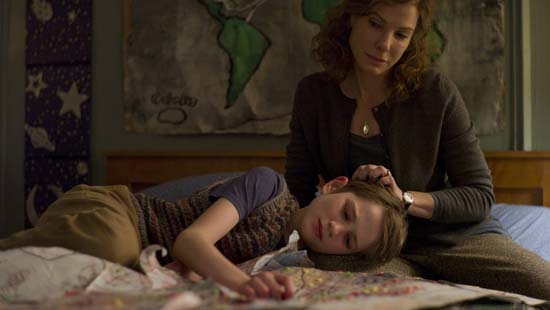
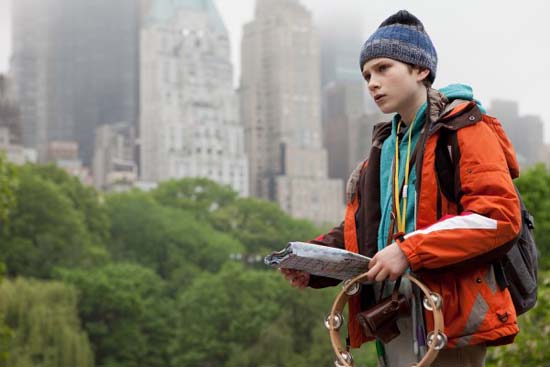
My husband and I watched “Extremely Loud and Incredibly Close” yesterday because we know it deals about death. Anyone that is faced with devastating loss can relate to lost souls who are in a process of traumatic recovery. Extremely Loud and Incredibly Close tells the unflinching story of a boy trying to make sense of the world after his father perishes in 9/11.

After a year of his father’s death from 9/11, eleven year old Oskar ventures to his father’s closet and finds a key in a small brown envelope labeled “Black” within the blue vase. The boy, who shakes a tambourine to calm himself embarks on a “reconnaissance expedition” in which he contacts every single person named Black in New York’s five boroughs. It is not mere trivia Oskar yearns to conquer but inside, it is the quest to find the meaning of life (and death) itself. He goes on a relentless quest to open a lock that he believes will reveal a message from his father that will help him make sense of a senseless world.

While this story is about the unimaginable loss as 9/11, it made me think about my own loss in life…the death of my mother, my two brothers, my precious 6 year old son, then my father. All five family members.

How does one make sense about the death of a loved one? In the process of seeking the answers, the search for meaning of the loss can challenge a survivor’s religious and spiritual beliefs. Survivors are forced to look at and re-evaluate life priorities. I feel the pain of Oskar’s frustration in trying to reconnect with his dead father.

Trying to make sense of or understand sudden losses can be difficult. Survivors are left asking “Why?” “Why did this happen?” Yet events such as the September 11, 2001 tragedy were beyond anyone’s control; they are a sudden, unexplainable loss.

It is human nature to want to answer the question “Why?” yet it may be difficult if not impossible to find an answer. Instead the question “Why?” is more of a plea for meaning and understanding. The thoughts of Rabbi Earl Grollman provide a useful perspective for coping with this difficult question:

Now death has shaken your faith, “Why?” “Why must life be one of sorrow?” “Why?” There are no pat answers. No one completely understands the mystery of death. Even if the question were answered, Would your pain be eased, your loneliness less terrible?

“Why” may be more than a question. It may be an agonizing cry for a heart-breaking loss, an expression of distress, disappointment, bewilderment, alienation, and betrayal. There is no answer that bridges the chasm of irreparable separation. There is no satisfactory response for an unresolvable dilemma. Not all questions have complete answers. Unanswered “Why’s” are part of life. The search may continue but the real question might be “How [do I] pick up the pieces and go on living as meaningful as possible?”

One day, we find out there is no use making sense of death but there is hope in making sense of our life. It is best ask to “What can I do about it now?” “How can I help?” or “How do I pick up the pieces and go on living as meaningful as possible?”

All of these thoughts came back to me as I watched this film. Extremely Loud and Incredibly Close, the movie is a wonderful and moving story about coping the death of a loved one.

Shielding myself from the scorching sun, I clutched on to my umbrella and looked down towards the smooth bermuda grass. My eyes linger to the engraved markings staring back at me , “Luijoe, my angel”.

“Mom are those weeds?” a daughter pointed to the tiny yellow flowers dotted at the top of his tombstone.

“I planted those so Luijoe will always have flowers cradled around his resting place”, I explained.

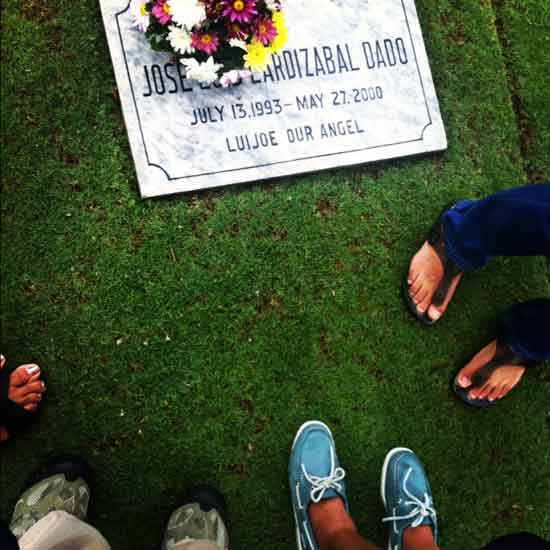
My husband knelt down and laid down a vase of mums as my other daughter carried another umbrella to shield him from the sun. We all stood there staring at the flowers and I couldn’t help feeling proud, “this is my family”. I took my iPhone and took a snapshot. Four pairs of feet beside Luijoe’s tombstone.

I felt a tug in my heart and wondered why I felt this way. It’s been 11 years after all. It must be a trigger. I was getting sentimental that my daughter would soon be leaving for Australia the next day. Or perhaps the stressful political conditions in the country must also be getting to me.

The words echoed inside my mind, “still a family” as we inched closer together and prayed, “Thank you God for family.”

I know that death ended Luijoe’s life but not his relationship to my family. He will always be our precious son. The difference is I gave up the old person who was physically connected to a now deceased Luijoe and made a spiritual connection with my child who died. True, my second daughter will not be with us for a year but I know we will always be connected, thanks to the internet.

It is with a sense of gratitude knowing my family will always be with me wherever they may be. I am thankful for their support in understanding the work that I do. During challenging moments, it is my family who stands by me.

No accusations of “you are pro-Corona, pro-GMA, anti-Noynoy” or “funded to support the RH Bill” or “someone is using you” or “influencing your choices”. Some of my friends disappoint me at times.

Next to God, my family knows what is in my heart. Searching for truth and justice is not being a pro-anyone but merely fighting for what I believe is right. After all, didn’t God give us the gifts of the Holy Spirit to know the difference between right and wrong, and to choose to do what is right? Life is too short to dwell on negativity.

My life in this mortal world is temporary and I might as well make the most of it by focusing on meaningful work, contributing value to society, sharing joyful experiences with my loved ones, and remembering to slow down to savor the precious moments.

Luijoe, my angel reminds me the temporariness of life and to live more fully in the precious moments I am blessed with.

The hot sun rises and the grass withers; the little flower droops and falls, and its beauty fades away. In the same way, the rich will fade away with all of their achievements. James 1:11