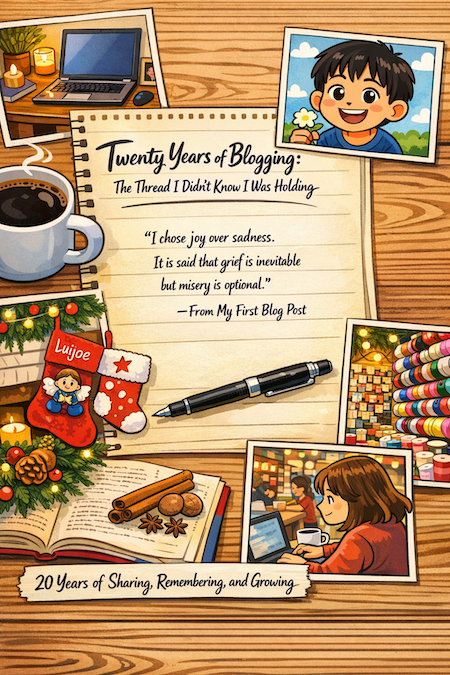
A year looks tidy on paper. January to December. One clean line. My 2025 did not move like that. It came in scenes, small ones. A notification. A quote that sat heavy in my chest. A long walk that made everything quiet enough for me to hear myself again. A graduation photo that looked familiar and still felt strange. If I had to name the thread that ran through my posts from January to December 25, it would be this: I kept circling the same question. How do you keep living honestly when you’re carrying loss, memory, and time?
Outside, everything signals celebration. Lights blink. Carols repeat. Shop windows insist on cheer.
Inside some homes, it’s heavier than that.
For some of us, this season doesn’t feel wonderful. It feels tiring. Or lonely. Or unexpectedly sharp. And when you’re not okay at a time when happiness seems mandatory, that mismatch can be its own quiet burden.
I have been thinking about death lately, and then I stumbled on an old post of mine on “Death and Dying” with this line from Norman Cousins: “Death is not the greatest loss in life. The greatest loss is what dies inside of us while we live.”
What dies inside me is not always the big stuff. It is often the quiet things: curiosity, courage, tenderness, and the habit of noticing small joys. Sometimes faith. Sometimes trust. Sometimes just the willingness to try again.
Grief can do that to me. So can my chronic ailments or a long season of stress. I keep moving, do the errands, show up. But the inner lights dim. Numb helps for a while. Stay there too long, and parts of me forget the way back.
I’ve heard it said, “Grief is the price we pay for love.” People say Queen Elizabeth II said it. Maybe. I don’t know. What I do know is the words are true.
When I first heard it, I thought, that sounds harsh. Like love is some cruel deal, happiness traded for pain. But it’s not that. It’s just the truth no one wants to face.
Because when we love, we don’t think about the end. We laugh, we sit at the table together, we hold our kids close. We don’t stop and say, one day this will be gone. We can’t. We just live. And then, when loss comes, that’s when we realize. This is the cost.

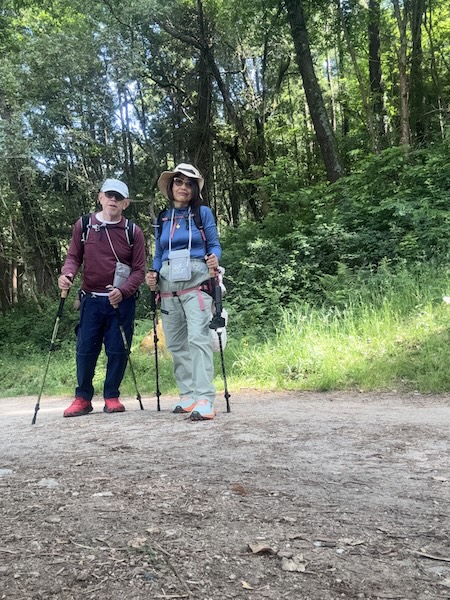
The idea of a Camino journey had been with us for years, quietly tucked away in our hearts, waiting for the right time. When that time finally came, the journey unfolded in ways we couldn’t have imagined.

May 21: Vigo to Redondela (15 kms)
From May 21 to 27, we walked the 100 kilometers of the Camino Portugués—but more than that, we walked through memories, through grief, through hope, and love. This journey was for our son Luijoe, who left us 25 years ago. It was also our way of sending quiet prayers for our two daughters and the people they hold close. Reaching the cathedral on the exact day we lost him didn’t feel like chance. It felt like grace.A circle, gently closed. Read More →
It feels like just yesterday, though many years have passed, that I first shared this deeply personal story. But with the arrival of another Easter Sunday, a day so profoundly special, the memory surfaces with a familiar poignancy.
“If I die, Mama, will I be alive again?” Luijoe asked. My six-year-old boy lay nestled amongst a small mountain of prayer books he’d arranged on his little tummy, idly flipping through the pages.
“Tears are the words the heart cannot express.” How poignant these words have become almost 25 years later. Losing a child is like having a piece of your soul ripped away. It’s a pain so profound it defies words, a constant ache that settles deep in your bones. It’s a hollowness that echoes, a silence where laughter and chatter used to be. It’s a future that vanished in an instant, replaced by a grief that reshapes everything. It’s a love with nowhere to go, a connection that’s been severed but not broken. It’s a wound that may heal slightly over time, but never truly closes. It’s the most indescribable feeling imaginable, a weight no one should ever bear.
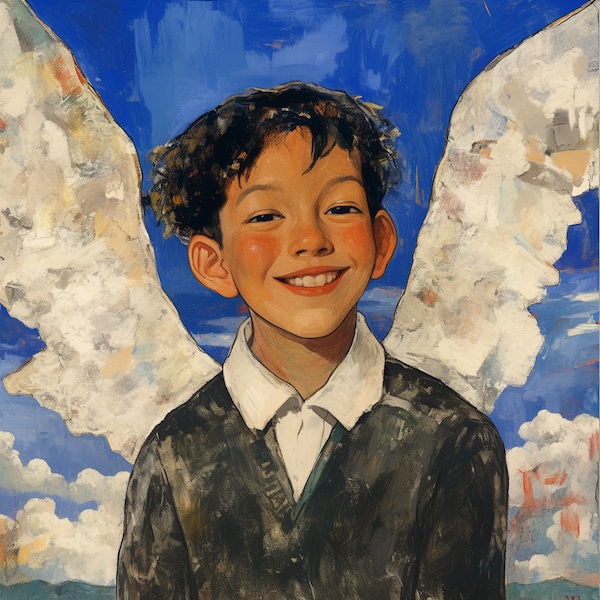
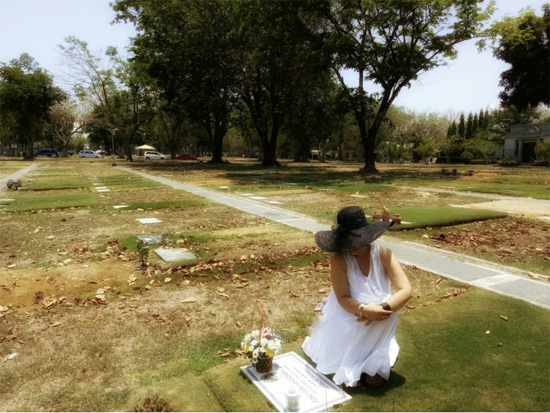
The pain lives within me, intertwinded into my soul. My son, Luijoe, passed away way too soon. Even though the sharp pain has changed over time, I still feel his absence deeply, like a constant emptiness. Some days, the grief hits me like a wave, reminding me of the future that was snatched from me, the milestones that will never come.

People say time heals all wounds, but I disagree. Time helps us learn to live with the wound. It teaches us to navigate the world with this gaping hole in our hearts. For me, that navigation involves cherishing the sacred bond I still share with Luijoe. It’s a lifeline, vital to my well-being.
I dream of him. I imagine him as he would be today, a young man of 31. I picture him as handsome, lively, and full of energy. I catch myself glancing at other young men, the children of friends, those who are the same age Luijoe would be now. Dine’s daughter, Jane’s son… I see them, so grown up, and a bittersweet smile touches my lips. Because in those fleeting moments, I see a glimpse of what my Luijoe might have been.
I wonder about the young man he would have become. Would he still sing? I remember him at six years old, captivated by music. He loved watching his older sisters during choir practice, his eyes wide with wonder. Pop music was his passion. He’d ask me to download mp3s of his favorite songs on Napster – remember Napster? – and then he’d sing and dance along, completely lost in the joy of the music. Those memories… they’re treasures I hold close, fragments of a life that burned too brightly, too briefly.
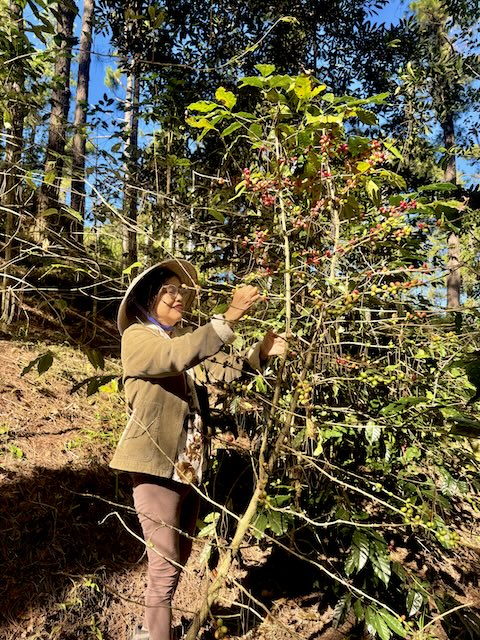
I wonder if he’d be here on the coffee farm with me. Would we walk the fields together? I dream of those times when I’m here. Maybe we’d pick coffee cherries side-by-side, and he’d help me get them ready afterwards.

Created using Midjourney
The world tells you to move on, to heal, to forget. But a mother never forgets. A mother’s bond endures. It’s a love that continues even with incomprehensible loss. And even if the tears continue to flow, sometimes quietly, sometimes in a torrent, they are proof of that unfading love. They are the words my heart cannot put into words, a language spoken only by those who have walked this path. I know, in my heart, that someday I will be reunited with my son. And I will keep holding on to his memory with me, a flame that might waver but never go out. It’s a love story that endures, even on the other side of the veil.


As the clock ticks towards midnight this New Year’s Eve, a time when reflections and resolutions take center stage, my thoughts are swirling in a bittersweet dance. Yes, the year blessed me with cherished moments – the laughter of my daughters filling the air, the thrill of exploring new places four times over. Yet, amidst this mosaic of memories, there’s a shadow, a subtle, unspoken ache that lingers – ambiguous grief. It’s a feeling hard to articulate, like a whisper in the wind, there but not quite tangible. I won’t dive into the specifics, but let’s unravel this enigma together. Perhaps, you too have felt its elusive touch as one year folds into another.

Ambiguous grief is a journey through a landscape shrouded in fog, where the usual signposts of loss and recovery are obscured. Unlike the clear-cut sorrow of losing a loved one to death, ambiguous grief is the heartache of loss without closure. Imagine grappling with a loved one’s disappearance, living with someone lost in the depths of dementia, or the aching void left by a relationship that abruptly ends without explanation. It’s a psychological tightrope, balancing between presence and absence, where the loved one is neither fully here nor completely gone.
This type of grief plays tricks on the heart and mind. It manifests in a whirlwind of emotions – anger, confusion, depression, and a relentless yearning for answers. The unique pain of ambiguous grief lies in its lack of societal recognition; there are no rituals for the ‘not quite gone,’ no condolences for the ‘half lost.’ It’s a silent struggle, often borne alone.
But, in this murkiness, there is also a profound lesson in resilience. Coping with ambiguous grief requires a redefinition of hope and acceptance. It’s about finding support in unexpected places, be it through counseling, support groups, or shared stories. It’s about adjusting the lens through which we view loss and reassembling the pieces of a shattered reality into something new and meaningful.

Ambiguous grief, in all its complexity, speaks to a truth we often forget: that life, love, and loss are rarely black and white. It challenges us to navigate shades of gray, to find peace amidst the unresolved, and to embrace the strength that comes from weathering the unknown. In a world that craves certainty, ambiguous grief teaches us the power of living with uncertainty and the grace of letting go, even when we can’t quite say goodbye.
Before I bid farewell to 2023, I’m setting the stage for a transformative journey. Beginning tomorrow, I embark on a 21-Day Journaling Inner Adventure. It’s more than a resolution; it’s a commitment to self-exploration and growth. Join me on this journey to unlock new perspectives and embrace the power of reflection. Let’s turn the page together!

A mother who lost a child often cries out over insensitive remarks. I have heard it countless of times. Consider this conversation from a mother who thought a well-meaning friend was insensitive.
Don’t they know? Of course these wonderful, concerned, well-meaning friends don’t know. They can only guess how I feel. They haven’t personally known (thank God) the disbelief, the shock, the anger, the depression that has filled my heart and soul since my child died. They don’t know that the words I need to hear are, ““I know you must be hurting terribly. You had such a good life together, the pain must be awful. You need to express your anger, your frustration. I know it must be hard for you to believe that God is a loving God who will support you through this horrible tragedy.” They can’t know words aren’t necessary, that just being there, holding my hand, crying with me, or listening to me would be much more comforting than words they feel they must say.
I don’t think they are insensitive. They just don’t know how to comfort or are uncomfortable in facing a person who lost a loved one.
Even one can experience grief in the loss of a presidential candidate in an election.
One often suffers temporary emotional pain in response to loss of anything that is very important to us. Here, losing a dream where we looked up to potential leaders of our country who hold our future and the future of our children. The pain is a normal internal feeling one experiences in reaction to a loss—the defeat of a candidate in the elections. The winning of certain candidates even made the pain worse in the senatorial slate, which is mostly political dynasties or familiar names.
The defeat of your candidate hurts. This is a loss of a dream you nurtured in your mind for the love of country. It is okay to cry. There is a normal reaction to loss. It is not a sign of weakness. I needed to tell myself that: feel, acknowledge, and express my emotions with an attitude of acceptance and compassion. The time will come when you can handle it with a sense of loving acceptance.How do you fare when you come across a bereaved? What do you say? You don’t say “Life should go on”. The grief journey is a process and when a loss or death is just so recent, mourning and moving on is not possible.
Do not ask them to deny their tears. Allow them to wash their inner wounds and speed the healing of their heart. In time, life goes on.
Grief is cyclical, much the same way the seasons change. Saying “life should go on” when grief is so fresh is like diminishing the grief of these victims.
Not everyone will follow the same journey. Some move on to their new life (without their loved one) ahead than others. The bereaved, in their own individual ways, gradually get better at bearing their loss. Mainly, the pain simply softens with the passage of time.
Moving on means that we live a new normal, never forgetting the love and memories of our beloved. Moving on says nothing about forgetting our loved one, not missing them or not wishing they were still with us, many years after the death. It says we will think and feel differently about having lost him or her.
Here are other words that are not comforting to those who have lost a loved one:
“It’s a good way to die.”
Don’t they know there is no good way for a child to die? Can’t they understand there’s nothing good about his being snatched away from our life?
“Remember, everything is God’s will.”
Don’t they know I can’t understand how God could cause me such despair? Don’t they understand that I can’t accept this as God’s will?
“All things work together for good for those who love God.”
Don’t they know I’m not sure I can love a God who robbed me of my child? Can’t they understand I’m very angry at God, who treated me so unfairly?
“Your child is better off. He’s gone to Heaven, where he will have eternal peace.”
Don’t they know I can’t be relieved to know Hess in Heaven when I ache so to have him back? Can’t they understand that his death is an injustice, not a godsend?
“Count your blessings.”
Don’t they know that in this state of mind I can’t in my wildest dreams consider all this pain, this anger, this emptiness, this frustration a blessing?
“If you look around you, you’ll find someone worse off than you are.”
Don’t they know right now I can’t imagine anyone worse off than I am?
“Think of all your precious memories.”
Don’t they know how much it hurts to live with nothing more than memories? Can’t they understand that because our love was so great, the pain is more intense?
“Keep your chin up.”
Don’t they know how hard it is to do that when I really want to cry, to wail, and to scream at the injustice that has been dealt me?
“You must put it all behind you and get on with your life.”
Don’t they know we don’t hurt by choice when our children die? I haven’t met a bereaved parent yet who wasn’t really weary of hurting.
“Time will heal.”
Don’t they know how time is dragging for me now, that every minute seems like an hour and every hour like a day? Can’t they understand how frightening it is to face the rest of my life without my child?
“If there’s anything I can do, let me know.”
Don’t they know they shouldn’t wait for me to ““let them know?” Can’t they understand that my mind is so numb I can’t even think of what needs to be done?


Life has a way of catching us off guard, especially when we lose someone we love. Grief doesn’t come with instructions, and words often fall short of what’s stirring inside. In those moments, we search for small comforts, ways to hold onto memories even as we learn to live without them.