
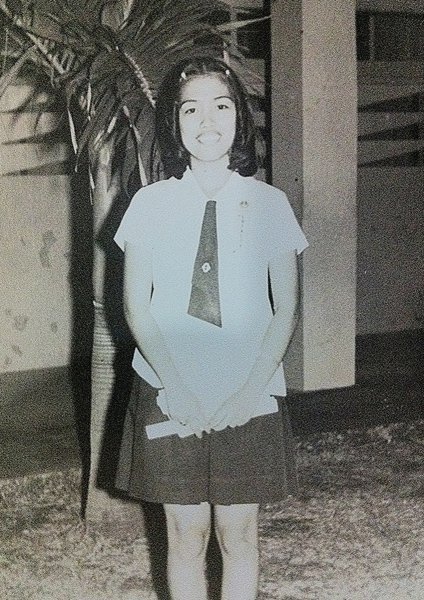
Some time ago, almost on a whim, I uploaded my high school graduation photo to Nano-Banana, an AI image generator. There was no big goal behind it. I was curious, that’s all. I wondered if a machine could somehow connect the sixty-eight-year-old woman I am now with the sixteen-year-old girl I used to be, or at least the version of her I still remember.
The result stopped me for a moment. I didn’t expect it to. It felt quietly unsettling. Familiar, yet not quite. Like running into someone you recognize but can’t immediately name. In the image, my past and present selves seemed locked in an awkward digital hug.
I kept staring at it, and one question wouldn’t let go: was that girl really me? Or was I looking at someone I once knew very well, but no longer quite recognize?
Joshua Rothman writes about this in his essay “Are You the Same Person You Used to Be?” He describes two kinds of people. There are “Continuers,” who feel a steady connection to who they were as kids. Then there are “Dividers,” who see their lives as broken into chapters, each one starring a different version of themselves.
For years, I was sure I belonged in the Divider camp.

When I look back at that sixteen-year-old, mocked by uncles who called her negra, weighed down by average grades, quietly sliding into the back of the classroom so she wouldn’t be seen….it’s tempting to believe she disappeared somewhere along the way. My life doesn’t look like hers anymore. I don’t move through the world the way she did. Today, I write columns. I work with technology. I grow coffee. I walk into rooms without apologizing for being there. I’ve learned how to forgive a strict mother. I’ve learned how to stay married. I changed. I shed an old skin.
So surely, that girl no longer exists.
But then I wrote her a letter. A letter from the future. And that changed things.
When I wrote, “You are not ugly,” I realized I wasn’t just talking to a memory. I was calming something that still lives in me, even now. When I told her, “You are not shy, you are just low on confidence,” I wasn’t describing a different person. I was naming the starting point of who I became.
That quiet girl, afraid of being judged, was already doing the work of a writer. She watched people closely. She listened. She tried to understand how others thought before she ever spoke.

Psychologists talk about something called the “reminiscence bump.” It’s why many older people remember their teen and young adult years so clearly. That’s when we start forming the story we tell ourselves about who we are. After that, we spend decades revising it.
Writing that letter felt like revising one small but important part of my story.
At sixteen, I looked at my report card and saw proof that I wasn’t smart. At sixty-eight, I see something else. “The system measures only one kind of intelligence,” I wrote. Back then, I loved science, society, and politics. I could think deeply. I just hadn’t found the right place to use those skills yet.
This is what I like about the Continuer idea. If we stop treating our younger selves like strangers or worse, like fools, our regrets start to look different. They become lessons. Even the hard parts shift. My mother’s temper left marks, there’s no denying that. It showed me, very clearly, the kind of parent I would rather not become. I still fall short, and sometimes I hear her in my own voice. In its own way, that history shaped me into what I once described as an “imperfectly perfect mom.”
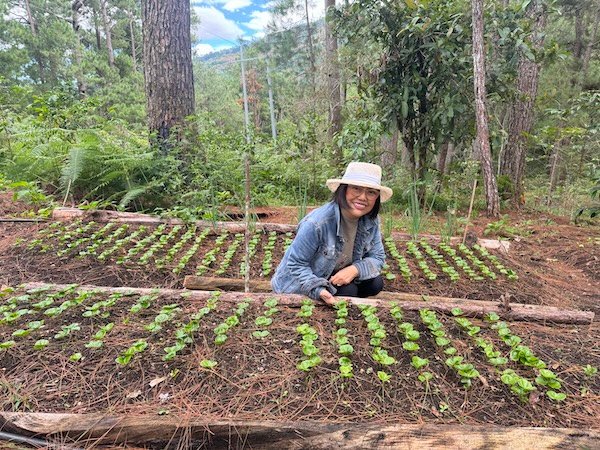
These days, though, it’s easy to smooth over stories like that, especially online. We present ourselves as if we were confident from the start, certain at every turn, always getting it right. But that version of continuity isn’t real. Real continuity means admitting the mess. It means saying out loud that the woman who now understands coffee science is built on top of a girl who once believed she wasn’t smart enough.
Martin Heidegger taught that to live ‘authentically’ is to take responsibility for who we are becoming. In his view, humans are never fixed or finished products; we are beings of pure possibility, always in the process of creating ourselves. That’s what I was trying to tell my younger self when I wrote, “The woman I am today exists because of the strong, if unsure, girl you are now.”
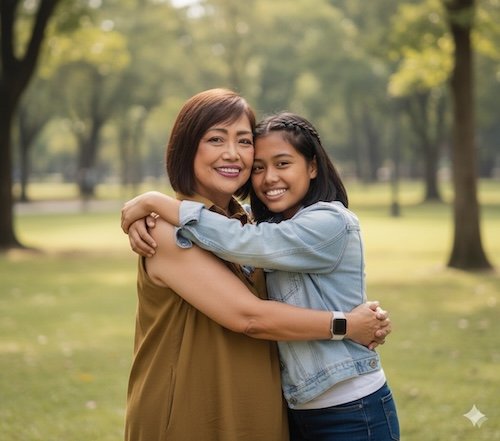
Maybe that’s the best answer to the question of identity. We’re not exactly the same person we used to be. But we’re not strangers, either. We’re partners. That sixteen-year-old carried the shame, the doubt, the weight of being “average,” so that I could one day make sense of it all—and write about it.
I ended my letter with one simple line: “Be kind to her. She deserves it.”
It felt like the only advice that mattered.
We’re not exactly gentle with our younger selves. We wince at the haircuts, laugh at the awkward crushes, brush off the fears as if they were silly. But if that girl is still part of me—if I’m still carrying her along—then treating her with a bit more care is really just another way of treating myself better too.
