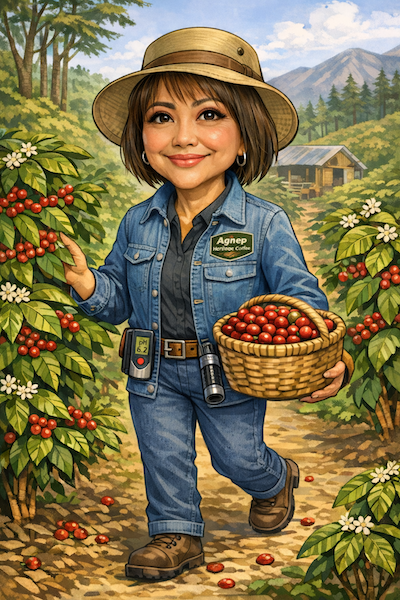
Eight years ago, we planted coffee. I still remember how hopeful it felt, putting young trees into the ground and trying to imagine a future we couldn’t see yet. Today, I’m proud we did it. But I also carry one honest regret: I wish we had started earlier, when I was younger, when my energy felt endless and time felt like something you could waste.
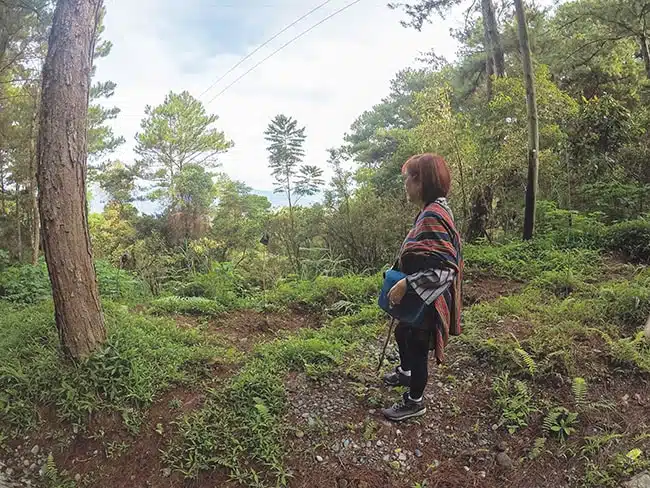
Back then, we weren’t thinking about awards, licenses, or selling to cafés. We were thinking about land and what it could become if we treated it with patience instead of pressure. In Sitio Bay-O in Mankayan, Benguet, what we had was idle forestland, pine, kalasan, and the feeling that we were standing at the edge of something bigger than a project.
My daughters named the farm Agnep, after their great-great-grandmother who planted coffee in the backyard of her ancestral land in the early 1900s. At that time, we didn’t know the heritage and history. Anyway, that lineage mattered. It told us we weren’t inventing a story. We were continuing one.
Eight years later, I understand why coffee changes you. It forces you to think in seasons and decades. Coffee is a long-term crop, often taking around five years to reach full production. You can’t rush a tree into becoming what it’s meant to be.
And in our case, place adds another layer to that timeline. Our farm sits at around 1,620 meters above sea level. It’s cooler up here, so growth is slower, and cherries ripen more gradually. That’s part of why high-altitude Arabica can develop the sweetness and brightness specialty roasters look for.
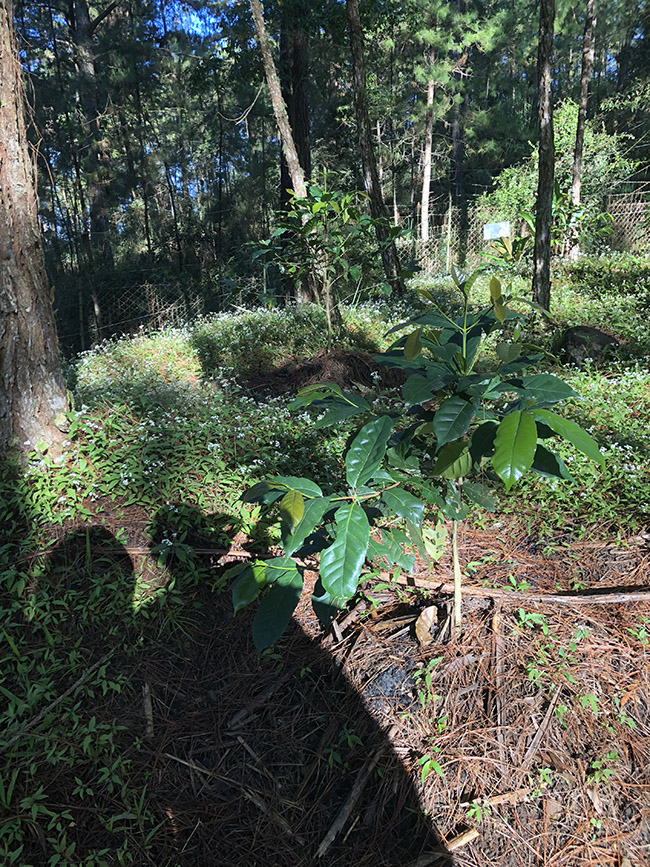
We chose to manage the farm more like a forest than a plantation. We keep roughly 40% shade under Benguet pine, kalasan, and alnos. That canopy doesn’t just make the farm feel alive. It shapes the microclimate, protects the soil on slopes, and helps the ground hold moisture during dry months.
We avoid chemical pesticides. We rely on biodiversity, birds, bees, and the steady work of a healthy environment. We also use indigenous microorganisms and inputs like JADAM microbial solution or JADAM liquid fertilizer because the goal has always been soil health first, harvest second.
Starting late shows up in my body sometimes. I notice it when the work is heavy, when the days run long, when I think about how much easier this would’ve been with a younger back and fewer responsibilities.
But the other truth is this: starting earlier wouldn’t have guaranteed we’d start right. It takes maturity to commit to slow work, to invest without immediate reward, to accept learning curves that don’t care about your deadlines.
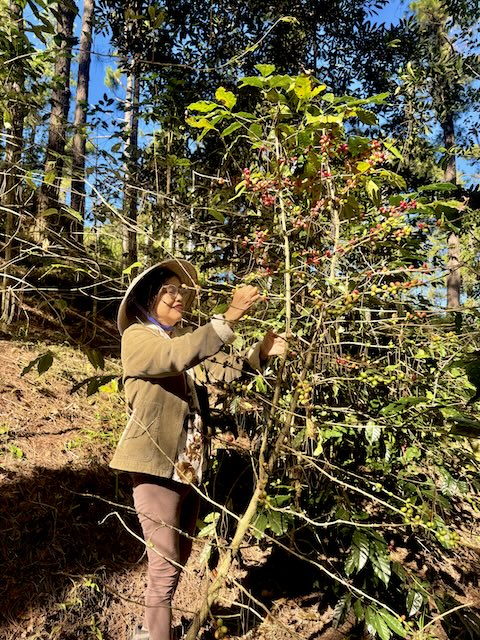
Over the years, we planted varietals that fit Benguet’s conditions: Typica, Red Bourbon, Orange Bourbon (Granica), and Catimor (Mondonovo). And we learned that quality isn’t one decision. It’s a chain of decisions, especially after harvest.
In early 2022, we worked with post-harvest consultant Michael Harris Conlin, refining fermentation and also learning when to keep processing minimalist so the terroir speaks. That same year, our coffee earned international recognition in Korea, winning a Bronze Award in a blind-judged Global Coffee Championship.
Today, when I catch myself wishing we started earlier, I try to reframe it. We began when we were ready to do it with care, for the land, for the people working it, and for the long timeline coffee demands.
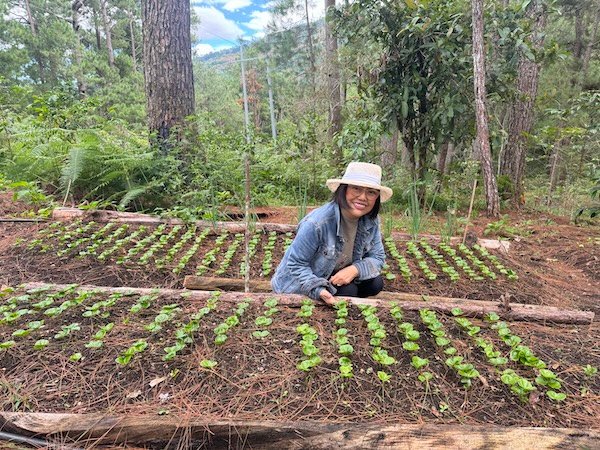
Now I’m also thinking further ahead, about who will take over the farm one day. We won’t be forever young. I can’t rewind the start date, but I can keep planting, keep learning, and keep building a farm that’s strong enough to outlast us.