
I was scrolling through X the way you do when you’re half-working and half-avoiding work. Then I saw it. A post by Atty. Jesus Falcis saying my name showed up, of all places, in a Grok-generated list of the Top 10 influential political bloggers in the Philippines.
I blinked. Twice.
Not because I think I don’t belong in political conversations, but because I haven’t been writing about good governance on blogwatch.tv as much as I used to. These days, my brain is often parked elsewhere. Family logistics, deadlines, the Agnep Heritage coffee farm. And still, there it was. My name. In a category I thought I am behind.

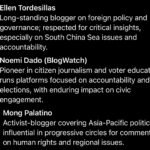
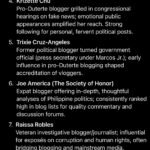
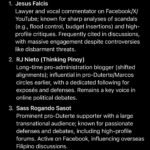
So of course I did what any mildly amused, slightly suspicious writer would do.
I asked Grok: Why am I on that list?
The short answer it gave me was this: ”due to longevity, historical significance, quality/depth, and spectrum balance—criteria that prioritize enduring contributions to civic engagement over raw 2025 viral metrics. She edges out purely emerging vloggers by representing the foundational independent voice in Philippine political blogging. In a landscape shifted toward high-engagement partisan content, her influence is more institutional and educational than mass-mobilizing, justifying inclusion among pioneers like Tordesillas and Robles while acknowledging lower current reach compared to top-ranked viral commentators.“
I laughed at “institutional and educational.” Not because it’s wrong, but because it sounded like the polite version of this. You’re not loud, but you left receipts.
And yes, I felt seen. A little.
But I also felt something else. An old itch I haven’t scratched in a while.
That itch is good governance.
The kind of writing I miss and why I stopped doing it as often
There’s a specific kind of tired that comes from writing about governance. Reading long documents, tracking timelines, comparing what was promised versus what was funded, and then trying to explain it without sounding like a lecture.And also the trolls that invaded my then twitter account and also my Facebook page.
It’s not glamorous writing. It doesn’t trend easily. It doesn’t come with instant applause.
But it matters.
Because when governance fails, it doesn’t fail in abstract. It shows up in delayed salaries, missing medicines, broken roads, flooded homes, shady procurement, and the slow, familiar shrug that says: Ganito talaga.
I used to write into that space more often, where the work is not just reacting to personalities, but paying attention to systems. Where you write about process, accountability, and how power moves when nobody’s watching.
Somewhere along the way, the internet changed. The incentives changed. And if I’m being honest, I changed, too.
It became easier to focus on what was immediately shareable instead of what was deeply explainable.
So, is “political blogger” still a thing?
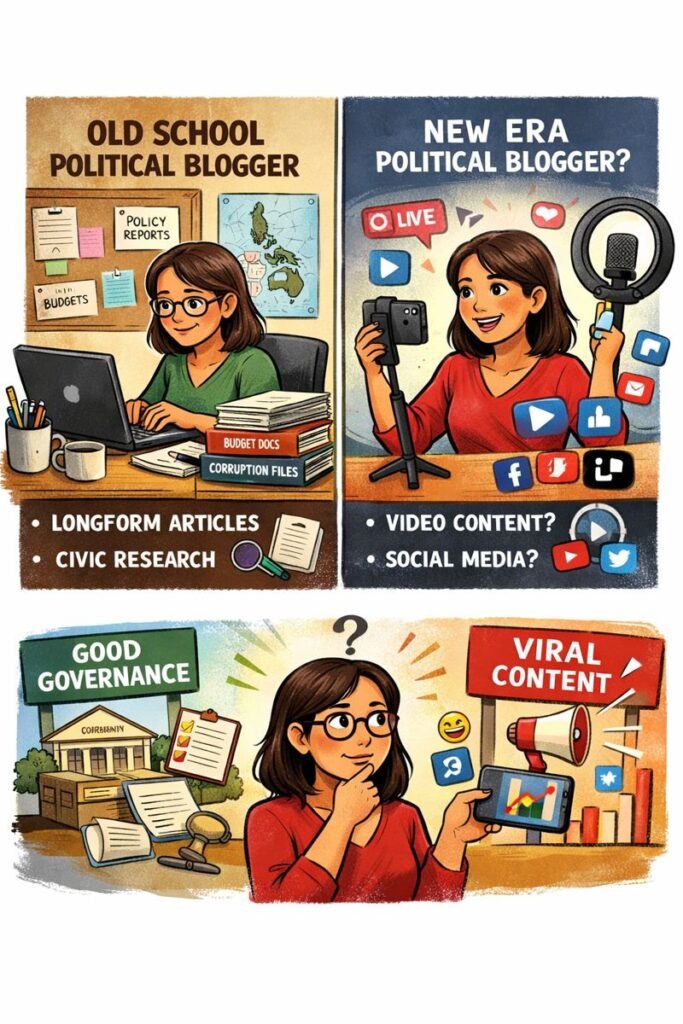
I asked Grok that too, because I genuinely wasn’t sure what the label even means now.
Its reply was: Yes, the term “political blogger” is still used in the Philippines as of December 2025, but it’s increasingly niche, legacy-oriented, or transitional rather than the dominant descriptor for current influential voices.
That tracks.
“Political blogger” feels like a word from a time when your platform was your website. You owned the space. You controlled the layout. Your work didn’t disappear because an algorithm decided your post wasn’t engaging enough in the first three seconds.
Now, the center of gravity is video. Short clips. Faces. Voices. Reaction in real time. And for many people, influence is measured in views and shares, today’s numbers, not years of work. I hate facing the camera. I tried short videos on YouTube. I even had an active TikTok acccount.
Grok also pointed out that the ecosystem has shifted toward “political vlogger,” “commentator,” or “content creator,” and that written blogging often gets treated as a legacy format unless it’s paired with something more modern, like video, live streams, or multi-platform republishing.
Which leads to the uncomfortable but true thought.
Maybe I should do more video content though.
Influence isn’t just virality. Sometimes it’s memory.
Here’s what surprised me about Grok’s explanation. It wasn’t flattering in the shallow way. It wasn’t “you’re trending.” It was more like: you built something that lasted.
That’s the part I needed to hear.
Because political blogging, at least the kind I grew up doing, was never meant to be a popularity contest. It was closer to civic note-taking. A personal archive of what happened, what was said, what was promised, and what didn’t add up.
And when you do that long enough, something funny happens. Even if you go quiet for a while, the work stays searchable. People still link to it. Students still cite it. Readers still remember that you were paying attention when it wasn’t fashionable.
That’s not mass influence. It’s durable influence.
And in a landscape where high-engagement partisan content dominates, durability starts to look rare.
What good governance content can look like now
If I’m going to return to good governance writing, and I think I am, I can’t pretend it’s 2009.
The format has to meet people where they are, without giving up the depth.
So here’s what I’m thinking, out loud.
- Keep the longform writing for the heavy lifting: context, timelines, sourcing, and the “so what?”
- Add short video explainers that point back to the written piece. Not hot takes. Not performance. Just clear, calm walkthroughs.
- Use simple visuals, screenshots of public documents, budget tables turned into plain-language summaries, and before-and-after comparisons.
- Stay allergic to hero-villain storytelling. Governance is rarely that simple, and oversimplifying is how we get manipulated.
And maybe the best part: video doesn’t have to replace writing. Video can be the doorway. Writing can be the room you invite people into.
A small decision I’m making

Seeing my name on that list wasn’t an award. It was a nudge.
A reminder that I didn’t start writing about politics because it was trendy. I started because I wanted to understand how decisions were being made, and who was paying the price when those decisions were sloppy, self-serving, or hidden.
So yes, I miss writing about good governance issues. I miss the discipline of it. I miss the clarity it forces on you. I miss the feeling of connecting dots and putting them somewhere public.
And maybe it’s time to do it again, just in a way that fits 2025.
Not perfect. Not constant. But present.
Because the country doesn’t just need louder voices. It needs people who are willing to look at the paperwork, ask the boring questions, and keep asking until the answers get specific.
And if I need to show my face on camera sometimes to get people to read the boring parts, fine. I can work with that.
