“Second chances are not about erasing the past, but about embracing the future with the wisdom of our experiences.”

Eighteen years ago, I reached a point where I nearly gave up on my marriage. Grief had engulfed me to such an extent that I felt like a stranger to my husband. Then, unexpectedly, I broke my ankle, while I was looking for an apartment for me to stay. This led me to a living situation I hadn’t planned for. I found myself back living with my husband, a scenario I never imagined. It felt like a sign, perhaps even a divine message, telling me, “You can’t run away from your marriage. Try to fix it. Give it a second chance.”

I sustained a fracture in my ankle that necessitated surgical intervention. Throughout the entire duration of my hospitalization and the subsequent six months of therapy, he was there, taking care of me with unwavering dedication and support. This period provided me with an opportunity to reconsider my initial decision to separate from him.

I’ve spoken about this before, but it bears repeating: second chances in a relationship are possible, under certain conditions.

First, there must be a genuine effort from the person who caused the hurt. My husband did more than just apologize; he wooed me back, demonstrating a willingness to make amends and compromise.

Second, it’s critical to set boundaries. I couldn’t allow the same mistakes to repeat, but I also had to acknowledge that recovery takes time and effort.

Third, loving myself is essential. I’ve learned that you cannot give what you don’t have. By nurturing myself, I’ve grown into a better wife, mother, and friend.

Fourth, being open to the positive possibilities of the future is vital. I realized I couldn’t let my current feelings and circumstances limit what the future might hold.

Fifth, and perhaps most importantly, is forgiveness. Clinging to pain, grudges, bitterness, or hatred only harms oneself. Forgiving is a choice not to define myself as a victim.

These lessons are deeply personal, and I share them from my own journey. The scar from my ankle surgery serves as a constant reminder that second chances are more than just a dream – they are a tangible reality.

Have you caught wind of the recent buzz making rounds online? It’s about a woman who received a 299-peso ($5.37) engagement ring from her boyfriend, a story that has ignited a fiery debate across the internet. Opinions are divided: some are championing the notion that love trumps monetary value, while others argue for the importance of effort in a proposal. This topic has certainly struck a chord with many.

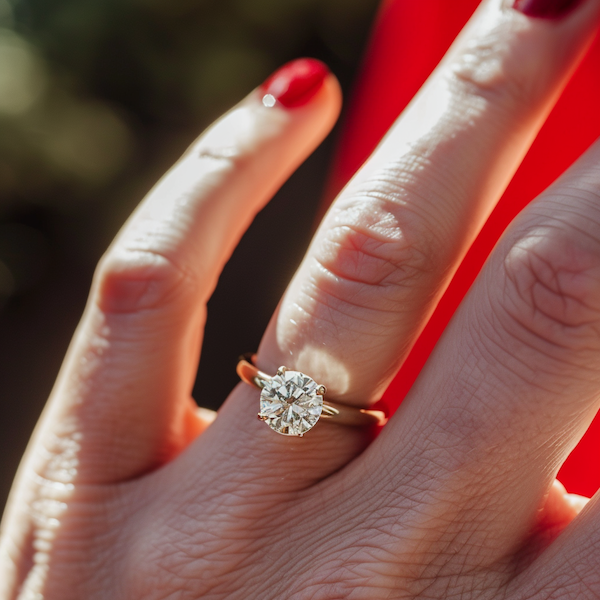
Reflecting on this, I’m transported back to my own engagement, a memory from 39 years ago. I had envisioned a scene straight out of a romantic movie: just me and my beloved, a heartfelt proposal with him down on one knee. However, reality had a different script in mind. My proposal scene featured a stunning vintage diamond ring, but rather than the intimate setting I had imagined, the moment unfolded in front of my future father-in-law. His face was alight with joy, a stark but heartwarming contrast to my own mix of surprise and bewilderment. It was far from the proposal I had dreamt of, yet it has become a memory I hold dear. My husband and I laugh at this poignant memory.

Generative art of a diamond ring

This narrative reveals an essential truth: there is no one-size-fits-all blueprint for engagements. My story and that of the woman with the modestly priced ring share an underlying theme – our engagements were unique, defying conventional expectations. What truly matters is not the cost of the ring, but the depth of love and the story that it represents. I totally get where the woman is coming from, but let’s also try to see things from the guy’s point of view for a moment. Adding a twist to the tale, there’s a recent update (if indeed true): the fiancée, unfortunately, ended the relationship with the woman who received the 299-peso ring.

In the end, whether you’re in the midst of planning a proposal or simply imagining your special moment, the essence lies in the bond and memories you forge together. Be it a modest ring or a family-inclusive proposal, the real significance lies in the shared love and affection. These personal, real-world love stories are what make each proposal distinct and genuinely enchanting.

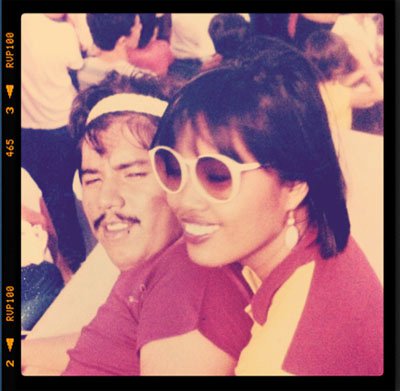
A week after our engagement. 1985

Forgiveness is about stopping our past from dictating our present, recognizing that our past experiences shape who we are.

As I scrolled through my Facebook feed, I stumbled upon a post from a friend that took me back to my grade school days. She had shared the Act of Contrition with her daughter, the same prayer I was taught in a Catholic school over 50 years ago. I remember reciting, “Forgive me, Father, for I have sinned…” but the details of the prayer have faded. This prayer expresses remorse for our wrongdoings, a sentiment I deeply connect with, even if I no longer recount my sins to a priest. I’ve found my own way to seek forgiveness, believing that God’s presence isn’t confined to a church.

Here’s the thing: I’ve made mistakes as a wife and mother. Yes, I’ve apologized and sought forgiveness from God and my family. But I’ve learned that forgiving oneself is just as important. Apologizing and making amends are essential steps in healing and warding off resentment in any relationship.

Why apologize, you might ask? From my experience, a sincere apology not only eases the burden from my shoulders but also brings immediate relief. It’s about clearing the air, not letting bad feelings linger. Psychologist Guy Winch, author of “Emotional First Aid,” says an effective apology heals both the recipient and the one who’s apologizing by dissolving guilt.

An apology must be genuine, and it should lead to a change in behavior. It’s not just about saying sorry; it’s about understanding the hurt caused and working to ensure it doesn’t happen again.

Reflecting on my 39-year marriage, I remember the early days filled with conflicts. My husband would quickly apologize for his missteps, but I was more interested in seeing a change in his behavior. Saying sorry is easy; the real challenge is in taking the time to understand the hurt and actively working to prevent it in the future.

Forgiveness has been our greatest gift to each other. It’s about freeing ourselves from the shackles of resentment, breaking down the walls built by anger and negativity. Forgiveness is about stopping our past from dictating our present, recognizing that our past experiences shape who we are.

Forgiveness doesn’t always start with letting go of resentment, but once you embrace it, resentment loses its grip on you. I’ve realized that I can’t control others, including family members, but I can choose how I react. By practicing honesty, self-expression, and forgiveness, I’ve found that resentment has no place or power in my life.

In the midst of a hectic week, an email landed in my inbox, bristling with what seemed like unwarranted hostility. My immediate reaction was defensive, attributing malice to the sender. But then, I remembered a principle that had recently caught my attention – Hanlon’s Razor. Traditionally, it advises, “Never attribute to malice that which is adequately explained by stupidity.” Yet, Tina Gilberston of The Reconnection Club offers a nuanced interpretation: “Never attribute to malice that which can be adequately explained by (thoughtlessness or self -preservation) neglect.” This prompted me to reconsider – perhaps the email was a casualty of stress or poor communication, not an intentional attack.

Rethinking Hanlon’s Razor

Hanlon’s Razor is more than a clever quip; it’s a tool for interpreting the actions of others with a lens of understanding. It encourages us to first consider simpler, non-malicious reasons for actions that might otherwise upset us.

The Significance of Hanlon’s Razor

  1. Mitigating Misinterpretations: This principle urges us to seek less hostile explanations, thereby reducing misunderstandings and conflicts.
  2. Fostering Empathy: Recognizing that a perceived slight might stem from an oversight or a gap in knowledge leads to a more empathetic approach to conflicts.
  3. Harmonizing Relationships: Both in personal and professional spheres, Hanlon’s Razor can be instrumental in maintaining respectful and understanding relationships.

Applying Hanlon’s Razor in Everyday Scenarios

  • In Personal Relationships: It helps us navigate tricky family or friend dynamics by tempering our reactions with understanding.
  • At the Workplace: Encouraging a culture of giving the benefit of the doubt, it fosters a more collaborative and positive work environment.
  • In Digital Interactions: Particularly in the realm of online communication, where tone is easily misconstrued, this principle helps in preventing heated escalations.

A Word of Caution

Despite its usefulness, Hanlon’s Razor isn’t infallible. It’s important to recognize genuine malice when present and not dismiss harmful actions as mere misunderstandings. Overuse of this principle should not lead to excusing consistently problematic behavior.

Integrating Hanlon’s Razor into our thought process represents a significant shift in perspective. It reminds us that not all negative actions are driven by ill will; sometimes, they are just simple errors or oversights. Adopting this mindset can lead to more peaceful interactions, fewer conflicts, and a culture rich in empathy and understanding. In a quick-to-judge world, taking a moment to consider more benign explanations can make a profound difference in how we interact and perceive those around us.

In a recent conversation with a friend curious about personal preparations before marriage, I emphasized the significance of addressing past wounds and cherishing one’s inner child. I advised her to confront and heal unresolved parental issues, highlighting the importance of nurturing our inner child throughout adulthood.

Irrespective of our age, there resides within us a young child longing for love and acceptance. My personal journey reflects this. Losing my mother just before I turned twenty was a profound challenge. It wasn’t until years later, amidst a health scare in 1996, that I confronted these deep-seated emotions. Facing my own fears during a medical procedure, I connected with my mother’s struggles with breast cancer. In that vulnerable moment, I forgave her and sought forgiveness for any pain I might have caused. This cathartic experience helped me release a heavy emotional burden.

I later realized that unaddressed emotional wounds can inadvertently influence our future relationships. Reflecting on my past, I recognized a pattern where I was drawn to partners mirroring aspects of my mother’s challenging temperament. Despite my mother’s critical and sometimes harsh demeanor during my upbringing, it wasn’t until adulthood that I understood her actions were not a reflection of my worth but a manifestation of her own struggles.

The concept of nurturing one’s inner child became clear to me after recognizing numerous unresolved issues from my childhood. As a child, I often felt that any misstep was a personal failure, leading to a constant pursuit of perfection in the hope of earning my mother’s affection. This belief system persisted until my mother’s passing, after which my relationship with my father, who had been more reserved during her life, blossomed.

In my journey towards independence, I discovered the internal parent-child dynamic as described by Louise Hay. I realized that our internal dialogue often involves a critical parent figure admonishing the child within. Recognizing this, I worked towards fostering a more nurturing internal parent voice.

Healing the inner child involves embracing and accepting every facet of ourselves, including our flaws and past mistakes. Love, I’ve found, is a powerful healing force. It allows us to shed light on our darkest memories and bring understanding and forgiveness. This process of loving and forgiving our inner child can profoundly impact our well-being.

My journey of forgiving my mother was pivotal in releasing past burdens and enhancing my roles as a parent and spouse.

Regardless of gender or perceived strength, we all have a vulnerable child within us, seeking affection and care. If you’re contemplating settling down, it’s crucial to resolve past conflicts and practice self-forgiveness and love.

These days, I consciously indulge my inner child with simple joys like treats, laughter, and playful activities. I often remind myself: “I am perfect, whole, and complete, just as I am.” Repeating this affirmation helps in releasing past traumas and embracing a more wholesome future.

As the clock ticks towards midnight this New Year’s Eve, a time when reflections and resolutions take center stage, my thoughts are swirling in a bittersweet dance. Yes, the year blessed me with cherished moments – the laughter of my daughters filling the air, the thrill of exploring new places four times over. Yet, amidst this mosaic of memories, there’s a shadow, a subtle, unspoken ache that lingers – ambiguous grief. It’s a feeling hard to articulate, like a whisper in the wind, there but not quite tangible. I won’t dive into the specifics, but let’s unravel this enigma together. Perhaps, you too have felt its elusive touch as one year folds into another.

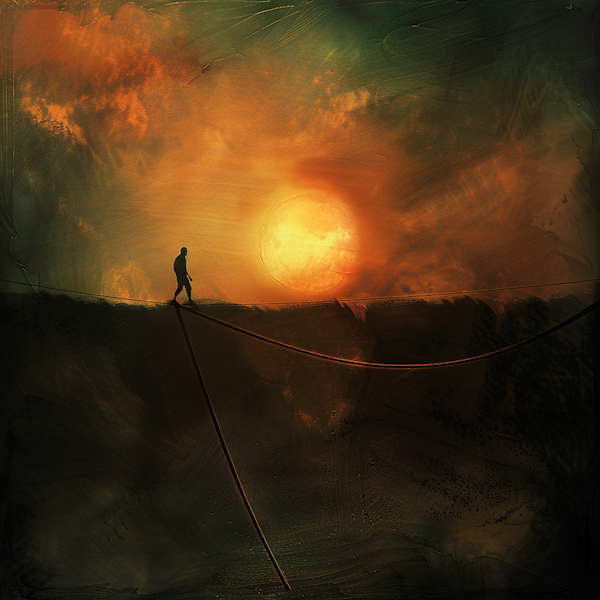
Ambiguous grief is a journey through a landscape shrouded in fog, where the usual signposts of loss and recovery are obscured. Unlike the clear-cut sorrow of losing a loved one to death, ambiguous grief is the heartache of loss without closure. Imagine grappling with a loved one’s disappearance, living with someone lost in the depths of dementia, or the aching void left by a relationship that abruptly ends without explanation. It’s a psychological tightrope, balancing between presence and absence, where the loved one is neither fully here nor completely gone.

This type of grief plays tricks on the heart and mind. It manifests in a whirlwind of emotions – anger, confusion, depression, and a relentless yearning for answers. The unique pain of ambiguous grief lies in its lack of societal recognition; there are no rituals for the ‘not quite gone,’ no condolences for the ‘half lost.’ It’s a silent struggle, often borne alone.

But, in this murkiness, there is also a profound lesson in resilience. Coping with ambiguous grief requires a redefinition of hope and acceptance. It’s about finding support in unexpected places, be it through counseling, support groups, or shared stories. It’s about adjusting the lens through which we view loss and reassembling the pieces of a shattered reality into something new and meaningful.

Ambiguous grief, in all its complexity, speaks to a truth we often forget: that life, love, and loss are rarely black and white. It challenges us to navigate shades of gray, to find peace amidst the unresolved, and to embrace the strength that comes from weathering the unknown. In a world that craves certainty, ambiguous grief teaches us the power of living with uncertainty and the grace of letting go, even when we can’t quite say goodbye.

Before I bid farewell to 2023, I’m setting the stage for a transformative journey. Beginning tomorrow, I embark on a 21-Day Journaling Inner Adventure. It’s more than a resolution; it’s a commitment to self-exploration and growth. Join me on this journey to unlock new perspectives and embrace the power of reflection. Let’s turn the page together!


In a world brimming with negativity—from the driver who rudely cuts me off to the endless tirades on social media and those who thrive on drama—finding calm in the storm is an art form, a skill in the quest to protect our inner peace. My journey is about mastering this art, about not allowing the darkness of others to dim my light. It’s about recognizing the onset of anger and stopping it in its tracks. Join me as I explore the transformative power of setting boundaries, the art of disengagement, the practice of mindfulness, the importance of protecting my energy and detaching with love. Learn how these strategies can fortify your peace against the assault of negativity. Because in the end, staying zen amidst chaos is not just a choice but a lifestyle, a continuous practice that strengthens with each challenge faced.

My goal is to preserve my serenity and not allow others’ negativity to poison my day. I want to stop anger before it even has a chance to take root.

Being zen in the face of negativity is important to me, and it begins with self-awareness. How do these situations make me feel? What can I control in these situations? Once I understand my reactions and limits, I can start to safeguard my inner peace.

Here are a few strategies I’ve started implementing:

  • The Power of Boundaries: Clear, strong boundaries are my best defense against troublesome people. I decide what behaviors I will and will not tolerate and communicate those limits firmly.
  • Choose Disengagement: Trying to reason with toxicity often backfires. The wise choice is to not engage – a simple “I’m not comfortable with this conversation” can work wonders.
  • Practice Mindfulness: I pay attention to my reactions in the moment – is my heart racing, is my jaw tensing? Deep breathing and other mindfulness techniques can help diffuse these physical signs of stress.
  • Protect My Energy: I’m often intuitive about people who drain me. I’m aware of that emotional exhaustion – it’s my internal signal to limit time and exposure to that individual.
  • Detach with Love: Sometimes, the kindest thing I can do for myself and those around me is to step back emotionally. Detaching with love doesn’t mean I don’t care, but rather that I recognize I’m not responsible for fixing others’ problems or saving them from their bad choices. It allows me to maintain compassion without becoming engulfed in the negativity.

Negative people have the power to throw me off balance, but I don’t have to let them. By cultivating inner peace, setting strong boundaries, and prioritizing my well-being, I can protect myself. Staying zen, as much as possible, is a skill that keeps improving with practice – just like any other. The more I do it, the stronger I become in my resolve to shield myself from chaos.


Imagine a place where each brushstroke and color splash is a step towards a brighter future for kids. That’s the essence of the Aloha for Lahaina Art Auction. With a collection of stunning artwork that’s as vibrant as the sunsets of Maui, this isn’t just an auction – it’s a celebration of community and giving. Local talent, alongside the youthful creativity of Lahainaluna High School students, has poured their best work into this event, all to support Lahaina’s youngest dreamers. Join us, where your love for art transforms into opportunities for our children.

One of the artworks you can bid on is my own piece, “Serenade in Blue.” It’s a painting of a mysterious lady with a background that’s inspired by the sea and landscapes of Lahaina. What’s really cool is that when you win a painting, you also get a special digital version called an NFT. This means you’re the only person who owns this exact painting, both in the real world and online. And this won’t change – no more copies will be made.

Every penny from this auction will go to the Public Schools of Hawaii Foundation, which means you’re helping Lahaina’s kids every time you place a bid.

Remember, the online auction finishes up on November 30th at 5:00 pm. While these bids don’t count for a tax deduction, they do get you a great piece of art and help out a good cause.

But that’s not all – come to our LIVE auction on December 2nd at Island Art Galleries at the Moana Surfrider Hotel. If you can’t be there in person, no worries, you can join in online too. Make sure you sign up here to be part of it.

If you’re curious about how all this got started, there’s a story behind the Aloha for Lahaina Art Auction you can read about here.

As you check out the art  think about how each one tells a little story about Lahaina and how each bid helps the kids here have a better future. Let’s come together and make this happen. #AlohaForLahaina #ArtAuction #SupportHawaiiEducation

After 17 incredible years as “momblogger”, the time has come for a shift. But, rest assured, while I’ll no longer be using that moniker, the essence of who I am and the brand I’ve built will remain protected and untouched on social networks. Evolution is a natural part of growth, and my evolution has brought me to new horizons: a columnist of The Manila Times and diving into the strange new world of Artificial Intelligence as  a generative artist.

I will just be Noemi Lardizabal-Dado or Noemi Dado but I won’t delete “momblogger” in social networks for reputation management.

So let me make it clear. My journey as a mom blogger was never about projecting an image of the perfect mother. Motherhood, with its challenges and rewards, has been a roller coaster.

On being a perfectly imperfect mother.

As I reflect on my journey, I embrace my perfectly imperfect role as a mother. Sure, I have made mistakes I wish I could undo. Without a mother to guide me and being raised by strict parents who didn’t know any better, I made a lot of mistakes but I loved my children in various ways. True, I showed more affection to one child than the other but it didn’t diminish the love I have for each one of them.

I choose to own my narrative, acknowledging my flaws, and cherishing my successes. Because in the grand story of motherhood, it’s not about being perfect, but about being present, loving fiercely, and learning constantly. Before I became a mom blogger in 2006, I made a conscious decision to change as a person, to be a better person so I could be a better mother. I learned about self-love which I often wrote about here in my blog. I wrote about nurturing my inner child because I never had a loving mother. I reached a point where I stopped blaming my parents for my life’s direction. The book on The Purpose-driven Life: What on Earth Am I Here For? by Rick Warren inspired me to move beyond the pain of losing a son and get out of my misery.

I have changed.

I am different . Things have changed.

I refuse to be defined by my past mistakes. Do you believe that someone who has caused you so much pain deserves a second chance? I have written about this. I had to give myself a second chance. A second chance to be a more loving wife and mother.

I know my value as a parent and I can list the things that I did right as a parent which outnumber more than the bad things.

To all the mothers out there, remember that our imperfections make our stories unique and powerful. We are perfectly imperfect, and that’s more than enough.


On being a blogger

This blog will always be called “Touched by an Angel” in memory of my son. I will continue to write here probably even showcasing my generative artwork .

Being a blogger was another transformative journey. It started with my grief journey, then sharing parenting stories and transitioned into advocacy. Championing underrepresented stories and causes dear to me became my mission. And today, I find joy in being a coffee producer and exploring my creative side as a generative artist, even receiving  an artist grant of my Coffee Artwork.

As I embrace this new chapter, I leave a message for all mothers: our flaws, experiences, and stories are what make us beautifully unique. Let’s own every part of our journey, for it makes us who we are: perfectly imperfect and more than enough.

The house creaked with a silence I hadn’t known before. It was not the peaceful kind—this silence rattled around empty bedrooms and echoed down hallways where laughter used to bounce. Mother’s Day is a cruel irony when you’re an empty nester.

Coffee turned bitter in my mouth, and the mug felt foreign in my hand. For years, different mugs get filled with hurried sips between diaper changes and school runs. Now, the only rush was the relentless clock ticking, counting the hours until I could pretend that sleep might drown out the hollowness inside.

They warned me, those well-meaning women. “Enjoy it; it goes so fast,” they’d say with wistful smiles. I’d nod, impatient then. If only I’d known “fast” meant a blink, a blur, and suddenly those chubby cheeks and sticky fingers were replaced with hastily packed suitcases and a rearview mirror filled with a life heading away from mine.

So many regrets. There were sharp pangs for the mistakes I made: unnecessary fear over a child that might die and not being demonstrative of my love for this child. But the dull ache was worse—the knowledge that even if I’d been perfect, this day would have still come. Children are arrows shot out into the world, and we’re left holding the bow.

The photo album lay open on the table, faces accusing me. There I was, younger, thinner, but with an edge in my eyes. Was I too critical, too quick to offer correction rather than just presence? Was I too detached? Distant? Did they hear “I’m disappointed” instead of “I love you” whispered beneath my frustration?

Tears splashed onto the page, blurring the images. No amount of wishing could rewrite the past. Motherhood isn’t a fairy tale with guaranteed happy endings; it’s a messy, glorious battle fought on uncertain ground. We all did the best we could with what we knew then.

A Christmas card my daughter wrote 20 years ago peeks out from my memory box. Inside,  this is an excerpt said: ” You’ve done a wonderful job and I appreciate it very much.

I see you do so many things for us, and sometimes I wonder if you do anything for yourself. It’s okay for you to take care of us, but I think you need to take more care of yourself. I guess I’m a bit worried about what you will do with your life after M and I leave the nest. I think it would be nice for you to go out once in a while, relax and just have fun and not attend to family duties. Take a break and be yourself.”.

I surely did. I became a social mom, made a name online and now as a columnist.

Today, my daughters are chasing their own dreams out there in the wide world. That’s all I ever truly wanted for them. My heart, cracked and weathered, began to stitch itself back together with a love less frantic but steadfast.

I wouldn’t waste this silence on beating myself up.  Instead, I’d brew another cup of coffee and then say a little prayer. I’d find an old book, finish my quilt project I started in 1995, and venture out of this too-quiet house. There’s a different rhythm to this part of life; it was time to learn the steps. I may not be a perfect parent, but I did so many things right. To my fellow mothers, remember, imperfections are part of what make our stories beautiful. We are perfectly imperfect, and that’s enough.