“We cannot always build the future for our youth, but we can build our youth for the future” Franklin D. Roosevelt

international youth dayHappy International Youth Day. The 2013 theme is “Youth Migration: Moving Development Forward .”

My daughter is one of the many young people who make up a significant share of the global number of international migrants. With easy access to opportunities that are open online, it is inevitable that one of them chose to study and work in a foreign land. While I am aware that opportunities may be invaluable, I worry about her safety. Young migrants face risks that may lead to unfavorable situations including discrimination and exploitation. Nothing is lost when our children leave. When they return home, these young migrants may apply their skills and knowledge to enhance development in their respective countries.

“The 2013 observance of International Youth Day will raise awareness of the opportunities and risks associated with youth migration, share knowledge and information stemming from recent research and analysis on this topic, and engage young people in discussions on their migration experiences.”

UN Secretary-General Ban Ki-moon say it is ” important to emphasize the positive contribution young migrants make to societies of origin, transit and destination – economically and by enriching the social and cultural fabric. Most work hard to earn a living and improve their circumstances. The remittances they send to support families in their home countries are a major contributor to economies worldwide.” The 2013 World Youth Report (WYR) on Youth Migration and Development will be launched today. The Report will offer a multidimensional perspective of the life experiences of youth migrants, as well as some insights on the role of youth participation in migration-development policymaking and practice.

IntYouthDay2013

The call by the UN Secretary General Ban Ki-moon is that stakeholders like the tertiary education sector should do their bit to promote the rights of all young migrants and to maximize the development potential of youth migration.

The youth should be be aware about their rights while academic institutions should maximize the development potential of youth migration.

““Education will need to play a significant role in finding the answers.” How we educate our communities “to participate effectively in the economies of the 21st century and at the same time educate an increasingly diverse society to feel some kind of cultural identity will surely be a hallmark of educational performance”.

Parents can start in their own homes.

One of your children may one day go abroad to study or work. It is important to impart resiliency , the ability to cope and adapt to change. Resiliency is the number one skill they need to learn. Being resilient allows children and youth to overcome difficulties in their lives. What can we do to help prepare our children for the road ahead? I wrote more about it Resiliency is a no. 1 Life skill where I talk about powerful thinking tools to equip them to face adversity:

1.Tell them there is always a choice
2. Teach gratitude
3. Teach them to master a skill

Parents play a significant role in the development of their children. The hand that rocks the cradle may not rule the world, but it certainly makes it a better place, at least for our children. They will be our future leaders one day.

shopping-at-sephora

Oprah Winfrey says she recently became a victim of racism “when a shop assistant in Switzerland refused to show her a £24,477 handbag saying it would be “too expensive” for her.”

When Winfrey insisted again, the woman replied: “No, no you don’t want to see that one, you want to see this one because that one will cost too much. You will not be able to afford that.”

One can only feel like a victim when you allow such to happen. Perhaps Oprah felt she was victimized. Whether real or imagined. she is entitled to her feelings of disappointment. The thing is that as a shopper, it is just darn annoying when shop assistants refuse to show you an item you are interested to buy or consider. It has happened to me once in Hongkong. I truly wanted to buy jewelry because I was told it is more affordable in Hongkong. Unfortunately, this shop owner didn’t want to bring it out of the glass case. She just wanted me to examine it from a distance. My first thought was “does she think I will steal it?” No, I didn’t think so because she bolted the door. Then I thought , perhaps she thinks I just want to look and not buy. It is a risk that shops need to take. I could have been a sale but her snobby attitude was just a turn-off. I left. She was just glad to show me the door. What a snob.

What is the use of putting an item on display? If shop owners don’t want it to be touched, then just hide it or put a sign “For display only. Not to be handled.” . Shops should have brand new stock in the inventory since potential customers will want to hold or feel the item.

Too bad, the shop may have a lost a sale. “Wouldn’t it be nice if the only thing salespeople focused on in stores is providing good service and the green of your money?”
Lesson learned.

Perhaps, shop owners should re-think their snobbish or “(insert here)” attitude . They can learn a thing or two from Robert Scoble.

“In Silicon Valley I learned a different lesson: always treat people in t-shirts, worn jeans, and flip flops like billionaires. To many of my competitors those people looked poor and not worth taking the time to deal with.

“When I worked at a consumer electronics store in the 1980s that’s just what I did and time after time I won sales that my competitors lost because they assumed those people were poor. I remember one guy who parked his supercar around the corner when he first came in just to see if he’d get good service without anyone knowing he had big bucks (I later got to drive that car, after winning his confidence, which was a big thrill).

“I don’t understand people who work retail who don’t want to show someone something. What harm is there in letting someone poor touch a $40,000 handbag anyway? Even if they were poor, you are helping them dream and they’ll remember you if they ever are rich.

“Plus, everyone knows someone poor, even the hyper rich. Maybe they influence someone who has the money.

“Racist or not, it’s just poor business to assume someone can’t afford what you are showing.

“I guess that’s why I keep pushing Rackspace Hosting to give free cloud computing to startup entrepreneurs as part of our startup program at http://www.rackspacestartups.com/ . Yeah, many of them won’t be able to afford a lot, but you never know who will start the next YouTube (which was hosted on Rackspace before it sold to Google).”

A child will always remember their yaya

Children will always remember with fondness their caregiver as much as they remember the love and warmth of their parents. One of my daughters told me they still remember their yaya (nanny) . Their yaya also remembers them especially during holidays. They still visit us at home and even bring gifts to my now-adult children. I am glad their yayas are financially independent. One even has her own restaurant with some dishes learnt from her more than 10 years with us. Though the restaurant is not that fancy, it gives her an income that is more than a maid’s salary. I recall also the yaya of my beloved Luijoe. When she left our household, she would call every year to greet my little boy. Then in July 13, 2000, she called once again only to her the devastating news that our Luijoe was gone. She wept.

There is no denial that there is a love that exists between the yaya and their ward. It is also one reason, I never had domestic helper issues because I recognize that bond. They stayed long enough to watch them grow or they made sure that they left a kapalit in case they had to leave.
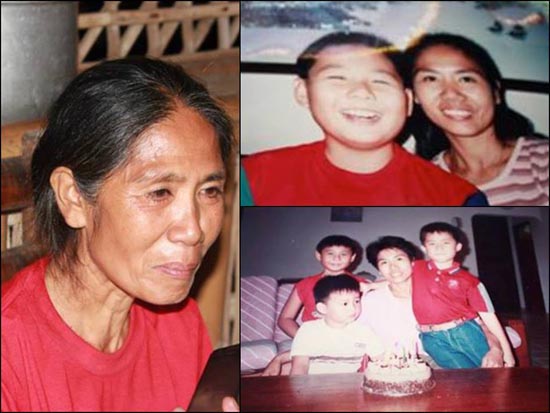
auntie terry of Ilo Ilo

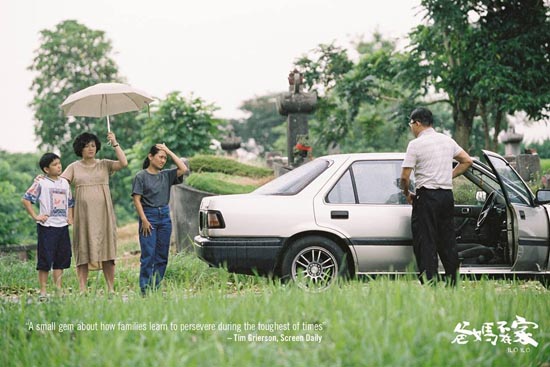
Ilo Ilo the Movie inspired by the real Auntie Terry

It is no wonder that Singaporean director Anthony Chen’s ILO ILO (which won the Caméra d’Or at this year’s Cannes Film Festival ) based his story from the domestic helper of his childhood days whom he and his two younger brothers called Auntie Terry. She worked with the Chen family for eight years from 1989 until the Asian financial crisis. The movie “Ilo Ilo,” “explores the lives of Singapore’s workaholic, ambitious middle classes and the domestic help on which they depend”.

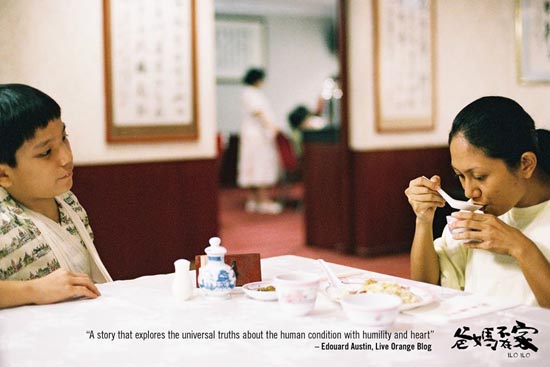
Set in Singapore, ILO ILO chronicles the relationship between a family of three and their newly arrived Filipino maid, Teresa, who has come like many other Filipino women in search of a better life.

The entire family needs to adapt to the presence of this stranger, which further threatens their already strained relationship. Still, Teresa and Jiale, the young and troublesome boy she cares for, soon form a bond. Their unique connection continues to develop and soon she becomes an unspoken part of the family.

But this is 1997 and the Asian Financial Crisis is starting to be felt in all the region…
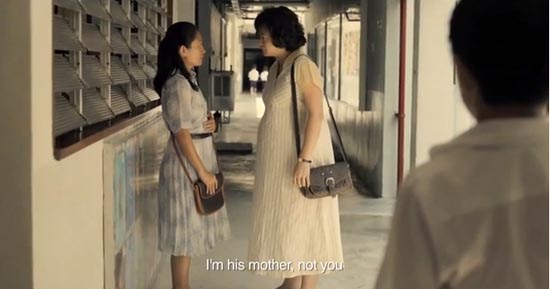
ilo ilo the movie 1

There is a poignant scene where the mother puts Auntie Terry in her place. “I am his mother, not you”. Of course, the child will always feel close to their nanny. It is natural mothers feel that tinge of jealousy when their ward gets close to the nanny. I did too but I would rather that my yayas love my children like a mother would do than be indifferent. I brush those pangs of jealousy and make sure that I have my own mommy time with my children.
ilo ilo the movie

I found it touching that Anthony Chen still remembers their Auntie Terry. He soon searched for the real Auntie Terry known as Teresita Sojonia. “The successful search for Auntie Terry” did not take long and soon a radio reporter went to visit her.

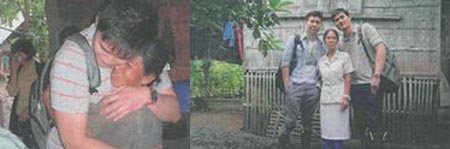
After 16 years of separation, Anthony and his youngest brother Christopher visited the village of San Miguel in Iloilo Province on July 23 to be reunited with their Auntie Terry.
reunion with auntie terry

Auntie Terry raised them well too

It was an emotional meeting for Anthony and Christopher as they hugged their Auntie Terry. Who wouldn’t be touched by this scene? As I read the account of their reunion, in the Ilo Ilo Facebook page, I could not help but tear.

Netizens who read the account were just as emotional and touched by the brothers’ visit. Lovee Gomez thanked them ” for loving Auntie Terry as a family member. May God bless you with more success in life because of your loving hearts!” .

The plight of the OFWs
ofw in singapore

Charles J Tan felt sad that ” they gave their years to raise our children but end up giving up a future of their own. this does not make sense. there has to be a better way to make it sustainable for domestic helpers who come from the Philippines and Indonesia. ” Even Luke Matthew teared ” realizing the sad fate of our OFW working hard to provide a bright future to their family at the expense of losing their own”.

Estilofil Abagatnan says it so well . She opines that “there are so many auntie Terry in our country, work so hard in a foreign land, no family and bundles of friends, only faith. Faith that their hard work will bring comfort and success for the family back home,its their inspiration, that’s their priority, and they forget their own self. But there are few who succeed in the end of the day. Mostly are those whose family value everything, and set the same goal to help each other. Teresita Sajonia sowed seeds of love to her family and the Chen. So sad that her harvest from her own land was not enough to support her for 16 yrs. but her love to the Chen family give her value that better than gold. as she was remembered and never forgotten.
Blessed are those who give love in return.”

Ilo Ilo movie

There is a story behind the movie which brings us to carefully study the plight of Overseas Filipino Workers (OFWs) when they return home to the Philippines. There is a story of love and devotion. Distance may have separated them but the love of their caregiver will always remain in their heart. Hopefully, the movie will open the eyes of the OFWs to save enough for their retirement and for the government to provide initiatives for the OFWs to invest their hard-earned money.

The movie has such a lovely and touching theme. I can hardly wait for the movie to be shown in the Philippines. Meantime, watch the Ilo Ilo trailer

Here is the complete story from Facebook page of Ilo Ilo the movie, Lianhe Zaobao , the Chinese-language newspaper of Singapore, covered the story and here is the translation.

Singaporean director Anthony Chen’s ILO ILO, which won the Caméra d’Or at this year’s Cannes Film Festival, is inspired by the domestic helper from his childhood whom he and his two younger brothers called Auntie Terry. After the film won the Caméra d’Or, Ilonggas (Iloilo locals) began a search for the real Auntie Terry, and it did not take long for them to find her. After 16 years of separation, Anthony and his youngest brother Christopher recently visited the village of San Miguel in Iloilo Province to be reunited with her.

Sometimes, even after years of separation, there are those who are destined to meet again. On Sunday 23rd July, in a small hut in the village of San Miguel in Iloilo Province, Anthony and Christopher were reunited with the real Auntie Terry after a 16-year separation. Words were unnecessary as they embraced. It was an emotional moment for all who were present.

The woman whom the Chen boys called ““Auntie Terry” is Teresita D. Sajonia. She’s only 56, but looks a lot older. Her clothes are ragged, her hair greying and her face is full wrinkles. What happened to her in the last 16 years? Why was she living in poverty, in a run-down hut filled with the foul odour of animal excrement? Why was she afraid to talk, when she used to speak fluent English? Anthony was looking for answers to those questions when Auntie Terry was found, because the Auntie Terry from his memory was a cultured, young, and beautiful lady who loved to dress up and listen to cassette tapes of ““Evita” and ““Miss Saigon”.

What happened to Auntie Terry may very well be a very common example of domestic helpers from the Philippines or Indonesia – They work hard to send their money home, and neglect to look after their own future. Teresita’s older brother has a house nearby, with electricity and television, but her own house is probably the most dilapidated in the village. One might as well call it a chicken shack.

Her house is roughly the size of a regular HDB room, but built with wooden planks and bamboo, with no proper walls. There is no door; the floor is muddy, and the gaps between the bamboo are filled with spider webs. The kitchen shares the same space as the living room, and there stands only a wooden table and a bench. There is no fridge, cabinet or gas. Her bedroom is raised on a small platform above the floor, and the bed is also built with wood and bamboo. There is no mattress, only a ragged pillow, some blankets and a mosquito net. The space between the house and the floor is used to raise chickens, which explains the foul odour permeating the house.

The entire house is lit with only a small light bulb. The TV has been broken for three years but she cannot afford a new one, and an old radio is the only electronic appliance in the house. The ““toilet” is a short distance away, and she must walk through an unsheltered, muddy path to reach. There is no modern flushing system or electricity. The drinking water she consumes every day is not filtered pipe water, but well water from the ground.

16 years ago, at age 40, Teresita decided to return home due to health issues. Initially she stayed with her sister in the city. But the house became too crowded and Teresita decided to return to the village. During the ten years she worked in Singapore, she sent home majority of her salary, and only had 80,000 pesos (roughly SGD2300) set aside for herself. After building a cabin and buying some livestock, she has little money left. She wakes up at six in the morning every day to work. But as she has little food to eat and her rice bucket is often empty, she has no extra money to use to take care of her crops. ““Sometimes I only have two meals a day, only bread,” she says.

She takes her chickens to the market to sell, but she’s really bartering her chickens for fish and this is the only way she gets to eat fish. She has no refrigerator so fish cannot be kept for too long. She refers to two old rattan baskets hanging on the ceiling as her fridge. The baskets are actually used to store the only food she has, otherwise the chickens and ducks will eat them. The land she lives on was left to her by her parents, but the land given to her elder brother is much better. But she says she has never regretted helping her family with the money she earned by being a maid.

Living in such conditions, instead of making a life in the city reflects Teresita’s helplessness and lack of confidence. She had stopped speaking English for a long time, and thus was very shy and reluctant to speak to visitors in English. She tells us she is in poor health, and she’s not sure what she can do in the city. She planned to be a nurse-midwife before she went to Singapore, but did not end up taking the exam. Even after she returned home, she could not fulfill her dream as the nephews whose studies she sponsored offered her no financial help. Living in poverty, she has not seen a doctor in 16 years, and turned to traditional herbal treatments whenever she fell sick. On this trip, the Chen brothers gave her some money, as well as vitamin supplements, to help with her health, if only for a small part.

Teresita and her partner Mr. Jhunie have suffered from myopia and long-sightedness for many years, but they couldn’t afford glasses. When the Chens brought them to The SM Store – the biggest shopping centre in Iloilo city – she wished for a pair of glasses. That was also the first time they have visited the shopping centre. Other than glasses, the Chens also bought them some clothes, t-shirts, jeans and shoes. When introducing her partner Mr. Jhunie, Teresita told us he was her neighbour and she got to know him after she returned from Singapore. Mr. Jhunie’s wife left him a long time ago, but he could never afford to get a divorce.

Teresita did not start working for the Chens through an agency. She was working for a family nearby for two years. Her work permit was expiring soon and she heard that the Chens were looking for a domestic helper to take care of the three boys (Anthony’s mother had just delivered the youngest son but planned to return to work after a month.) Accompanied by a friend, Teresita knocked on the door of the Chens for an interview. After hearing favourable comments from their neighbours, the Chens hired her. “It was really fate that brought her to our family,” says Anthony.

After working for the Chens for eight years, Teresita returned to Iloilo, and the Chens have not hired a domestic helper ever since. After she returned to her village, Teresita missed the three boys very much. She didn’t marry and has no children. Up till today, she still carries photos of the three boys with her, as if they were her own children. She wrote to the Chens once, but the family moved to a different address and they lost contact.

Anthony is the eldest in the family. The second, Justin, could not take time from work for the visit. The youngest, Christopher, was closest with Teresita. “We were sharing a bunk bed, and every night she would pat me on my back until I fell sleep,” he recalls.

Christopher recently graduated from the University of British Columbia and will be returning to Vancouver for work in August. When he knew that Aunty Terry had been found, he insisted on coming with Anthony to visit her. After this visit, he is very concerned about her living conditions. When she gets older, it will be even harder. “There are many domestic helpers working in Singapore. We thought when they return home, they’ll be able to afford a big house, or run a small business. But the truth is that’s not always the case,” says Anthony.

Mr. Charles L. Lim, head of Selrahco Management, was inspired to find the real Auntie Terry after hearing about ILO ILO. With his help, including getting sponsorship from an airline company, both Aunty Terry and Mr. Jhunie will be attending the Singapore premiere of ILO ILO. This will be the first time she is visiting a foreign country after 16 years, and to watch a movie in a cinema.

Photos from the Ilo Ilo facebook page.

Don’t walk behind me; I may not lead. Don’t walk in front of me; I may not follow. Just walk beside me and be my friend.
– Albert Camus

friendships

Of course you know one of my advocacy is The Compassionate Friends (TCF). Woe me , I should really be more careful when I promote TCF. Maybe in my eagerness to reach out, I readily gave out my cellphone number without thinking of the repercussions. Perhaps the word “The Compassionate Friends” caught the fancy of lonely hearts. I can’t help but shake my head over this text message

Gud pm p0, gus2 q0 p0 sna mging friend, ng PASIONTE FRIEND…

meaning “Good afternoon. I would like to be a friend of the PASSIONATE FRIEND”

I receive countless text messages screaming “Can I be your friend?” I am not talking of a few text messages. I am talking of hundreds like these. Oh dear, it goes to show how friendship is important.

In high school, I overlooked the value of friendship. Maybe because I was too shy. I let my high school insecurities get into me to the point I avoided the “popular girls”. I know better now.

I value my friendships. Old and new friends.

The adult friendships can be a good place for us to learn to have fun and appreciate how much fun we can have with a friend. Often our choice of friends will reflect the issues we’re working on. My friends these days are healthy individuals who share a common bond with me and vice-versa . Giving and receiving support help both of us grow.

Some of my friendships go through cycles throughout the years.

Some friendships trail off when one friend outgrows us. There are trials and tests in friendships but some friendships will last a lifetime.

Today, I will reach out to a friend. I will let myself enjoy the comfort, joys and enduring quality of my friendships.

paranoid “Are you paranoid , mom?”.

One of my daughters noticed the red and green colored fire extinguishers I placed in every room of the house. I ignored her question as I pointed to the fire exits in their respective bedrooms and gave a quick lecture on how to use the fire extinguishers.

One daughter asked, “if we’re gonna die, we’re gonna die”

I merely nodded.

One effect of losing a child , particularly if death is sudden and unexpected , is that we become newly aware of the fragility of life. If this tragedy can befall us, what next? We can become fearful, almost paranoid.

I became “slightly” paranoid after Luijoe’s death but I just kept that to myself in the early days of my grief journey.

When my girls used to live with me, I could not bear it if the girls didn’t send me text messages on their whereabouts. “Text me where you are. Call me if you’re on the way. Make sure the driver was not drinking .” are text messages that constantly barrage their cellphones. Thank goodness, these girls humor me all the time by reassuring me they are fine.

Yet I believe that I am not overdoing it as I still allow them to go out and have fun.

So to answer that question. Am I paranoid?

I really don’t want to give an impression to my daughters that I am afflicted with paranoia. But lately, TV reports on fire accidents have been bothering me. A few months ago, a bereaved mother advised me to install smoke alarms on the ceilings. She lost her daughter through a fire accident. It happens even to the best homes. Remember Gina de Venecia’s daughter who got trapped in her bedroom because of heavy steel grills in her windows? or those 3 family members that died of suffocation in their Corinthian Gardens’ home? I couldn’t find smoke alarms in hardware stores or I just didn’t know where to find it. So the next logical step was a thorough electrical wiring inspection and fire prevention means like the fire extinguishers and fire exits.

The news about crime in major television shows are just alarming. All I can do is pray for the safety of everyone.

In answer to the question of my daughter. “I am just being careful, dear.”

And that ended the discussion.

Image via najlaspeaks.wordpress.com

It takes two to make a relationship work. It is easy to blame the other partner if something fails in a relationship. I used to blame my husband for every little thing without even checking if I too had my faults. When I took away the focus from my husband and turned to myself, wonderful things happened to me, my family and my life, in general.

love yourself first

What did I do?

Loving myself unconditionally!

It means loving myself into health and a good life of my own. It meant loving myself into all that I have always wanted. Yes, love myself into peace, happiness, success, joy and contentment.

So how do I love myself?

It wasn’t easy at first. I had to force myself to and even “faked” it. By “acting as if“. To practice the positive, I act as if. It’s a positive form of pretending. It’s a useful tool to use to get ourselves unstuck.

Here is what I did.

1. Embrace and love all of myself including past, present and future. I forgave myself and as often as necessary, I talk to myself and list down my good points.

2. If negative thoughts entered my mind, I get them out in the open quickly and replace those beliefs with positive and uplifting ones.

3. I gently pat myself when necessary. I discipline myself and even ask for help when needed.

4. I give treats to myself. I don’t allow myself to work like a carabao, pushing and driving myself to stressful levels. I learned to be good to myself.

5. I stopped explaining and justifying myself. When I make a mistake, I let it go. I learn, I grow and learn some more and despite it all, I love myself.

I constantly work at loving myself. One day, I looked up at myself in the mirror and loved what I saw. I saw a new and lovely me. Loving myself had become habitual.

Love-yourself-first

Loving ourselves sounds like an alien concept and even foolish at times. Some may accuse us of being selfish. But do we have to believe them? People who love themselves are truly able to love others and let others love them. People who love themselves and hold themselves in high esteem are those who give the most, contribute the most and love the most.

Self-love will take hold and become a guiding force in our life.

Remember, you are lovable and capable of giving and receiving love.

I heard a voice so close to my ears “Are you tweeting??. I turn around to my husband and smiled, “Yes” then promptly closed my macbook.

What my husband really means is “I’m lonely here, give me some loving hugs”. You know, sometimes I can get really engrossed with my online activities that my husband has to remind me with these subtle hints. Being together for the past 35 years, I developed a fifth sense- the ability to be sensitive to his feelings and, to read his mind.

emotions.jpg
It took a lot of years for me to finally understand his “language”. My husband is the type to “beat around the bush” before getting to the crux of the matter. For example,

If Butch wants me to do the grocery, he doesn’t request me to do it. He asks “I didn’t finish the grocery today. Do you think you have time to do the grocery tomorrow?” which I know really means “Do it for me, please”.

If that were me, I’d be more direct. I’d actually request it: “I don’t have time to do the grocery, can you do it for me?”

My directness brought me a lot of marital rifts in the past maybe because I did not say it gently. With time, I learned to use his indirect language when I know it calls for “beating around the bush”. Perhaps his beating around the bush is his gentle truth. It really drives me crazy to beat around the bush but that’s how he works.

I grew up with a family that was very open with our communication. If we didn’t like something, we said what was on our mind. However, direct statements can hurt. I learned a technique that does not make my family members defensive whenever I utter an opinion. I start the sentence with “I feel _______” statements. With varied emotions, I can say…

I feel worried if you go home late at night, Lauren which is far better than “You should be home by midnight or else….you’re grounded”

I feel sad that you yelled at me” after an argument which works far better “You are such a loud-mouth! Shut up”.

Feelings are never wrong because you own it. It is okay to have and feel our feelings—all of them. Maybe in the past I shut down the emotional part of myself to survive certain situations. Sometimes we shut down the part of us that feels anger, sadness, fear, joy and love. Many of us lived in systems with people who refused to tolerate our emotions. In the past, I felt shamed or even reprimanded for expressing feelings, and these are by people who were taught to repress their own feelings.

Times have changed now. It is okay now for me to acknowledge and accept my emotions. I don’t allow emotions to control me and ruin my day, neither do I need to rigidly repress my feelings.

I feel safe around direct and honest people. They speak their minds and I know where I stand with them. Like I said, that was not the case in the early parts of my marriage as my husband beats around the bush in expressing his feelings. Indirect people, people who are afraid to say who they are, what they want and what they’re feeling is not a comfortable feeling. They will somehow act their truth even though they do not speak it. And it may catch everyone by surprise.

I do not need to be judgmental, tactless, blaming, or cruel when I speak my truths. I can say what we need to say. I can gently, but assertively, speak my mind.

Freedom is just a few words away.

Kids know best on what parents need to parent about. Running out of topic ideas, I went to my daughter’s room asking her for suggestions. Without hesitation she squealed ““bullying”. Oh, how she knows this topic so well. My heart goes out to my two girls who had to deal with the school bully. I teach my kids to be good girls but how to deal with a bully? I didn’t want them to be the bully nor wanted them to be bullied. I engaged in role playing where I pretended to be a bully and I taught the girls to be gently firm with their bully. Such tips included but were not limited to ignoring the bully and walking away, not showing anger nor hitting back. Along with these, I continued to develop their confidence by honing their skills in music and to open communication lines.

Role-playing was easier said than done because it needed the cooperation of school authorities. My daughter who was then in Grade 1 once wrote me a note that she felt terrible in class and if a street mouse had the same feelings. Now that she is an adult, she articulates these feelings. ““Think about it. You’re a little kid, and all you really want is to make friends with the kids you go to school with everyday. Then you find out that not only do your schoolmates reject your attempts at friendship – they also make fun of the most trivial things about you, like the way you speak. You start to wonder if maybe there’s something seriously wrong with you because nobody can seem to like you for the way you are. You start hating yourself and constantly doubting your abilities, and you find it difficult to open up to people and form deep friendships with anyone.”

stop bullying

What about the bully? Bullying is violence, and it often leads to more violent behavior as the bully grows up. My daughter reflects back on these unpleasant experiences. As a bully victim, her story doesn’t sound particularly traumatizing to an outsider. One doesn’t have to get beaten up in the playground to develop emotional scars that stay on for the rest of your child’s life – especially when the damage is psychological, which is what female bullying is about.

Knowing the bullying tactics that victimized my sweet and gentle daughter just broke my heart. During the nineties, talking with the teachers and guidance counselors were futile. All they could muster to say is ““your daughter has to learn to live with these bullies”. Moving schools was an option but where? Anti-bullying campaign in Philippine Schools was not yet in place in the mid-nineties. Today, schools are more enlightened to embark on anti-bullying programs to lessen the instances of bullying on campus by creating a supportive school community of students, teachers, and parents. Some of these schools are not cheap but it doesn’t mean parents are helpless. Home schooling is an option but it is not for everyone.

DepEd issued the Child Protection Policy guidelines May last year in partnership “with civil society groups, teachers’ groups, private and public school representatives, and international agencies. Bullies will receive a warning and reprimand for the first and second offense, respectively, and one0week suspension for the third offense.”

Schools should already implement a safe school program that includes fighting against bullying. Through the persistence of the parents, a comprehensive, school-wide framework was developed for the prevention of bullying or any form of discrimination or harassment can be done. My sister initiated one in her son’s school. She told me the goal of their program is ““to use interventions at the levels of the student, parents, and school to ensure that all concerned are given a consistent, coordinated, and strong message that bullying will not be tolerated and that it can be prevented if everyone works together.”

bullying2

Just like real-life situations, knowledge on parenting in a digital world is crucial for monitoring cyber-bullying. No one wants to see their children hurt and become helpless in the process. If parents do nothing, nothing will happen. The bullying won’t stop. ““What kind of lesson will be passed on to our children if their elders shrug off bullying as something totally normal?” That is the question that my daughter imparted to me. Our young kids need to know that we are speaking out for them when their voices are left unheard in school. It is time for parents to speak up and fight against bullying.

Whenever something bothers me, I keep reminding myself that we cannot control people’s actions, attitudes and even events. I label it as the Three P’s (People, Places and the Past). The only thing we can control is our attitude. But it isn’t that easy. One of the choices in recovery is choosing what we want to think and using our mental energy in a positive way.

Positive thinking can be extremely difficult in stressful situations. Positive thinking does not mean thinking in an unrealistic matter or reverting to denial. If I don’t like something, I respect my own opinion. If a problem hits me, I am honest about it. If something isn’t working out, I accept reality. I don’t have to dwell on the negative portions of my experience. So here I am affirming what is good in my life.

affirmation-tree-mindmap

One way to empower the good is through affirmation. They are simple positive statements we make to ourselves:

1. I am my own unique self – special, creative and wonderful.

2. My life is a joy filled with love, fun and friendship all I need do is stop all criticism, forgive, relax and be open.

3. I’m glad I am alive today.

4. I give out Love and it is returned to me multiplied.

5. Loving myself heals my life. I nourish my mind, body and soul

6. I have a wonderful husband and we are both happy and at peace.

7. I choose to make positive healthy choices for myself.

8. I choose love, joy and freedom, open my heart and allow wonderful things to flow into my life.

9. I attract only healthy relationships

10. I prosper wherever I turn and I know that I deserve prosperity of all kinds

So when you think the world is against you, just say this:

Today, I will empower the good in myself, others and life. I’m willing to release, or let go of, negative thought patterns and replace them with positive ones. I will choose what I want to affirm, and I will make it good.

What positive statement do you say about yourself everyday? Please share.

It is said that music soothes the soul.

Chances are you have sung a song to your little one whenever they feel bad or get sick. Perhaps as a child, you’ve been lulled to sleep in the arms of your parents . You will most likely remember faintly one endearing song your parents would always sing for you. I know my girls did. It’s every parent’s instinct, even for somebody who can’t carry a tune, to sing to their child as a form of therapy. But is there truth to music therapy?

music therapy 1

My daughter suffered asthma attacks almost every month. With visits to the emergency room every month, I had to do my share in making her calm and relaxed to ensure a faster recovery. I gave her ““Visualizations for Mind Calming” of which the objective of the exercise is to gain practice in visualizing while at the same time soothing the mind. Calm and peaceful scenes from nature were quite helpful in erasing worries and distractions. I often said it out in a soft voice to imagine walking in a park, or in the woods, sitting by the lake, a walk on a hill or mountain, countryside or any spot that I though had a particularly soothing quality. Together with this mind-calming techniques, I added baroque music (specifically in largo beat) to get into slowed down body mind/body rhythms and manageable breathing.

baroque music

There is a huge difference between baroque and classical music. The baroque music composers are from the likes of J.S. Bach A. Corelli, G.F. Handel, G. Telemann and A. Vivaldi in the 1600 – 1760. The classical music is from the time period 1730 – 1820 and right after the Baroque period.

Music did pave the way for my kids to be calm and relaxed. As reported in Ostrander and Schrader’s “Super Learning”, research discovered that the ideal state for learning is when the brain is in a relaxed, but aware state. And when they say relaxed, they do not mean asleep, but relaxed, focused and aware. No one is too young or too old to enjoy relaxing baroque music. You can imagine the healing power of music.

children in music therapy

According to the American Music Therapy Association, music therapy is an interpersonal process in which the therapist uses music and all of its facets-physical, emotional, mental, social, aesthetic, and spiritual-to help clients to improve or maintain their health.

Medical practitioners around the world talk about the healing qualities of music. Barbara Crowe (past president of the National Association for Music Therapy) says “Music therapy can make the difference between withdrawal and awareness, between isolation and interaction, between chronic pain and comfort — between demoralization and dignity.” Dr. Oliver Sacks reports that patients with neurological disorders who cannot talk or move are often able to sing, and sometimes even dance, to music. Its advocates say music therapy also can help ease the trauma of grieving, lessen depression and provide an outlet for people who are otherwise withdrawn.

himig ng kalinga

I was impressed that GlaxoSmithKline Philippines, Inc. (““GSK”) instituted the Himig ng Kalinga program which is supported by doctor-recommended Paracetamol (Calpol) in partnership with key hospitals in GMA and Luzon. ). The use of music therapy in hospitals will surely help pave the way for the holistic wellness of every Filipino child.

music therapy from calpol

Dr. Jocelyn Eusebio , a Development pediatrician explained that music therapy is used on individuals of all ages for a variety of conditions, which include: psychiatric disorders, medical problems, physical handicaps, sensory impairments, developmental disabilities, substance abuse, communication disorders, interpersonal problems, and aging. When soothing music occupies the mind, it somehow allows the patient to ‘escape’ into ‘his or her own world’, also facilitating relaxation for the patient.

music therapy in hospitals

The program aims to bring appropriate and familiar nursery rhyme songs to in-hospital pediatric patients that will be performed by the program volunteers. An original song written by well-known song composer, Jimmy Antiporda, entitled ““Gagaling Ka Rin” will also be taught to the patients and parents to further uplift the spirits of these hospitalized children.

music therapy from calpol

Music is always familiar to children as they usually hear these wonderful sounds from home and school. It is something children are all touched by. Happy memories are associated with their favorite tunes. Nobody wants to be in a hospital, and the patients try to make the best of the situation and heal as fast as they can.

Remember music therapy is not just for the sick child. It is always good to sing lullabies to lull them to sleep or simply to relax them after a hyperactive day. Singing nursery rhymes with your child will surely get them off to a flying start. What is even better is singing with actions and encouraging your child to dance along to the beat of the music.