Happy Chinese New Year. February 5, 2019 thru January 24, 2020 is the Year of the EARTH PIG. A lot of stalls are sprouting out in shopping malls selling all sorts of cute pig charms to celebrate the Lunar Chinese New Year. My husband, Butch’ Chinese Zodiac sign is the pig. Maybe he believes in pig charms and the symbolism it represents. Holding up a fake jade pig charm, he observes that the pig charm bore many piglets. The sales lady at the mall says “swerte yan sir” (That’s good luck). Butch bought this pig charm for $5.00 and told me that the green pig complements the color scheme of our new living room. Right! I teased him.

What do these lucky pig charms really mean?

Grandmaster Lin Yun says that the PIG is the most blessed of the animals of the Chinese zodiac. The horse draws a cart, the ox plows the fields, the goat provides milk, the rooster lets you know when morning has come, and the dog stands guard at night, but the pig is obligated to do nothing at all except sleep, eat and sleep some more. Haha, how lazy is that? The pig is happy go lucky, easy going, and eager to avoid conflict. Don’t you think people should adopt a more easy-go-lucky attitude to tolerate others and strive to live life free of conflict? Life is full of conflicts but trivial conflicts can be avoided.

Whether one is of Chinese descent or not, people need to be patient, and tolerate the idiosyncracies of others. What does tolerance mean exactly?

I realized the meaning of tolerance when I got married. It happened on the first night of our honeymoon. Oh my god, Butch hogged the bed with his legs sprawled all over the bed space. I tried the practice of tolerance when he’d mess up the room. I wasn’t all that tolerant. I was too obsessive with the orderliness of my physical space.

The practice of a healthy and loving tolerance of myself started when my grief journey hit rock bottom. The constant bickering with my family in so little matters forced me to be more open to new approaches. It started with myself. I set healthy boundaries and trusted myself to own my power with people.

I learned to

1. Tolerate my quirks, my ups and downs, my humanness, my struggling and awkward nature.
2. Tolerate my fears, mistakes, my need to occasionally feel superior and to sometimes feel ashamed.
3. Tolerate my instinctive desire to control and learn detachment with love.
4. Tolerate my tendency to get obsessive and forgetting to trust God.

There are some things I do not tolerate. I do not tolerate abusive behaviors or destructive behaviors towards others or myself. Often , I get the ire of abusive people when I exert my stand on their destructive behaviors. But that’s another story.

When I learned healthy and loving tolerance, I learned tolerance for others. I also learned that the humanness I tolerated is what makes myself and others beautiful.

We don’t need the lucky pig charm  to remind us of healthy tolerance to ourselves and others.

 Hopeline hotlines 02-804-HOPE (4673); 0917-558-HOPE (4673); or 2919 (toll-free number for Globe and TM subscribers). 

Did you know every 40 seconds, someone dies of suicide? The World Health Organization (WHO) states that close to 800 000 people died by suicide every year, which is one person every 40 seconds. We cannot avoid reading about suicide in our social media news feeds or private group chats. Let me point out the phrases “died of suicide” or “died by suicide” as neutral ways to explain the death. These phrases replace “committed suicide” or “completed suicide.” 

Social media use and depression

 Growing evidence showed that social media can influence pro-suicide behavior. The 2012 study on “Social Media and Suicide: A Public Health Perspective” (David D. Luxton, PhD, Jennifer D. June, BA, and Jonathan M. Fairall, BS) cited the role social media, might have in suicide-related behavior. The rise of pro-suicide, social media sites may pose a new risk to vulnerable people who might not have been exposed to these potential hazards. Media also plays an influence on suicidal behavior, and suicide methods used. Cyberbullying and cyber harassment are prevalent problems. An increase in publicized cases of suicide in 2011 involved social media. 

Another paper came out on “Increases in Depressive Symptoms, Suicide-Related Outcomes, and Suicide Rates Among U.S. Adolescents After 2010 and Links to Increased New Media Screen Time” (Jean M. Twenge, Thomas E. Joiner, Megan L. Rogers, Gabrielle N. Martin) in 2017. The study discovered that adolescents who devoted more time online such as social media were more likely to report mental health issues. Psychiatrist Dr Dinah Nadera says “that sense of lack of social connectedness is very, very prevalent…. They’re connected but they can’t seem to have a trusted person”.  Without experimental evidence, one is unclear that the rise in new media screen time causes the increase in mental health issues after 2011. Three earlier studies, however, provided evidence that “screen time in social media use, may cause depressed mood rather than vice versa, at least among adults.”  The research concludes that adolescent mental health issues rose since 2010, among females. New media screen time is both associated with mental health issues and increased over this time period.

The relationship between social media use and depression remains a controversial topic. A study in 2018 by San Francisco-based social innovation group called HopeLab did not find a correlation between use and self-reported depressive symptoms. Despite the lack of conclusive studies, I cannot stress enough that our digital well-being matters. It is best to disconnect when called for and create healthy habits for ourselves.

 WHO says suicides are preventable

There is hope. WHO believes suicide is preventable with timely, evidence-based and often low-cost interventions. We need a comprehensive multisectoral suicide prevention strategy for national responses to be effective. This is where Mental Health Law (RA No. 11036) comes in. The law provides affordable and accessible mental health services to Filipinos if implemented well.

Social networking sites for suicide prevention can facilitate social connections among peers with similar experiences. Know of legitimate sites to increase awareness of prevention programs, crisis help lines, and other support and educational resources. A Facebook page called “Anxiety and Depression Support Philippines” (ADSP) is a mental health support group run by volunteers. The page has closed Facebook group where people can vent their feelings, meet new people, ask questions without judgments. 

Natasha Goulbourn Foundation (http://www.ngf-hope.org) started Hopeline, a depression and suicide prevention hotline to help those suffering from depression. The numbers to call are ?02-804-4673 and ?0917-558-4673. Globe and TM subscribers may call the toll-free number 2919. 

10 years ago, I added a Suicide Prevention page (https://aboutmyrecovery.com/suicide-prevention/) in my blog to save a life. What if each one of us do their share in saving a life by educating ourselves and our community? Let us take advantage of current suicide news to educate people and/or ourselves about suicide and mental health instead of spreading hate and fueling stigma. Use social media for good.

 Suicide prevention is everybody’s business

ADSP warns about sharing any photos and videos that describes the suicide and self-harm related content. Why? It could trigger other mental health warriors. It could encourage copycat self-harming or suicide. None of us can fathom their pain so let’s stop judging people who suffer from depression. Stigma, surrounding mental disorders and suicide, means many people thinking of taking their own life or who have attempted suicide are not seeking help and not getting the help they need. By raising awareness and educating the public, we can SAVE lives. A person talking about how they feel reduces their distress; they also see other options and are much less likely to attempt to suicide. Talking the situation over with a caring person helps whether you’re in a crisis yourself, or worried about someone else who is.  You don’t have to wait until the deepest point of crisis or until you have a life-threatening problem before you seek help.  

 Hopeline hotlines 02-804-HOPE (4673); 0917-558-HOPE (4673); or 2919 (toll-free number for Globe and TM subscribers). The Department of Health manages the Hopeline. Support is out there. 

First published at Sunday Times and IT on January 19, 2019

Technology inside the classroom is not a new idea. Even though technology progresses, the message is relevant. I came in an era of filmstrip projectors, copy machines, tape recorders, cassette players and television sets. Then VCRs, CD players, DVD players and a myriad of other tools came along. These are forms of technology that have aided teachers and enhanced instruction in the past. Today, Virtual reality (VR) is the future of education. Students will enjoy VR-enabled textbooks and virtual classrooms soon.

The skepticism of VR on our kids is a concern. I dealt with the same apprehension when I first introduced my children to the internet in 1995. The decision to make technology a healthy and positive part of family life was to embrace it. I learned to educate myself about it and go hands-on with new devices, apps, social networks and services wherever accessible.

virtual reality classrooms

Image from commonsense.org. Some rights reserved.

A Common Sense research in 2018, titled “Virtual Reality 101: What You Need to Know About Kids and VR,” helps bring clarity by summing up the existing body of studies. The report was co-authored with researchers at Stanford University’s Virtual Human Interaction Lab. Virtual Reality 101 “explores the potential positive and negative effects of VR experiences on kids’ cognitive, social, and physical well-being and its potential to shape young people’s perspectives.” It pays to understand the risks and benefits of VR. Key findings of the paper show:

1. VR is likely to have powerful effects on children because it can provoke a response to virtual experiences similar to a response to actual experiences.

2. The long-term effects of children’s use of immersive VR on their still-developing brains and health are unknown, but most parents are concerned, and experts advocate moderation and supervision.

3. Only one in five US parents (21 percent) today report living in a household with VR, and the majority (65 percent) are not planning to purchase VR hardware. However, the interest levels of US children are high, while parent interest is mixed.

4. Characters in VR may be influential on young children, even more so than characters on TV or computers. This can be good or bad depending on the influence.

5. Students often feel more enthusiasm for learning while using VR, but they do not necessarily learn more through VR than through video or computer games.

6. VR can potentially be an effective tool for encouraging empathy among children, though most parents are skeptical.

7. When choosing VR content, parents should consider whether they would want their children to have the same experience in the real world.

virtual reality classrooms

Image via Commonsense.org.

VR is evolving and schools and households will embrace this technology in the coming years. It is critical for parents and educators to understand VR’s dynamic effects, as there are not enough studies on how this immersive medium affects a child’s developing brain. More than half of the parents surveyed in this report said they are at least “somewhat concerned” that their children will experience negative health effects while using VR. There is a need for caution with its usage by young children. VR manufacturers have been careful to recognize that the effects of VR on toddlers and the risks are unknown. Except for VR devices targeted toward child users, most companies suggest that children below 12 years old should not use them. The study recommends that adult participants use VR for only 20 minutes at a time without a break. When the lab studies young kids, they are in VR for five minutes or less at any one time to avoid simulator sickness.

As a parent confronted with the internet and personal computers in the mid-nineties, I prefer that my children read a book, or play volleyball than vegetate in front of the computer. Internet and computers were not available in the classrooms. But I thought the internet can have a place at home and I took the risk of exposing them to this technology before it got introduced in their classrooms. Though I don’t have young kids at home. I continue to immerse in new technologies even buying a standalone virtual reality headset to understand the risks and benefits to children. It can be safe, uplifting and a wonderful part of kids’ lives if spent wisely, together with other balanced and healthy daily activities.

You can download the full report “Virtual Reality 101: What You Need to Know About Kids and VR,” at Commonsensemedia.org. Common Sense is the leading independent nonprofit organization dedicated to helping kids thrive in a world of media and technology.

“Whether or not you realize it, you’re setting up a digital trail for your children that can last through their lifetime, and you’re doing it without your permission”

Psychological implications of growing up without anonymity

oversharentingCutesy photos may be harmless now, but they might pose a problem in years to come. This is why experts strongly recommend making sure that whatever images or anecdotes parents post are things their children will feel comfortable with later in life.

“Whether or not you realize it, you’re setting up a digital trail for your children that can last through their lifetime, and you’re doing it without your permission,” Greenberg says.

Kathryn Tuggle of Main Street explains that children can also be very sensitive about their appearance during their tween years. “If you post photos of your child during an ‘ugly duckling’ phase, you could be setting them up for self-esteem issues in the future.”

Another danger is “branding” your child. If you continually post pictures of them crying or clinging to you with captions like, “He’s so cranky,” or “She’s so shy,” it’s also possible you could be shaping your children’s perception of themselves. Hence, think about what’s best for your child, not you, the next time you log on to social media.

To read more about privacy setting pluses and the problems with privacy settings, click here.

‘Oversharenting’

Sharing too much information about one’s kids online has become too commonplace that according to Time, a term has already been coined for this: oversharenting. It is understandable that parents would want to share the growth and development of their children, but there’s also a fine line between posting family pictures and cutesy photos of baby’s first bath. You never know where your kid’s pictures might end up someday.

“Anytime you post anything on social media, you’re losing a little bit of control over what happens to that image,” says clinical psychologist Barbara Greenberg through Main Street. “There are people out there who are bad. There are stalkers and malicious people who can take your pictures and put them on sites where heads end up on other people’s bodies… Socially isolated people who spend all day on Facebook stalking people, who get turned on by children,” Greenberg adds, emphasizing how as parents, we have to think about how much we’re going to post.

Joining the bandwagon is never a good reason to post something. “There may be pressure to show off your baby, but you don’t have to join that club. It’s always your decision.”

What you can do

Some parents go to extreme measures of literally posting nothing about their kids at all, but for those who still want to share photos or videos of their beautiful brood to some extent online, here are some tips that might be helpful:

  • If you shall decide to keep your child off social media, cull your friend list and let them know about your intention of doing so.
  • You may also use a pet name, rather than your child’s real name, to afford him/her some protection against companies or individuals who might be interested in your child’s personal data.
  • Avoid tagging your child’s photos on Facebook lest you want to the facial recognition tool to work on him/her.
  • Lock down your privacy settings to prevent strangers from viewing your pictures and posts.
  • Lastly, and most importantly, use the internet consciously and in a way that is effective and positive for your life.

15940615297_b6e61e5883_b

Here are other interesting and worthwhile reads on sharing about your child on social media:

*“Mother and Child Reflected” by William Pitcher, courtesy of Flickr. 


written by Edel Cayetano as originally posted at the Philippine Online Chronicles

 

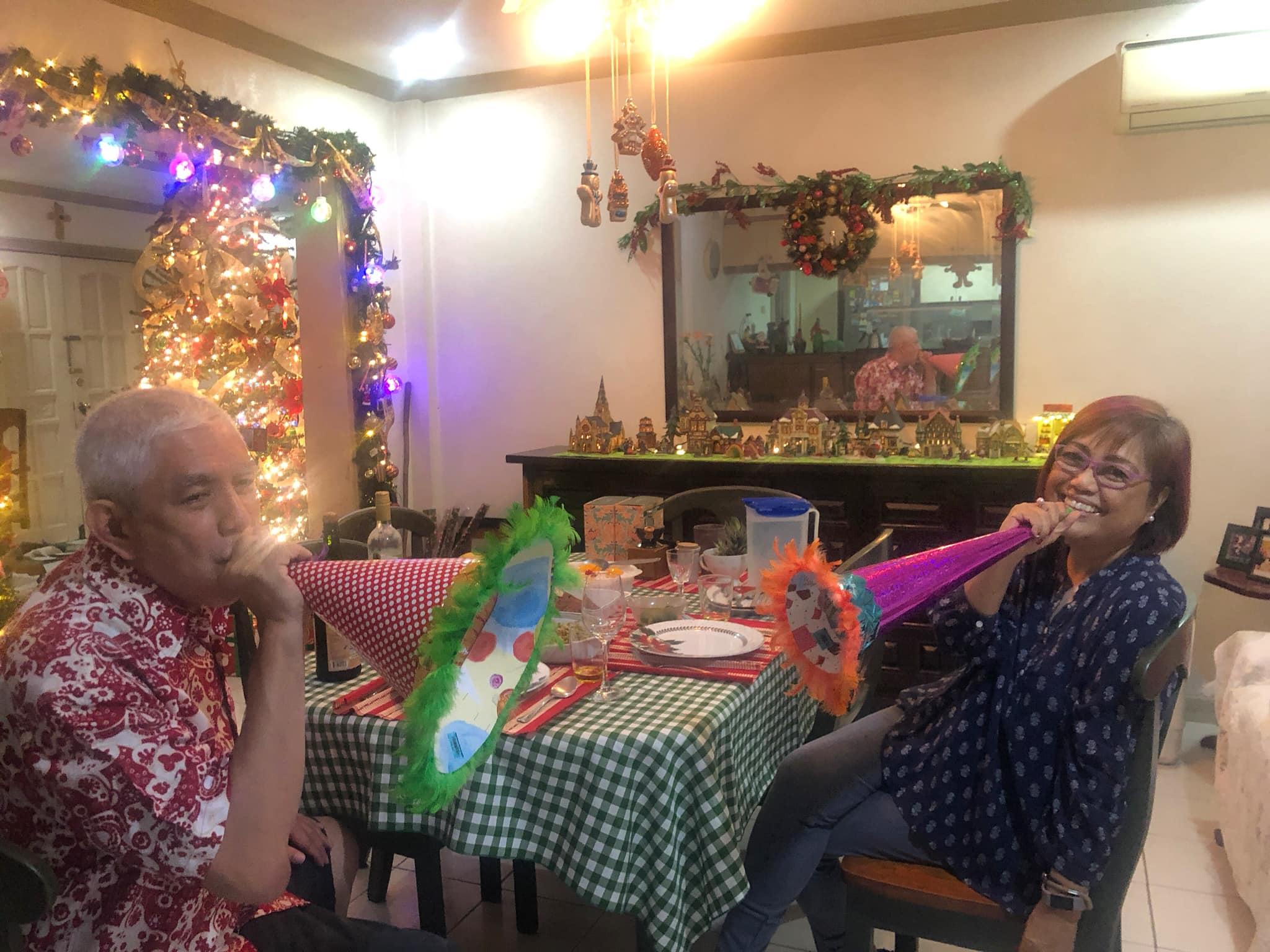
It is just the two of us, the four cats and our trusted helpers as we got ready to welcome the New Year. Listening to Auld Lang Syne and tooting our horns, my husband and I reflected what we needed to focus this year and let bygones be bygones. The end of a year often signals new beginnings. Auld Lang Syne is traditionally sung at the stroke of midnight on New Year’s Eve in Scotland and around the world, especially in English-speaking countries. My husband loves to listen to this song. Listen:

As we tooted our horns, our boxer howled along with us as if saying Goodbye 2018. We were so amused at our dog’s howling.

I thought we would just hear the tooting of horns but instead, the sound of firecrackers from the neighbors surprised us all. We waited for 2019 to arrive, and cheered the New Year along with our toast of sparkling juice.

The next day, I was so excited to write on page 1 of my new planner. Its pages are still blank. I know I am going to put words on them myself in the coming days. Yes, this is a book called “Make today magical” and its first chapter is New Year’s Day. I scribbled a note on January 1, 2019 and greeted everyone a happy new year . The 2019 Belle De Jour Power Planner is usually used by the young ones. I don’t care. It is cute and I love the food for thought — usually something inspirational, partnered with pretty artwork.

When I wonder what is coming, I tell myself the best is coming, the very best in life has to to offer, the best God will send and claim it as mine.

Happy New Year, everyone. A blessing becomes a blessing when spoken. So I declare that you are blessed with a loving family, good health, faith, favor, promotion and provision. A blessed New Year to you and your family!

To all my visitors, may you have a Blessed Christmas. May the warmth and love of family and friends that make the holiday season so memorable. May peace be your gift at Christmas and your blessing all year through. Merry Christmas everyone.

Peace and Joy to all.

From the Dado Family

To those who have lost a child, here is a poem for you:

Christmas message
Luijoe’s last Christmas with us, 1999

Twas the month before Christmas
and I dreaded the days,
That I knew I was facing the holiday craze.
The stores were all filled with holiday lights,
In hopes of drawing customers
by day and by night.
As others were making their holiday plans,
My heart was breaking – I couldn’t understand.
I had lost my dear child a few years before,
And I knew what my holiday had in store.
When out of nowhere, there arose such a sound,
I sprang to my feet and was looking around,
Away to the window I flew like a flash,
Tore open the shutters and threw up the sash
The sight that I saw took my breath away,
And my tears turned to smiles in the light of the day.
When what to my wondering eyes should appear,
But a cluster of butterflies fluttering near.
With beauty and grace they performed a dance,
I knew in a moment this wasn’t by chance.
The hope that they gave me was a sign from above,
That my child was still near me and that I was loved.
The message they brought was my holiday gift,
And I cried when I saw them in spite of myself.
As I knelt closer to get a better view,
One allowed me to pet it – as if it knew –
That I needed the touch of its fragile wings,
To help me get through the holiday scene.
In the days that followed I carried the thought,
Of the message the butterflies left in my heart –
That no matter what happens or what days lie ahead,
Our children are with us – they’re not really dead.
Yes, the message of the butterflies still rings in my ears,
A message of hope – a message so dear.
And I imagined they sang as they flew out of sight,
“To all bereaved parents – We love you tonight!”

By Faye McCord

christmas message

Luijoe and my family, 1998

This was first published at the Sunday Business & IT , December 9, 2018

Are you done with your Christmas shopping? Many of my friends dread the rush to the high street to buy their last-minute Christmas presents. I don’t mind shopping at the mall. The Christmas carols and the holiday decors bring out that warm fuzzy feeling that glows inside me during the entire season. What’s challenging is the traffic and parking. Online shopping sites make holiday shopping convenient. I find it even more meaningful when I buy from budding Filipino entrepreneurs or social enterprises. I curated 12 online shopping sites with the help of my friends.

  1. Abubot (Abubot. ph)

If you are looking to buy gift items for your geeky friend, then head off to Abubot.ph. Check out the board games, role-playing games, and accessories.  I appreciate Abubot.ph’s mission to help small business owners and retailers have an online storefront to sell their products.

  1. Barapido (facebook.com/barapido/)

This start-up online platform showcases a variety of goods from local delicacies, home items, to clothing with intricate designs. Check out Balangay’s Best high quality, naturally processed and wild-caught sustainable seafood products from Artisan Filipino Fishers.

  1. BeautyMNL (beautymnl.com)

My daughter introduced me to BeautyMNL‘s curated assortment of beauty and wellness products. My favorite is Venus and Mars (V&M) Naturals, who first started out in Multiply.  Try out their fragrances, carrier oils, extracts, soaps, skin care, hair care products, spa and wellness products, and even aroma-therapeutic oils. BeautyMNL is also available at the Apple App store and Google Playstore.

  1. Domesticity (mydomesticity.com)

Domesticity, a social enterprise, is proud of their products because Filipinos make them, using materials indigenous to the Philippines.  For a limited time, check out Tilia, hand-loomed by a community of women in Kabankalan, Negros Occidental.

  1. ECHO Store (echostore.ph)

ECHO is the acronym for Environment & Community Hope Organization Store. I love ECHO‘s social enterprise. Aside from the convenience of online shopping, they have many retail stores that carry green, fair trade products created by marginalized community groups from the provinces of the Philippines. Buy the Malagos Premium Unsweetened Chocolate for your hot chocolate drink when celebrating Noche Buena.

  1. Kalsada (kalsada.com)

Kalsada champions Philippine specialty coffee. Their top priority is to support Filipino coffee producers and their dedicated efforts to bring quality coffee to market. My daughter’s gift this year was a 250g subscription of roasted Benguet Arabica coffee beans for six months.

  1. Karton (karton.ph)

Looking for gift baskets? Karton carries a varied selection for different personalities filled with unique local products such as the Christmas Warmth Basket, Stress Away Basket, Pamper Basket, Coffee Bundle.

  1. Marketa (marketa.ph)

Marketa Philippines is the country’s first lifestyle-managed marketplace platform. They champion local micro, small and medium enterprises to strengthen their online brand. Check out the goodies at Kim’s Pastry Haven, Village Breadhouse, and Sugar Babies Desserts Unlimited.

  1. Rags 2 Riches (rags2riches.ph)

Rags 2 Riches (R2R), a social enterprise, partners with local artisans across the Philippines to create eco-ethical fashion and home accessories out of upcycled, overstock cloth and indigenous fabrics. Community artisans weave their signature R2R products. Since most of them are mothers, they have created a unique system that allows them to work from their homes. You can also buy at their joyful marketplace (thingsthatmatter.ph) for advocates of beautiful, meaningful and impactful things.

  1. ToyTinkr (facebook.com/toytinkr)

The kids will love Toytinkr. They offer tools that challenge intelligence and creativity through educational toys. Kids will enjoy the puzzle toys, play kitchens, easels, Yogi Game Kit, stamp sets, and more.

  1. Winsome box (winsomebox.com)

Winsome Box is the first gift curating studio in Manila that offers specialized gifting services for personal, social, and corporate gifting. They partner with Filipino brands, local makers and artisans, and offer a unique channel for them to showcase their craft. Their holiday gift boxes offer the gift of tranquility, the gift of joy, the gift of peace, and the gift of wonder. 

  1. Xabukid (facebook.com/xabukid/)

Xabukid is an initiative of women social entrepreneurs with a passion for helping local communities. Check out their catalog of handwoven cloth made of abaca fibers made by Bagobo-Tagabawa women weavers of Bitaug, Bansalan, Davao del Sur.

Use caution when shopping online. Good shopping starts with good security. I usually choose cash on delivery or bank deposit for online shopping. Contact the shop owner for managed expectations of the product and the estimated delivery of your purchase.

Can you recommend other online shopping sites that promote social enterprises?  Please let me know at momblogger@protonmail.com so I can feature them.

The joy of brightening other lives, bearing each others’ burdens, easing other’s loads and supplanting empty hearts and lives with generous gifts becomes for us the magic of Christmas.
-W. C. Jones

antiChristmasTree
““I have not put up any Christmas ornaments for the past 19 years. Never! What for when my family is not here. I cannot enjoy Christmas without them,” a bereaved parent once said.

He is not alone in his feelings. It is difficult to celebrate what once were beautiful, happy days. I remember how my husband dreaded Christmas day, the first without our son. He didn’t like to see the Christmas tree but I placed it anyway because I had two girls looking forward to Christmas day which has always been a joyful day to celebrate. I am thankful I opened my heart to my children and allowed them to help me embrace Christmas that year. In doing so, we renewed our strength and spirit together and we found the courage we needed to go on and enjoy life. It wasn’t the same reaction with my husband. It took him five more years to let Christmas come back to his life. And that was the year he learned that life can become good and whole and complete once again.

Why does Christmas or the holidays just make it difficult?

While most of the world seems to be addressing holiday greeting cards and planning holiday menus, the bereaved are struggling with other concerns: HOW LONG DOES GRIEF LAST? WILL THE HOLIDAYS ALWAYS BE THIS AWFUL? WHAT DO WE DO WITH THE EMPTY PLACE AT THE TABLE? WHAT IS THERE TO BE THANKFUL FOR THIS YEAR?

For many, Christmas is a special time of year. Although pretty packages and twinkling lights are the window dressing for this exciting festivity, it is the warmth and love of family and friends that make the holiday season so memorable. It can be a painful time for those experiencing the recent loss of a loved one.

I know there are others out there feeling similar losses.

If you are facing Christmas alone for the first time, I encourage you to reach out to someone you trust and share your feelings with them. Devote a place and time before Christmas Day in which you can openly honor your loved one and acknowledge your feelings. On Christmas Day, intentionally set your focus on family and friends who not only share in your loss, but who bring precious gifts of love and support to aid in your healing journey.

How To Help Yourself Through The Holidays

sad_happy_face_christmas_card

At this time you will be acutely aware of the voids in your life. You may find yourself wishing to go straight from December 24 to December 26; it is hard to continually hear Christmas carols playing and people saying ““Merry Christmas”, or to see the perfect gift and realize the person is no longer alive to enjoy it.

Here are some suggestions that may help to make your holiday season a little easier.

1. Family gatherings may be extremely difficult. Be honest with each other about your feelings; sit down and decide what you all want to do for the holiday season. Don’t set expectations too high for yourself or other family members on that day.

2. There is no right or wrong way to handle the day. Some people prefer to follow family traditions, while others decide to change them . It may help to do things just a little differently. Remember, what you choose to do this time can always be changed next year.

3. Be careful of “shoulds” it is better to do what feels best for you and your family, not what you or others think you should do. Give yourself permission to not do things. Once you have decided how your family will handle the holidays, let others know.

4. Do the Christmas preparations that you enjoy and look for alternatives for those you don’t. For example, this year you could buy baked goods, let others bake for you or do without.

5. Holidays are tiring; get lots of rest. You will need every bit of your strength.

6. If you decide to decorate your home, let children, other family members or friends help you. It’s okay to do something different, or to do no decorating at all.

7. How do you respond to “Merry Christmas”? You could say ““best wishes to you” or ““thank you”. Think of how you might answer ahead of time.

8. For Christmas dinner, you may decide to visit relatives or friends this year. If you have dinner at home, try changing the menu, the time or the room. You may want to be involved in preparing the meal, or not.

9. Be gentle with yourself and don’t expect too much. If you cry, don’t let that ruin the day for you. It may allow others to grieve and feel sad on a “happy” day.

10. Consider cutting back or not sending Christmas cards this year. It is not essential to send cards, especially to those people you will see over the holidays.

11. As the holiday approaches, share you concerns, feelings and apprehensions with someone. Let them know what is difficult for you; accept their offers of help. Holidays often magnify feelings of loss; allow yourself to experience the sadness that comes.

12. Christmas shopping can be upsetting and it may help you to shop early, to shop by telephone and catalogue, or to take along an understanding friend. Family may be willing to shop for you if they realize how difficult this is for you.

Often, after the first year of bereavement, people expect you to be ““over it”…..you will never be ““over it”. However, most people do find that eventually they are able to enjoy holidays

I wish I can tell those who have lost a loved one this message, “May you find hope and peace and ways to remember the life of your loved one, not just the death. May Love be what you remember most”.

Source for “How To Help Yourself Through The Holidays”
From Victoria Hospice, British Columbia


In this modern and gadget-obsessed era, many people have learned the art of playing with words and using them to their advantage. How can you not become skillful with words in a time when you cannot escape a day without sending text messages, updating our social media status and expressing ourselves in 140 characters on Twitter? But all those words are meaningless without the appropriate action.

couple-in-embrace

Words, no matter how eloquent have no bearing when they are not accompanied by gestures. In a relationship, words are important but you cannot depend on them alone. Of course, it feels good to hear your significant other say “I love you,” “you mean the world to me,” “I’ll do anything for you,” “you’re my everything” and so on but if that person constantly lets you down and hurt you, then those words may seem ironic.

Words are music to the ears but they should always be supported by actions. In order to mean what you say, you have to prove it with gestures. The virtual world is bombarded with sweet nothings but in reality, happiness highly depends on what you actually do. After all, actions speak louder than words.

Many complain that their partners are not vocal about their feelings. It’s a blessing to have someone who can express his/her feelings in words and gestures. Sometimes, you can’t always have the best of both worlds. If you have to choose, would you rather be with someone who showers you with sweet lines but disappoints and makes you cry or would you rather choose a person who doesn’t say much but who is always there for you and fulfills his/her promises? If you have good sense, you know you’re better off with the latter.

A relationship starts with exchange of words but in order for it to grow and develop, you need to nurture it with the right actions. Simple deeds can outweigh words. Don’t worry too much if your partner is not generous with his/her words as long as you feel that you are loved. Here are some day-to-day gestures that express affection without the need to say the words aloud.

Introduction to family and friends – You know you are special to a person when he/she introduces you to his/her family and friends. It’s a gesture that may indicate that he/she is serious about your relationship and thinking of building a future with you.

Shirley was ecstatic the day her boyfriend introduced her to his family. They have been together for a year and a half when her boyfriend invited her for brunch at his parent’s house. Shirley took it as a sign that their relationship is for keeps.

Physical display of affection – A simple and random display of affection such as giving you a tender embrace, kissing you on the cheek, holding your hand, or putting an arm around you show that your significant other wants to be in close proximity to you.

Weng, a stay-at-home mom is married to a hardworking regional sales manager of a big company. He is always on the road. They have been married for eight years now. Her husband is the quiet type but what he lacks in words, he compensates in action. Although he rarely says “I love you,” Weng feels loved because he never fails to kiss and hug her the moment he wakes up and every chance he gets whenever he is at home.

Taking the extra mile – A person can express his/her emotions through his/her behavior. He/she may go out of his/her way to cheer you up, give you advice or offer you a helping hand.

Gloria fell in love with Frank because of his genuine kindness. She remembers the time when torrential rain caused city-wide flooding. She and her sister were stuck at home because of the flood. Frank bought pandesal, bottled water and a few canned goods to bring to Gloria and her sister. Frank walked for more than an hour carrying the goods because many of the roads were impassable to public and private vehicles. Frank waded in filthy water. He disregarded his own health and safety just to get to Gloria. There was a nagging fear in his head that he might get injured by falling in a manhole or stepping on something sharp or worse something rusty. Thankfully, he arrived at Gloria’s apartment safe and sound. Little did he know that on that day, he won her heart.

Symbol of love – You can express how much you value the presence of a person in your life by giving him/her a symbolic gift.

Bernie gave his girlfriend a promise ring as a sign of commitment. The promise ring is also a pledge of love and faithfulness. It was like a pre-engagement gesture to show his girlfriend that he sees his future with her.

Showing remorse for mistakes – Being sorry goes beyond words of apology. It means making an effort to correct the problem and setting things right.

Alfred’s infidelity almost destroyed his marriage. The thought of losing his wife and children made him realize the gravity of what he has done. When his wife found out about his affair with another woman, she threatened to leave him and take their children with her. Alfred held his wife as tight as he could. She struggled to break free but he refused to let go. When his tears began to fall, his wife stopped and looked at him straight in the eye. It was the first time that she saw him cry. He has always been a strong and brave person. He is not easily moved by difficult situations unlike most people. But that moment, Alfred felt all his strength and courage escape him. He knew he had broken his wife’s heart. He wanted to apologize and beg her to stay but the words couldn’t come out. Alfred broke down. After his emotional release, he was able to talk to his wife.

He learned from his mistake. Rather than making promises, Alfred showed his wife how much he values the second chance she gave him through his actions. He severed all forms of communication with the other woman. He keeps his mobile phone in plain sight. No more secret text messages and calls. He now makes it a point to go home early. Alfred knows that it will take time for his wife to trust him again but he will keep trying.

Photo c/o Pixabay. Public domain.

Written by Ma. Rachel Yapchiongco , as published originally at Walk your (loving) talk, Philippine Online Chronicles.

Originally published at Sunday Business & IT section, October 21, 2018

Parents need to venture into the online world of their children to help them navigate the tricky waters, learn the rules, learn from their adult experience and still be safe. We play a role in guiding children and teens navigate the internet and media environment, just as we help them learn how to behave off-line. In our digital lifestyle, a mobile phone or tablet is within easy reach. Raising tech-savvy kids at such a young age has its benefits but can be worrisome. Thanks to the smartphone, children can become subjected to cyber-bullying or get distracted and lose their ability to focus. There is another concern on the blue light from digital devices which allegedly damages vision.

visible internet

What can we do?

We can walk with our children to help them navigate the digital world. This can take the form of digital and non-digital action. A non-digital action undertakes steps outside the digital world. It includes open conversation, no smartphones during dinner or setting a time limit and more. Start a media plan that considers the health, education, and entertainment needs of each child and the whole family. An online tool at HealthyChildren.org/MediaUsePlan is available so families can create a personalized Family Media Use Plan.

READ: Do you have a family media plan?
Parenting in the new digital age
Are digital gadgets good for our kids?

The digital part focuses on the smartphone itself to make it more compatible with the child’s use. Such actions include security, privacy and parental control settings. Several parental control apps are available online but restrict websites, apps and time usage. What if a tool does not include restrictions, spying or policing, just modern day applications mixed with good parenting?

I got introduced to Visible Internet’s modern technology which serves as a bridge between smart phones, tablets and computers used by parents and their children.  The “Visible Internet” app centers on the strong Filipino culture, ensuring that parents remain the guiding influence in their children’s lives. Its seamless integration into the busy lives of parents allows them to be present in the crucial years of their child’s development.

“The most important element missing in the internet lives of children are the parents. Research has proven that children make better choices, perform better at school and are more focused on the things that matter in their lives when they know their parents are involved.”, says Tony Fawaz, CEO and Founder of Visible Internet. Our children deserve a safe environment – a place where they can learn, get entertained, and grow. The internet can be that place if it empower parents to be a part of their children’s digital lives and to frame the internet as a transparent family experience.

How  “Visible Internet” works

It is best to create an account on the desktop at visibleinternet.com so you can try a free version.  A parent gets free access for one child with one gadget before deciding to avail a full subscription payment.  “Visible Internet” supports your role as a parent with one set of features for you and a different set of features for your child. This requires two different apps.  After creating the account on your desktop, one can download and install the “Visible Internet” parent app. The next step is to install the “Visible Internet” child app on your kid’s smartphone or another device.

Installation of the child app enables parental access to the location and screen activity of the child’s device. The parent app user-interface makes interaction with the child easy, fun and informative. Parents can view a child’s location along with their internet activity on demand or regular intervals. Images broadcasted to the parent app show up as camera roll images. This expand for easy viewing and logged as historical data. A simple tap on your “Visible Internet” app tells you where all your children are in seconds. It also captures a screen cap of what they are looking at their smartphone at that particular time.

Visible Internet is a multi-platform technology working across the technology children use iOs iPhones, iPad, iPad, Android smart phones, and tablets, iMac computer, Windows and Chrome book laptop and PC.  This app is a lifestyle choice because it helps parents understand what is going on in the digital lives of their children. The best way to make technology a healthy and positive part of family life is to embrace it as a family activity.

The information contained here should not be a substitute for the medical care and advice of your pediatrician.