“Whether or not you realize it, you’re setting up a digital trail for your children that can last through their lifetime, and you’re doing it without your permission”

Psychological implications of growing up without anonymity

oversharentingCutesy photos may be harmless now, but they might pose a problem in years to come. This is why experts strongly recommend making sure that whatever images or anecdotes parents post are things their children will feel comfortable with later in life.

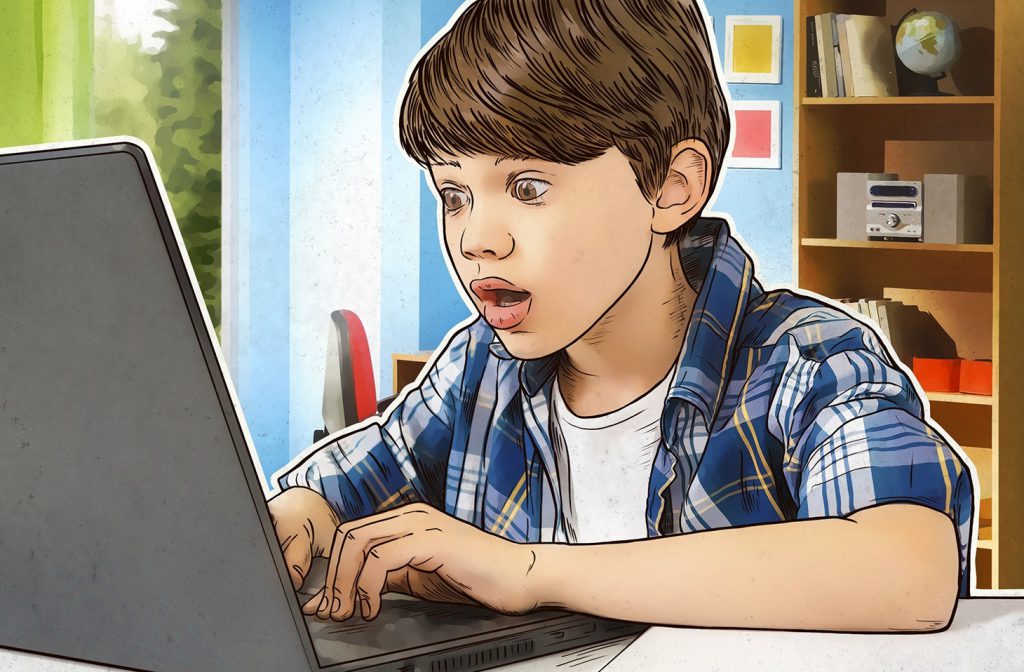
“Whether or not you realize it, you’re setting up a digital trail for your children that can last through their lifetime, and you’re doing it without your permission,” Greenberg says.

Kathryn Tuggle of Main Street explains that children can also be very sensitive about their appearance during their tween years. “If you post photos of your child during an ‘ugly duckling’ phase, you could be setting them up for self-esteem issues in the future.”

Another danger is “branding” your child. If you continually post pictures of them crying or clinging to you with captions like, “He’s so cranky,” or “She’s so shy,” it’s also possible you could be shaping your children’s perception of themselves. Hence, think about what’s best for your child, not you, the next time you log on to social media.

To read more about privacy setting pluses and the problems with privacy settings, click here.

‘Oversharenting’

Sharing too much information about one’s kids online has become too commonplace that according to Time, a term has already been coined for this: oversharenting. It is understandable that parents would want to share the growth and development of their children, but there’s also a fine line between posting family pictures and cutesy photos of baby’s first bath. You never know where your kid’s pictures might end up someday.

“Anytime you post anything on social media, you’re losing a little bit of control over what happens to that image,” says clinical psychologist Barbara Greenberg through Main Street. “There are people out there who are bad. There are stalkers and malicious people who can take your pictures and put them on sites where heads end up on other people’s bodies… Socially isolated people who spend all day on Facebook stalking people, who get turned on by children,” Greenberg adds, emphasizing how as parents, we have to think about how much we’re going to post.

Joining the bandwagon is never a good reason to post something. “There may be pressure to show off your baby, but you don’t have to join that club. It’s always your decision.”

What you can do

Some parents go to extreme measures of literally posting nothing about their kids at all, but for those who still want to share photos or videos of their beautiful brood to some extent online, here are some tips that might be helpful:

  • If you shall decide to keep your child off social media, cull your friend list and let them know about your intention of doing so.
  • You may also use a pet name, rather than your child’s real name, to afford him/her some protection against companies or individuals who might be interested in your child’s personal data.
  • Avoid tagging your child’s photos on Facebook lest you want to the facial recognition tool to work on him/her.
  • Lock down your privacy settings to prevent strangers from viewing your pictures and posts.
  • Lastly, and most importantly, use the internet consciously and in a way that is effective and positive for your life.

15940615297_b6e61e5883_b

Here are other interesting and worthwhile reads on sharing about your child on social media:

*“Mother and Child Reflected” by William Pitcher, courtesy of Flickr. 


written by Edel Cayetano as originally posted at the Philippine Online Chronicles

 

This was first published at the Sunday Business & IT , December 9, 2018

Are you done with your Christmas shopping? Many of my friends dread the rush to the high street to buy their last-minute Christmas presents. I don’t mind shopping at the mall. The Christmas carols and the holiday decors bring out that warm fuzzy feeling that glows inside me during the entire season. What’s challenging is the traffic and parking. Online shopping sites make holiday shopping convenient. I find it even more meaningful when I buy from budding Filipino entrepreneurs or social enterprises. I curated 12 online shopping sites with the help of my friends.

  1. Abubot (Abubot. ph)

If you are looking to buy gift items for your geeky friend, then head off to Abubot.ph. Check out the board games, role-playing games, and accessories.  I appreciate Abubot.ph’s mission to help small business owners and retailers have an online storefront to sell their products.

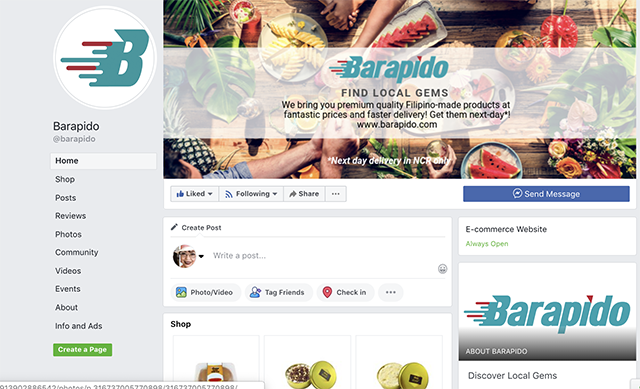
  1. Barapido (facebook.com/barapido/)

This start-up online platform showcases a variety of goods from local delicacies, home items, to clothing with intricate designs. Check out Balangay’s Best high quality, naturally processed and wild-caught sustainable seafood products from Artisan Filipino Fishers.

  1. BeautyMNL (beautymnl.com)

My daughter introduced me to BeautyMNL‘s curated assortment of beauty and wellness products. My favorite is Venus and Mars (V&M) Naturals, who first started out in Multiply.  Try out their fragrances, carrier oils, extracts, soaps, skin care, hair care products, spa and wellness products, and even aroma-therapeutic oils. BeautyMNL is also available at the Apple App store and Google Playstore.

  1. Domesticity (mydomesticity.com)

Domesticity, a social enterprise, is proud of their products because Filipinos make them, using materials indigenous to the Philippines.  For a limited time, check out Tilia, hand-loomed by a community of women in Kabankalan, Negros Occidental.

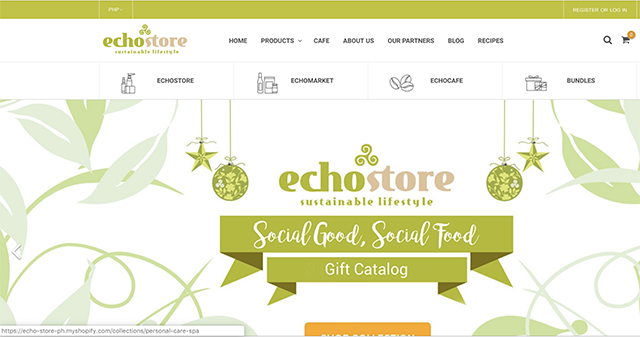
  1. ECHO Store (echostore.ph)

ECHO is the acronym for Environment & Community Hope Organization Store. I love ECHO‘s social enterprise. Aside from the convenience of online shopping, they have many retail stores that carry green, fair trade products created by marginalized community groups from the provinces of the Philippines. Buy the Malagos Premium Unsweetened Chocolate for your hot chocolate drink when celebrating Noche Buena.

  1. Kalsada (kalsada.com)

Kalsada champions Philippine specialty coffee. Their top priority is to support Filipino coffee producers and their dedicated efforts to bring quality coffee to market. My daughter’s gift this year was a 250g subscription of roasted Benguet Arabica coffee beans for six months.

  1. Karton (karton.ph)

Looking for gift baskets? Karton carries a varied selection for different personalities filled with unique local products such as the Christmas Warmth Basket, Stress Away Basket, Pamper Basket, Coffee Bundle.

  1. Marketa (marketa.ph)

Marketa Philippines is the country’s first lifestyle-managed marketplace platform. They champion local micro, small and medium enterprises to strengthen their online brand. Check out the goodies at Kim’s Pastry Haven, Village Breadhouse, and Sugar Babies Desserts Unlimited.

  1. Rags 2 Riches (rags2riches.ph)

Rags 2 Riches (R2R), a social enterprise, partners with local artisans across the Philippines to create eco-ethical fashion and home accessories out of upcycled, overstock cloth and indigenous fabrics. Community artisans weave their signature R2R products. Since most of them are mothers, they have created a unique system that allows them to work from their homes. You can also buy at their joyful marketplace (thingsthatmatter.ph) for advocates of beautiful, meaningful and impactful things.

  1. ToyTinkr (facebook.com/toytinkr)

The kids will love Toytinkr. They offer tools that challenge intelligence and creativity through educational toys. Kids will enjoy the puzzle toys, play kitchens, easels, Yogi Game Kit, stamp sets, and more.

  1. Winsome box (winsomebox.com)

Winsome Box is the first gift curating studio in Manila that offers specialized gifting services for personal, social, and corporate gifting. They partner with Filipino brands, local makers and artisans, and offer a unique channel for them to showcase their craft. Their holiday gift boxes offer the gift of tranquility, the gift of joy, the gift of peace, and the gift of wonder. 

  1. Xabukid (facebook.com/xabukid/)

Xabukid is an initiative of women social entrepreneurs with a passion for helping local communities. Check out their catalog of handwoven cloth made of abaca fibers made by Bagobo-Tagabawa women weavers of Bitaug, Bansalan, Davao del Sur.
Use caution when shopping online. Good shopping starts with good security. I usually choose cash on delivery or bank deposit for online shopping. Contact the shop owner for managed expectations of the product and the estimated delivery of your purchase.

Can you recommend other online shopping sites that promote social enterprises?  Please let me know at momblogger@protonmail.com so I can feature them.

Our digital well-being matters. It is best to disconnect when needed and create healthy habits for the whole family.

Originally posted at the Sunday Business & IT on October 14, 2018

Are you guilty of reaching for your phone every time you wake up in the morning to check on your notifications? I do and it has become a habit ever since I got hooked on social networking sites as early as 2007.

Screen time from another weekly period

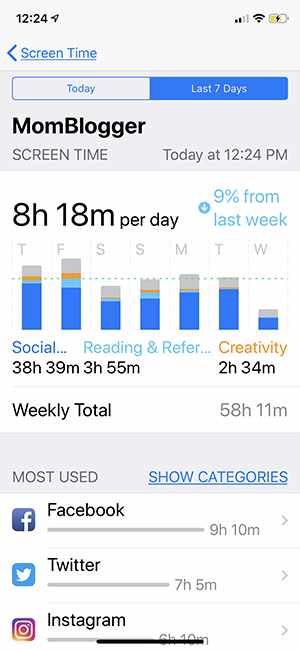
Proof? I spent 56 hours and 37 minutes on my iPhone for the last seven days or an average of eight hours and five minutes per day. My husband overheard me exclaim as I read the Screen Time statistics on my iPhone. He comforted me with “That’s part of your job.” Sure, I am a social media practitioner and citizen advocate rolled into one. I love to curate news articles, share photos and updates or opinions from my five blogs. It is time to audit and check if my usage is too high or excessive for my work. Is it time well spent? My Fitbit app tells me I slept an average of seven hours and a half the past week. That leaves eight hours and a half for my laptop use and other activities such as driving, walking and meeting people.

The latest iOS 12 features the Screen Time tools which show up under Settings > Screen Time. This provides an iPhone user with iPhone 5 and above to find out the time spent and limit apps’ usage. The first thing I do is to check the Screen Time report, a bar graph that illustrates the time spent on my iPhone during the day or in a week. One can see the breakdown of the time spent on specific apps. Try it. My latest weekly screen report showed:

1. Social networking — 37 hours and 56 minutes (Facebook, Twitter, Instagram, messenger, Messages, LinkedIn, Telegram, Viber, WhatsApp, Local, Bubbly, Skype, Quora, Tumblr, Signal)

2. Reading & Reference — 3 hours and 54 minutes (Safari, Waze, Angkas, Online news)

3. Creativity — 2 hours and 34 minutes (Lightroom CC, camera, photos, Snapseed, Boomerang, GoPro, Unfold, Insta360Nano S)

4. Others — 2 hours and 24 minutes (browsing, shopping apps)

5. Productivity — 1 hour and 40 minutes (Gmail, Drive, calculator, Calendar, One Note)

6. Entertainment — 1 hour and 4 minutes (Spotify, Youtube, Oculus)

7. Health & Fitness — 19 minutes (Fitbit, Nike)

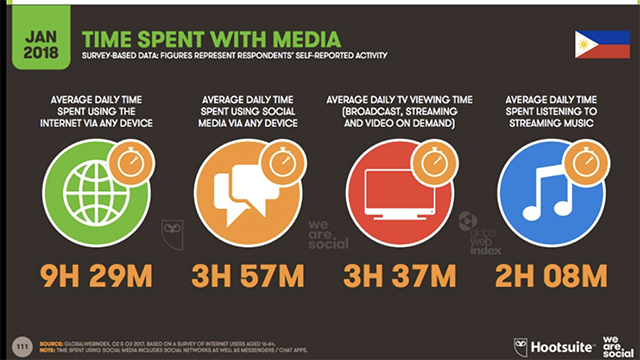
In the WeAreSocial Global Digital Report for January 2018 in the Philippines, the average daily time spent using the internet via internet device is nine hours and 29 minutes. Average time using social media spent via any device is three hours and 57 minutes. While my total screen time is lower than the average, I spend over four hours on social media. I was alarmed by the data. After seeing I use 15 social networking apps, I decided to prioritize them.

Using the Screen Time tools, I limited the average one hour time on Facebook to 30 minutes a day. I did not set limits on Twitter. My number one platform for social media engagement is Twitter because fewer trolls thrive in this network. Thirty minutes in Facebook is not adequate during a busy news day.

iPhone users can use the “Do Not Disturb” function that lets you turn off your notifications and calls.

The “Downtime” feature allows you to do the same for apps. Parents can manage their kids’ screen time and impose app limits on them remotely. To use Screen Time for tracking and managing your kids’ device usage, the parent must add them to their iCloud Family Sharing account. Google initiated its “Digital Wellbeing” app, which is in beta preview for Pixel devices. Facebook and Instagram rolled out digital well-being features that include an activity dashboard, a daily reminder, and a new way to limit notifications.

Although I’m committed to using technology in advocating change for social good, my digital well-being stays front and center. There is a concern about the blue light from digital devices which allegedly can damage vision and speed up blindness. Based on an optical chemistry research at the University of Toledo in the US, “blue light from digital devices and the sun transforms vital molecules in the eye’s retina into cell killers”. Dr. Ajith Karunarathne, an assistant professor in chemistry and biochemistry in the university said: “We are being exposed to blue light and the eye’s cornea and lens cannot block or reflect it”. The research published at the peer-reviewed journal Scientific Reports added, “It’s no secret that blue light harms our vision by damaging the eye’s retina. Our experiments explain how this happens, and we hope this leads to therapies that slow macular degeneration, such as a new kind of eye drop.” If you want to protect your eyes from blue light, Dr. Ajith Karunarathne’s advice is to avoid looking at your cell phones or other blue-light emitting devices in the dark and consider wearing sunglasses.

Our digital well-being matters. It is best to disconnect when needed and create healthy habits for the whole family.


The complete study can be found here.

First published at the Sunday Business & IT Of the Sunday Times entitled “Embracing the era of experience: Marketing redefined”

Do you recall the feeling when you purchased something for yourself? When I bought a pair of Nike shoes a few weeks ago, I felt good about my decision even if the price was higher than my budget. I did not just gain a high-tech midsole with the lightest, softest, smoothest, and most responsive foam Nike has ever produced. I bought the total fitness experience. Beyond the shoe, the brand understood a consumer’s fitness journey and complemented it with a Nike+ Training Club app. I felt more excited to carry out my Fitibit step goals together with this Ultimate Personal Trainer. This is one example of a brand that goes where their customers are. I find value in this great experience. One sees the rise of the “Experience Economy” when someone shares happy stories in social networks. It is experience embedded at every stage of the consumer journey.

The Digital Congress (DigiCon) for 2018, organized by the Internet and Mobile Marketing Association of the Philippines (IMMAP), tackled the Experience Economy (XE). The XE covered discussions beyond technology and mediums with a focus on creating an experience for the senses. Bozoma Saint John, a marketing guru and keynote speaker, reminded the delegates, “Emotion is the currency for the experience economy. We’re in the feelings business. We’re not in the data business.” If one is a marketer trying to build a business, one is talking about feelings most of the time. I love brands that understand my desires and recognize sentiments. Amazon is one company that understood my anguish when I complained that the cost of custom duties was more than the product itself. Instead of giving me a difficult time, Amazon gave me a refund. In their email, Amazon explained they valued my loyalty. It is no surprise I am still a loyal customer for over 10 years now.

experience economy

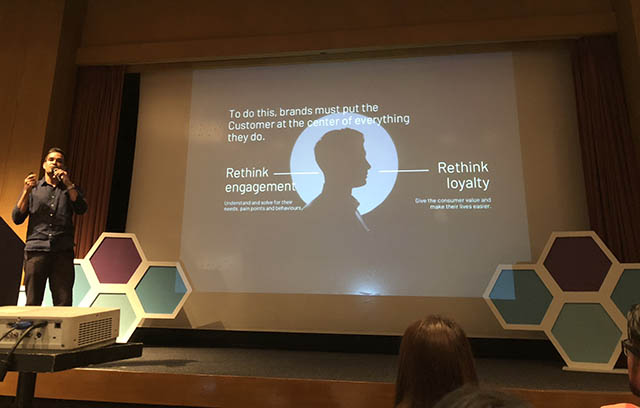
The Amazon shopping experience set my standard for the customer experience. I look up to brands who provide similar seamless interactions from every touchpoint. It is the touchpoints within the customer journey that help define both good and not-so-good moments. At DigiCon, Anthony Baker provided insights into the Experience Playbook. With access to reviews and competitive pricing, customers get more control in their choices. In the past, when a product is good, it will sell. That is not the case anymore. The shift is now toward customers driving brand experiences. It is about moving from marketing to experiences. This means putting the customer at the center and in everything they do. One must rethink engagement by understanding and solving their needs.

experience economy

Brands must get loyalty by giving the consumer value and making their lives easier. Amazon got my loyalty because I experienced being valued as a customer.

Customers connect with brands in the evolving digital landscape of the Web, Mobile, Social, Messaging, Augmented Reality/Virtual Reality/Mixed Reality, Voice, Artificial Intelligence, Machine Language, and Robotics.

Brands like Sephora, Nike, Alibaba, and Tencent are re-imagining consumer experiences. Value-added personalization services helped brands like Estée Lauder cut through the noise. Their chatbot finds the ideal consumer lipstick color for women. Some real estate companies use virtual reality in showing their future projects to potential customers. Mobile apps like the Nike Training app shape the in-store experience, empower the purchasing process, and create interesting and dynamic ways to interact with the customer.

experience economy

Baker suggests more points for a seamless brand experience:

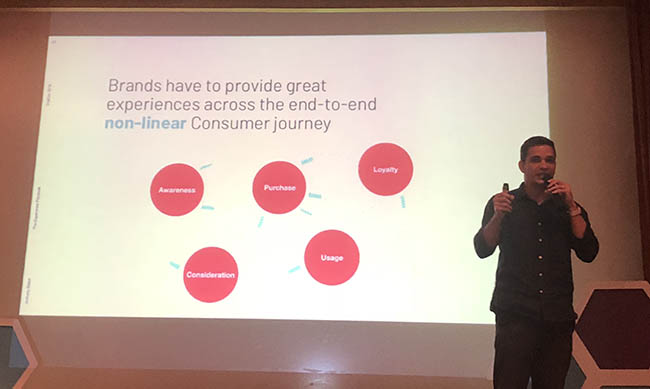
1. Brands have to offer great experiences across the end-to-end non-linear customer journey (awareness-consideration-purchase-usage-loyalty).

2. Think about engaging across the ecosystem, all platforms, channels, and screens.

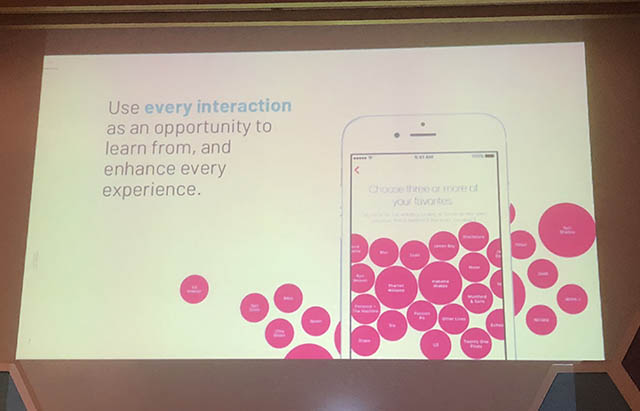
3. Use every interaction as an opportunity to learn from and enhance every experience.

4. Look beyond the transactions and focus on building long-term relationships.

5. Manifest the brand through the interface.

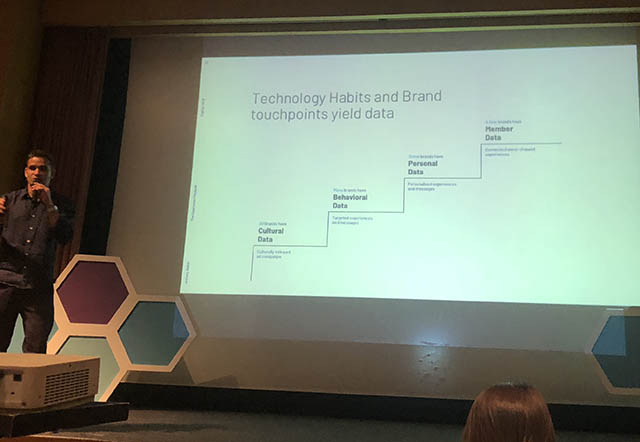
6. Brands must reclaim their consumer relationship and data. Brands that think of their consumers as members focus on the long-term relationship.

7. The model is now “inside out”. Every touchpoint has the potential for branded experience and engagement.

experience economy
Building customer loyalty is not enough. It’s about knowing, recognizing, anticipating, and creating value all the time and at scale. It is a promise that is compelling, clearly articulated, and makes consumers belong to something bigger. While I might not meet Nike’s promise of “We’ll make you a better athlete”, I know that I get value-added customer experiences through the tracking progress, encouragement, and clear routes to the improvement in my fitness journey. Consumers seek not only convenient service or a packaged product but a one-stop, sensorial experience.

Now is the time for business to embrace the era of experience.

My sister Myrna  moved to the US in 1984, and I missed her so much that I often wrote long letters. I took a look at some of my letters and was surprised to read about how I also talked about the political situation in our country in 1984.

Allow me to share some snippets of a letter I wrote on September 1984 (Italics are current comments)

September 8, 1984 (about inflation and gas scarcity)

Dear Myrna,

I have managed to save 3,000 pesos but this is only worth 1,500 early last year. Well, it’s better to save than have no money at all. (Inflation Rate in Philippines averaged 8.41 percent from 1958 until 2018, reaching an all time high of 62.80 percent in September of 1984 )… It’s no joke buying food nowadays. 

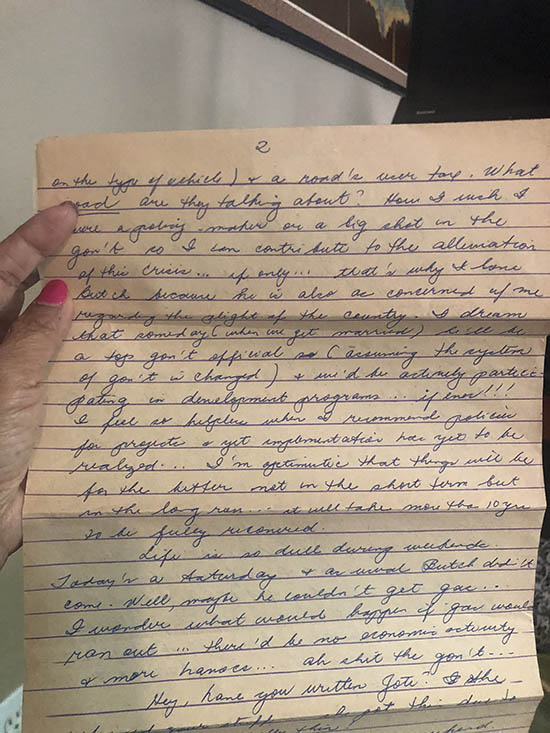
There’s another bad news…gasoline supply until Thursday unless the government will give gas dealers a share of the tax included in the price of the gasoline…oh well, the government really worsens the situation by requiring additional taxes. There’s going to be an increase in taxes again— the vehicle registration tax (up by 200% to 600% depending on the type of vehicle) and road’s user tax. What road are they talking about? How I wish I were a policy-maker or a big shot in government so I can contribute to the alleviation of this crisis…if only…that’s why I love Butch because he is also as concerned with me regarding the plight of the country. I dream that someday (when we get married ) he’ll be a top government official (assuming the system of government is changed) and we’d be actively participating in development programs if ever!!!!? I feel so helpless when I recommend policies for projects and yet implementation has yet to be realized. I’m optimistic that things will be for the better not in the short term but in the long run…it will take more than 10 years to be fully recovered.

Today’s Saturday and as usual Butch didn’t come. Well, maybe he couldn’t get gas. I wonder what would happen if gas ran out..there’d be no more economic activity and more havoc…ah shit the government.

September 10, 1984 (Typhoon Nitang)

I continue to hear/read so many unfortunate incidents regarding Typhoon Nitang, such as

  1. a pregnant woman was found dead but lying on a tree (In Negros Occidental)
  2. A farm tractor (this is heavy) was found 5 kilometers away
  3. A betamax machine in Surigao was found 3 kilometers away. Of course, out of order
  4. Hospital with no roof in Surigao

There was so many unbelievable stories. The wind must have been so powerful almost like a tornado (remember Wizard of Oz). The government now has a good excuse for diverting present political/economic problems. As Marcos said “Let us think of our country first and ourselves, last”. Look who is talking. Everyday, donations come in.

In our house in Cebu, our garage roof and the roof of the  house for the workers were also blown away.

September 25 – on the September 21 rally

What is new here? I learned the bakeshop wasn’t operational for 9 days since they didn’t have water and electricity for days.

Well, heard about the September 21 rally? They threw water at the rallyists. The water came from the canal..yuk!.

Other disasters…Mayon Volcano eruptions and another earthquake in Ilocos.

September 28 on UP Barricade

Today and yesterday, UP was barricaded by students all over the entrances. I had to sleep over at Butch apartment for two nights because I had lots of work to do.

The present situation is really tense . I feel the tension around. Last night, while I was at Butch apartment, I listened over the radio about a violent rally at “Welcome Rotonda”. I knew Butch was there and it really made me nervous hearing all the casualties..some students were shot!. The son of Dean Nemenzo was even shot. Fortunately Butch arrived. What a relief. It has been violent since Sept 21.


As for Butch, he’s planning to go to Cebu this sem break. He’s planning to make pamanhikan this sem break. Hopefully. I feel so restless already. I want to settle down . I feel the need. But I also feel scared. What with another devaluation next month. If ever we get married, I’ll make it very very simple so that expenses are minimal.

-end of snippets-

All of these were sent in one email. There was so much happening in one month: the inflation, the scarcity of gas, the devastation of Typhoon Nitang, September 21 rally, the devaluation of the dollar, increase of road taxes. It was like writing a diary and sent in one mail.  I am looking forward to the other things I wrote during the Marcos regime. To be continued,

“A journey of a thousand miles must begin with a single step.” — Lao Tzu

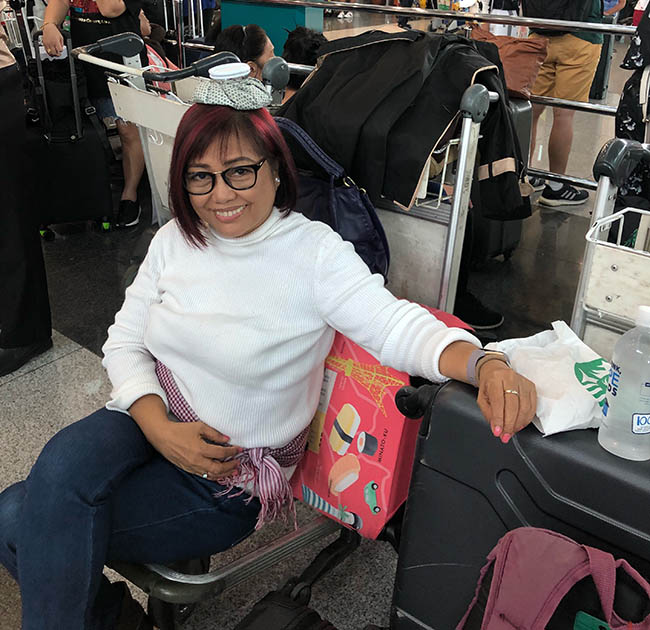
To reach that single step here in Germany took me almost three days  and whole lot of patience. I will write more about my adventure during the NAIA chaos which took off two days off my vacation plans.  I was travelling with my younger sister who has been so cool despite the chaos we were into.  I had to nurse a bump on my head when my husband accidentally closed the trunk door. Fortunately , it was just a slight bump that went away after the ice pack. (Smile)

Take two at the NAIA Terminal 3, delayed for five hours  and I am still smiling because I am terribly excited to see my daughter and start my adventure with my sister. (Smile)

I arrived in Hongkong on Sunday only to miss our connecting flight to Amsterdam. Still smiling.

Fortunately I got access to an airport lounge which gave me some time to nap and have a shower. Still smiling.

The sunrise near the Amsterdam-Schipol airport is lovely. (Smile)

This is the first time ever that I am dragging a heavy luggage but the thought of seeing my daughter is enough to give me the strength. (Smile)

I am finally in her flat. Happy!

Yes, I am still smiling. A sunny day by the Rhine River  with my daughter is comforting. The flowers from her friend is pretty. All that adventure and living through the NAIA chaos is finally over. It was worth the trip no matter what route I took. (Wider smile this time)

So, yesterday I had time to sit in the park and reflect on the beauty around me. (Smile)

It was 25 Celsius in this part of Germany and wearing a hat is not just to protect me from the sun but also from the wasps or hornets. (Smile)

Even it is a bad hair day for me, I am excited to see Berlin. 34 years ago when I visited Germany, there was still a wall that  cut off West Berlin from virtually all of surrounding East Germany and East Berlin . Always smiling.

I will not allow chaos to ruin my vacation. Travel is taking a journey into myself and knowing that I can still enjoy what the universe has in store for me.  There are more smiles to show off.


Are digital gadgets good for our kids? was first published at the Manila Times, July 29, 2018.

Most parents face this dilemma: should they be giving their kids gadgets as toys? Or should they deprive them of these gadgets? It doesn’t help that the World Health Organization (WHO) recently released the latest update of its International Classification of Diseases and identified gaming disorder as an addictive behavior disorder. The new classification is warranted because of a movement in the medical field to recognize addictive behaviors extend beyond drug addiction, according to John Roache, who heads UT Health San Antonio’s Division of Alcohol and Drug Addiction.

Having raised my three children in the early age of the internet in 1995, I followed two parenting concepts that applies online and offline. These are clear limits and lead by example.

Clear limits mean providing boundaries on our child’s activities and walking the talk on rules.

We need to understand the technologies better to know how they should and should not be used. We have to recognize where the real world begins and ends so we can help our children develop boundaries in both worlds. Parents also need to venture into the online world of our children to help them navigate the tricky waters, learn the rules, learn from our adult experience and still be safe.

In our digital lifestyle, a mobile phone or tablet is usually within easy reach. Raising tech-savvy kids at such a young age has its advantage but can also be a little worrisome. Both feelings are valid, but the motivation behind our children’s interaction with gadgets need to be examined as this can help determine whether the use of the gadget is beneficial or harmful to the kid. Children exposed to gadgets for more than two hours a day have higher risk of becoming overweight, which could lead to other serious illnesses such as diabetes and heart diseases according to Dr. Parolita Mission, head of the National Nutrition Council (NNC) in Region 7.

A paper “The Impact of using Gadgets on Children”, written by Sundus of the Department of Computer Science, Lahore Garrison University and which appeared in the “Journal of Depression and Anxiety” published on January 10, 2018 discussed both the positive and negative impact of gadget use. The positive impact of gadget use are 1) Children have better motor skills; 2) Gadgets are fun for kids while they use them; 3) Educational games help children to perform well in their studies; 4) Playing video games enhances their skills of competition and enables them to manage themselves in competing environment.

On the other hand, the negative impact of gadget use is Speech or language delay, Attention deficits, Learning problems, anxiety, childhood depression, and negative impact on character.

Mundus recommend some tips parents can follow when their child is using gadgets.

Set time for using screens: The amount of time children spend on gadgets need to be restricted and be consistent by not allowing them to use after their time is finished. It is recommended that small children use gadget an hour a day and two hours a day for school children. Set your own rules and follow them consistently.

Some parents get their children’s gadgets at 9:00 PM before bedtime while others programmed their modem to shut off at a certain time. Another parent I know allows her highschool children to monitor their own time as long as their grades are fine. The limits I set for my children below 16 years old: only one hour gadget use/internet a day. No TV during school days. Once the girls were in college, I set them free and allowed them to set their own rules.

Make them play outside: Children need to be encouraged to play outside with their friends and siblings. They will learn to interact and communicate with other children. Playing with pets like cats, dogs, and other kids are so much better, rather than watching any animated movie. Playing outside also helps in exercising long distance vision and lessens the chances of myopia. Allow them to develop other hobbies like singing, sports or the arts.

You can also make a deal in the house that for every hour of media, they must also spend an hour reading or being outside. This makes sure kids keep a balance between technology and other activities.

Gadgets as babysitters is discouraged: It is best to keep the children occupied with other creative toys, story books, puzzles, coloring books while you are busy. Kids should be experiencing all the senses in their activities not just eye-hand coordination.

Ensure adequate sleep of your child:  10 hours a day is what our young children need every day. Good sleep helps recover from eyestrain and for efficient working of brain.

If you need to use digital devices to your young children, cuddle them in your arms or sit them on your lap. The best way to make technology a healthy and positive part of family life is actually to embrace it as a family activity.

Play games along with them to encourage building social skills while monitoring how they are learning. Teach them how to use technology responsibly. Talk to them about apps that have added value, versus apps that are merely repetitive. For as long as the kids are guided well and follow a balanced set of online and offline activities, gadget use can be beneficial to their learning and growth. As with everything, moderation is key.

Kaspersky Lab’s latest report on the online activities of children – based on statistics received from its solutions and modules with child protection features – highlights children’s online activities and the importance of protecting them when online. The top three most googled items by kids worldwide are video, text translation and communication 

I have never tried Kapersky but I am intrigued with their latest report on online activities of children. Twenty year ago, there were not many websites so it was easy to track the online activities of my children. With so much multimedia today , it is impossible to monitor all the sites.  There are many security solutions like McAfee, Symantec Norton, Bitdefender , Kapersky and Avast . I personally use Avast but you can also check this Kaspersky report before trying it out.


what kids search online

The report shows anonymized statistics from Kaspersky Lab’s flagship consumer solutions for Windows PCs and Macs that have the Parental Control module switched on and from Kaspersky Safe Kids, a standalone service for Windows, Mac, iOS and Android devices.

For example, the report presents search results on the ten most-popular languages* for the last 6 months. The data shows that the video & audio category – including requests related to any video content, streaming services, video bloggers, series and movies – are the most regularly ‘googled’ by children (17% of the total requests). The second and third places go to translation (14%) and communication (10%) websites respectively. Interestingly, games websites sit in fourth place, generating only 9% of the total search requests.

We can also see a clear language difference for search requests: for example, video and music websites are typically searched for in English, which can be explained by the fact that the majority of movies, TV series and musical groups have English names.

Spanish-speaking kids carry out more requests for translation sites, while communication services are mostly searched for in Russian. More than any other nationality, Chinese-speaking children look for education services, while French-speaking kids are more interested in sport and games websites. In turn, German-speaking requests dominate in the “shopping” category. The leading number of search requests for porn are in Arabic, and for anime are in Japanese.

“Kids in different countries have different interests and online behaviors, but what links them all is their need to be protected online from potentially harmful content. Children looking for animated content could accidentally open a porn video. Or they could start searching for innocent videos and unintentionally end up on websites containing violent content, both of which could have a long-term impact on their impressionable and vulnerable minds,” says Anna Larkina, Web-content Analysis Expert at Kaspersky Lab.

As well as analyzing searches, the report also looks into which websites children visit or attempt to visit that contain potentially harmful content which falls under one of the 14 preset categories** for the last 12 months.

The data shows that communication sites (such as social media, messengers, or emails) were the most popular pages visited by computers with parental controls switched on – with users visiting these sites in 60% of cases over the previous 12 months. However, the percentage for this category is dropping every year as mobile devices continue to play a bigger role in children’s online activities.

The second most popular category of websites visited by these users is “software, audio, and video” (22%). Websites with this content have become significantly more popular since last year, when it was only the fifth most popular category at 6%. The top three is rounded off by alcohol, tobacco, and websites about narcotics (6%), which is a new addition compared to this time last year.

The mobile trend is again highlighted in the figures for gaming websites, which are now only in fourth place on the list at 5%. As kids continue to show a preference for mobile games rather than computer games, this category will only continue to decrease in popularity on computers over the coming months and years.

“No matter what they are doing online, it is important for parents not to leave their children’s digital activities unattended, because there’s a big difference between care and obtrusiveness. While it is important to trust your children and educate them about how to behave safely online, even your good advice cannot protect them from something unexpectedly showing up on the screen. That’s why advanced security solutions are key to ensuring children have positive online experiences, rather than harmful ones”, adds Anna Larkina.

The Kaspersky Total Security and Kaspersky Internet Security consumer solutions include a Parental Control module to help adults protect their children against online threats and block sites or apps containing inappropriate content. In turn, the Kaspersky Safe Kids solution allows parents to monitor what their children do, see or search for online across all devices, including mobile devices, and offers useful advice on how to help children behave safely online.

Check out the whole report, at https://securelist.com/kids-report-2018/85912/.
* These languages in Kaspersky Safe Kids are: English, German, Russian, Portuguese, Arabic, Japanese, Chinese, French, Italian, Spanish. Search engines include different categorizations, covering: Pornography, eroticism; Abortion; Religious movements and sects; Weapons; Drugs; Alcohol; Tobacco; Violence; Extremism, racism; Self-harm, suicide and Gambling.

** The 14 categories of websites that can be blocked by the Parental Control module in Kaspersky Lab’s solutions are: Adult content; Alcohol, tobacco, narcotics; Computer games; E-commerce; Explicit language; Gambling, lotteries, sweepstakes; HTTP query redirection; Internet communication media; Job searches; News media; Religions, religious associations; Software, audio, video; Violence and Weapons, explosives, pyrotechnic.


I love the convenience of my Coins.ph all-in-one mobile wallet especially when buying cellphone load. Try it yourself. Create a Coins.ph account with my promo code “momblogger” and get an exclusive 100% rebate on your first load purchase (up to Php 50).

Communication is important in my household especially if I am away on business or events.  It used to frustrate me whenever my helpers give me the following reasons for not communicating with me on important matters that needed my attention:

Me: So why didn’t you send a text?
Helper: Ma’am, I ran out of load.
Me: Then why didn’t you buy load?
Helper: Ma’am, I don’t have money anymore.

Or the following conversation:

Helper: Ma’am, I will just go out to buy load.
Me: It’s 9:00 PM. Why didn’t you buy earlier?
Helper: This is an emergency.

Communication is also important among my loved ones.  Whenever my balikbayan sister or my daughters visit the Philippines, I always have to google the syntax to get the text/call or internet bundled package.

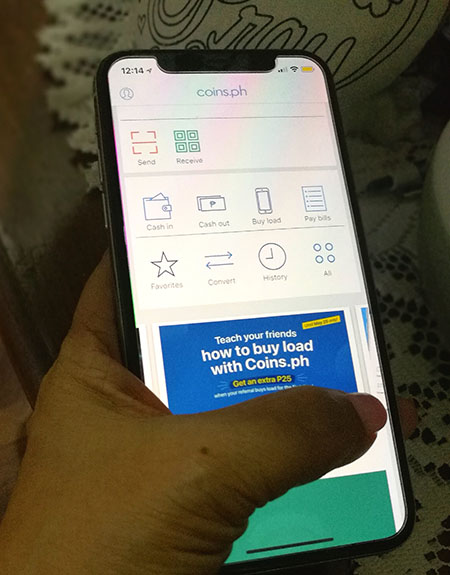
All these challenges are a thing of the past now that I can buy load using my Coins.ph all-in-one mobile wallet. I was aware that Coins.ph allowed me to send or receive money, pay 80+ bills online, or load a Beep card, but the first useful thing I did was give load to my helpers, all from my phone. No need to step out of the house to buy load or queue at a loading station.
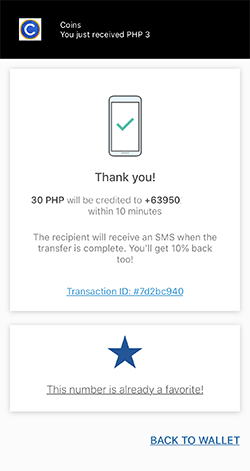
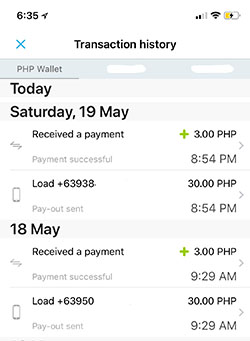
Let me share the same convenience I experienced by giving you an exclusive rebate during your first load, just so you can see it for yourself.

How to get 100% rebate on your first load purchase at Coins.ph

When I buy load and load promos through Coins.ph, I receive it in seconds and get a 10% instant rebate. But for you my dear readers, you are getting an exclusive 100% rebate during your first load. Here are the steps.

1.Download the coins.ph app from Google Play store or iTunes, and create an account

– Use the promo code “momblogger”  to get an exclusive 100% rebate and referral bonus

2. Once you create an account, get ID and selfie verified.

How? Watch this video:

Getting ID and selfie verified allows you to do more with your coins.ph wallet.

3.  You will receive a Php 75 referral bonus in your Coins.ph wallet once you are ID and selfie verified.

4. Make your first load purchase! The 100% load rebate is only valid for 7 days after you create your account. After that, the rebate is 10%.

Please see the terms and conditions:

  •  You must sign up for a Coins.ph account with the referral code “momblogger” to qualify for this promo
  • Your Coins account must be ID and Selfie verified before you can avail of this promo
  • Rebate is 100% (up to Php 50) of your 1st load purchase
  • To get the rebate, you need to make your 1st load purchase within 7 days of creating your account
  • Processing of ID verification may take up to 3 business days
  • Load promo is open to Philippine mobile numbers only
  • You may avail of the rebate only once
  • Rebate will be credited to your Peso wallet after your transaction has been successfully processed
  • Only one (1) Coins.ph account per person
  • Promo runs from May 25, 2018 until 11:59pm on June 8, 2018

Let me show you the “buy load” feature of the coins.ph wallet

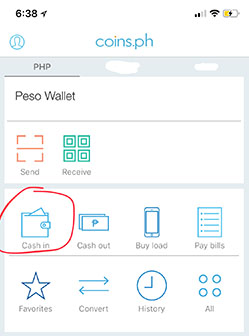
1. Cash in to your Coins.ph wallet

coins.ph wallet

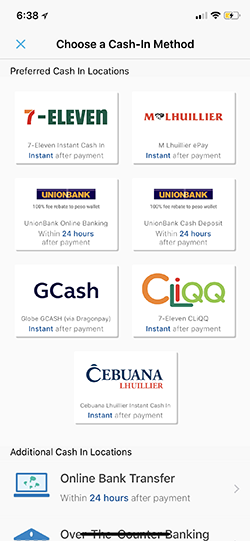
2.  Choose your cash in method. I prefer over the counter banking, but you can cash in at 7-Eleven, Gcash or M Lhuillier.

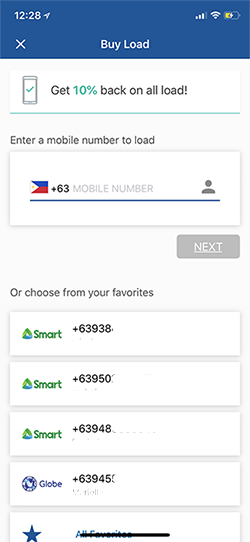
3. Once the cash is reflected in my Coins.ph wallet , I just select the “buy load” in the app menu.

Type the cellphone number.  After the load is sent, you will be able to save the number.

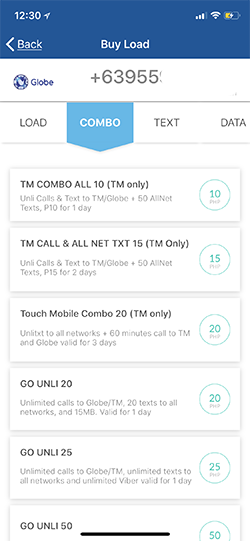
4. Choose the load or load promo  from GlobeSmartSunTalk ‘N Text, or Touch Mobile .

coins.ph wallet

I just love how the load promos are already set. There is no need to google for the right syntax or create a promo.

coins.ph wallet

5. Select the load amount and slide to send.

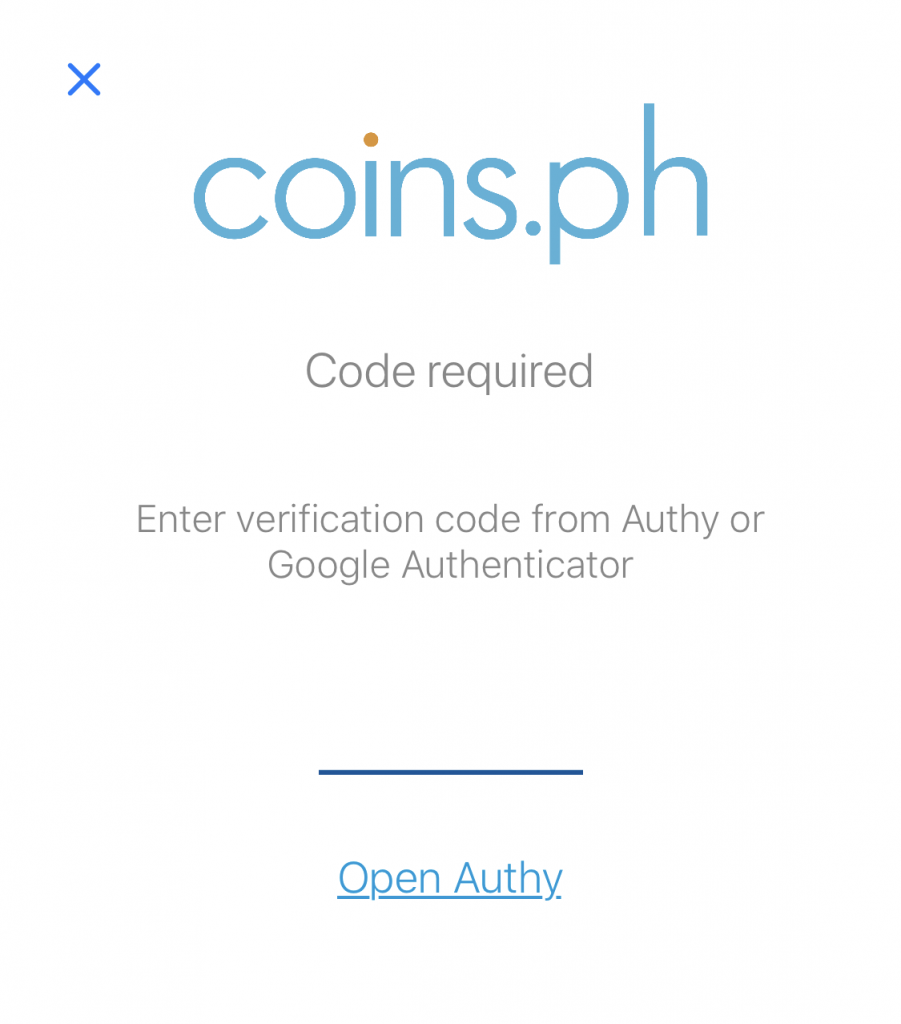
6. Coins.ph requires you to add a  verification code from Authy or Google Authenticator.

I use Authy for this extra layer of protection. Find out how to do the two-factor authentication through the 2FA tutorial video or through the step-by-step guides.

coins.ph wallet

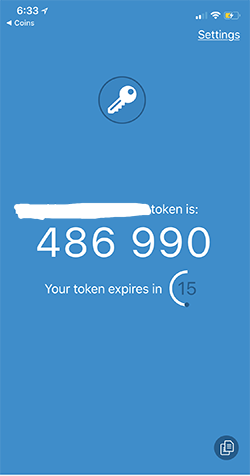
I just click “open authy” to get the token

coins.ph wallet

7.  The load is sent within seconds, and the best part is getting an instant rebate. (But if you sign up with the “momblogger” promo code and buy load in 7 days, you get a 100% rebate up to 50 pesos on your first load purchase.)

coins.ph wallet

It is that simple, fast and convenient. You also get a history of yourtransactions as well as the rebate.coins.ph wallet

Now, isn’t that convenience?

Create your coins.ph wallet today. Just download the coins.ph app from Google Play store or iTunes.

Those who wish to sign the “Bloggers for Freedom” statement can sign in this form http://bit.ly/bloggersforfreedom

“An attack on one of us is an attack on all of us. It is an attack on the freedoms over which we stand guard. Understand that we will see things this way. No, you will not be granted the impunity to make such attacks on ANY news outlets in the Freest Press in Asia.” –Alma Anonas-Carpio

The SEC order “revoking Rappler’s license to operate is the first of its kind in history – both for the Commission and for Philippine media.” It is obviously politically motivated.  I don’t always agree with Rappler.  When Rappler was new in 2012, I had initial misgivings. about their  “social media” branding.   But we learned along the way , learning to collaborate in social good projects. The recent actions  against Rappler is  an attack on freedom of the press. Granting Rappler violated the Constitution, where is the due process?

Many of my  blogger friends  remain vigilant , and stand with Rappler . We are out to defend press freedom.

That is why we are releasing a statement today.


Bloggers for freedom
Bloggers for Freedom

We concerned Filipino bloggers stand for the rights to free expression and to free speech. And our first responsibility is to protect these rights.
We thus stand with Rappler, its right to exist, the rights of its working journalists and contributors, and the rights of its community of readers.

We stand against moves to silence and scare journalists, bloggers and media practitioners just because the President and his ardent supporters dislike their news and views.

Now is a time for making choices amid battles between truth and lies, debate and dissonance, democracy and dictatorship.

We sign our names here to tell everyone we have made a choice. We are bloggers for freedom.

1. Noemi Lardizabal-Dado
2. Tonyo Cruz
3. Dale Bacar
4. Marcelle Fabie
5. Myk Mykapalaran Cruz
6. Rod Magaru
7. Ely Valendez
8. Alex Lapa
9. Tess Termulo
10. Zena Bernardo
11. Jover Laurio
12. James Romer V. Velina
13. Ramon Nocon
14. Flow Galindez
15. Helga Weber
16. Mc Richard Viana Paglicawan
17. Raymond Palatino
18. Loi Landicho
19. Saul de Jesus
20. Karlo Mongaya
21. Ricky Rivera
22. Mark Will Mayo Magallanes
23. Eyriche Cortez
24. Julius Mariveles
25. Yusuf Ledesma
26. RJ Barrete
27. Dino Manrique
28. Peachy Tan
29. Rhadem Camlian Morados
30. Julius Rocas
31. Jon Limjap
32. Markku Suguerra
33. Jam Ancheta
34. Estan Cabigas
35. Enrico Dee
36. Acee Vitangcol
37. Stefan Punongbayan
38. Jesus Falcis
39. Hancel Reyes
40. Czarina Maye Noche
41. JM Mariano
42. Reginald Agsalon
43. John Clifford Sibayan
44. Jane Uymatiao
45. Johnn Mendoza
46. Carlos Celdran
47. Christian Melanie
48. Jann Medina
49. Carlo Arvisu
50. Inday Espina Varona
51. Eugene Alvin Villar
52. Melo Villareal
53. Brian Ong
54. Fritz Tentativa
55. Fitz Villafuerte
56. Tina Antonio
57. Mykel Andrada
58. Reynaldo Pagsolingan Jr.
59. Renz Daniel de Vera

Published on January 19, 2018, Black Friday.


Those who wish to sign the statement can sign in this form http://bit.ly/bloggersforfreedom