Parents are so blessed these days. There is a growing awareness that bullying in schools are not tolerated anymore especially after the Department of Education announced a landmark policy last May that aims to protect children against bullying and other forms of violence in schools.

Twenty years ago, I fought a lonely battle with the teacher and guidance counselor of my daughter’s school. They didn’t think bullying was wrong. Bullying is part of growing up. Really? My daughter lost interest in studying. Her grades dropped. Much as I developed extra-curricular activities for her, she still had to face the bully at school.

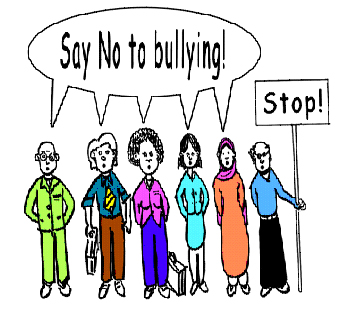
Bullying should not be tolerated. Bullying damages the physical, social, and emotional well-being of its victims.

“Bullying is NOT pre-wired, harmless, or inevitable
Bullying IS learned, harmful, and controllable
Bullying SPREADS if supported or left unchecked
Bullying INVOLVES everyone—bullies, victims, and bystanders
Bullying CAN BE effectively stopped or entirely prevented”

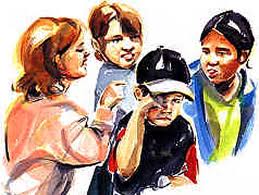
Indeed, bullying in the school has been a common problem in the Philippines and worldwide. Negative effects of bullying on our children can last a lifetime and curb their potentials.

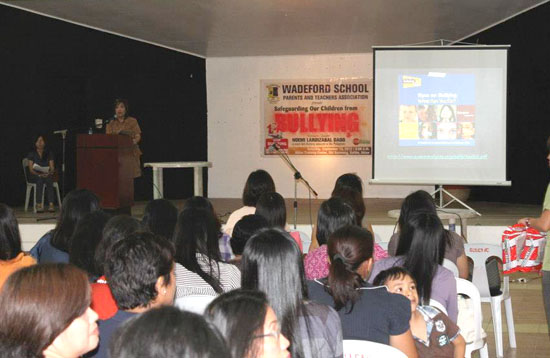
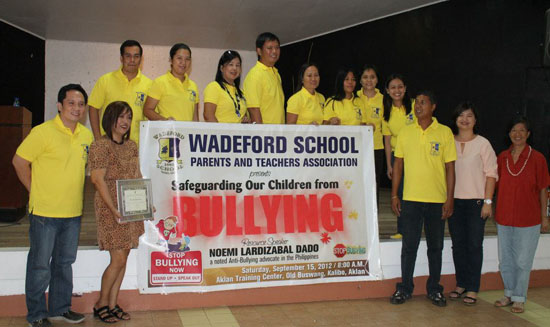
When I got invited to talk about the need for anti-bullying program in Wadeford School in Kalibo, Aklan over the weekend, I suggested a Safe School Program. A safe school program not only covers anti-bullying intervention. It creates a safe and caring school community by providing a comprehensive, school wide framework for the prevention of bullying or any form of discrimination or harassment.

It inspired me to see a number of eager parents and teachers in attendance. First I explained the four kinds of bullying:

1. Physical bullying

    when someone hits, shoves, kicks, spits, or beats up another person
    when someone damages or steals another student’s property

2. Verbal bullying

    name-calling, mocking, hurtful teasing
    humiliating or threatening someone
    making people do things they don’t want to do

3. Social bullying

    excluding others from the group
    spreading gossip or rumours about others
    making others look foolish
    making sure others do not spend time with a certain student

4. Electronic bullying

    using computer, e-mail, phone or cellular phone text messages to:
    threaten or hurt someone’s feelings

    single out, embarrass or make someone look bad
    spread rumours or reveal secrets about someone

Secondly, it was important to know their beliefs in bulllying.

I asked: “Do your beliefs promote or prevent bullying?”

Perhaps not many parents are aware of the ways their beliefs may color their views and influence on bullying..such as choices they make to intervene in—or ignore—the bullying around them.

A parent admitted that someone brushed away bullying as just “away-bata”. It has been tolerated as such for many years but we know now that it can be damaging to a child’s learning potential and psychological being.

Lastly, I also touched on cyber-bullying. Though this is the least prevalent form of bullying, knowing that such can happen 24/7 is enough to be concerned.

Collaborative effort of the school administration, teachers, parents, and students is needed for an effective safe school program.

Everyone from the parents, educators, the students and community should stand up and voice out that bullying should stop. Domestic violence should stop. Preventing and stopping bullying involves a commitment to creating a safe environment where children can thrive, socially and academically, without being afraid.

Based on the response and questions from the parents, I am happy to see that indeed, they recognize that bullying should not be tolerated. That is a good sign, the first step in initiating a safe school program is the right attitude that bullying can be prevented.

The goal of a Safe School Program is to use interventions at the levels of the student, parents, and school and to ensure that students are given a consistent, coordinated, and strong message by everyone in the school that 1) bullying will not be tolerated and that 2) we can prevent bullying if we work together.

It is heartening to see the Parents and Teachers Association of Wadeford School actively pursuing plans to undertake an anti-bullying prevention program. There is much to learn so I told them to download the toolkit to prevent bullying in children’s lives as a starting point.

Most of all I am grateful to Harvey Ylanan for bringing me to Kalibo. It is my first time to be there and it was a great place to be … far away from the maddening (sometimes) noise of Manila.

Heroes are made not born. There are no automatic heroes. Sometimes it takes a lifetime of heroic deeds to make a hero. But there are everyday opportunities for anyone, even ordinary people, to become heroes. All we have to do is be aware of these opportunities.

One does not have to hold a high government position, be intelligent, charismatic or extraordinary. Most people can be heroic as the need arises.  Sometimes we just need to be inspired to move into action by being aware of everyday heroes.


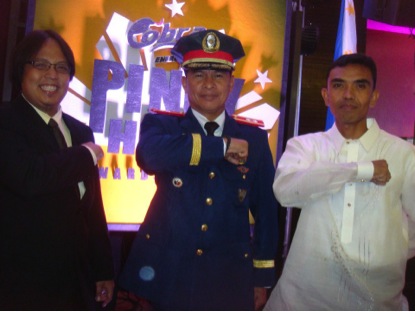
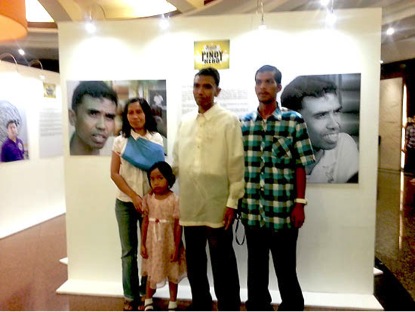
(from left) Mark David Cerezo, Dionisio Abude and Leonilo Beltran


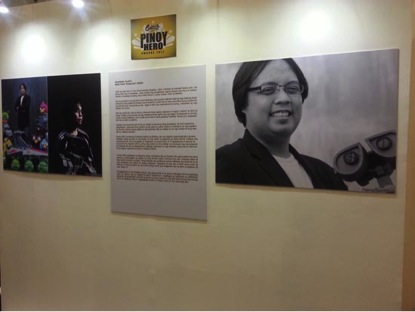
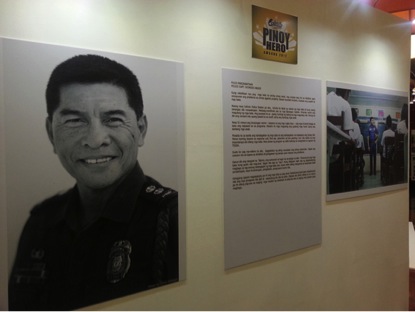
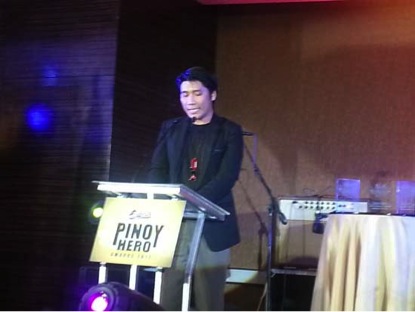
Take for instance the Cobra Pinoy Hero awards where three Grand Winners were chosen on August 29 at the Crowne Plaza. These three awardees are your everyday heroes with inspiring stories of strength, perseverance and determination.

The three Pinoy Heroes

Cobra Energy Drink capped its 3-month campaign of searching for everyday heroes from all walks of life wanting to share their experiences of victory over hardships, of giving back to those in need despite having little themselves. Around 2,000 stories were  gathered from this campaign . This is their way of taking a step towards nation building; in order to inspire Filipinos to be everyday heroes and take a step forward to become one.

Each of the three awardees embodied the greatness of a hero with their creativity, the passion  and courage to take on the awesome responsibility that came along their way.

Mark ““Rubberman” Cerezo of Marikina  learned to make sculptures out of trash and discarded rubber from shoemakers.

Police Superintendent Dionisio Abude from Davao took in the troubled youth with past crimes due to poverty and made it his mission to turn them into productive citizens.

Leonilo Beltran from  Baler,  Aurora, a former OFW electrician who founded Skills Caravan where fellow volunteers teach skills to out-of-school youth and jobless adults.

Other inspiring stories

The stories of the six other finalists need to be shared as well. Despite their limitations, these courageous men believed in themselves and made the choice to make a difference in their lives and that of others.

There is Ramil Junasa Jactin of Butuan City, a polio victim who conquered his disability in order to be able to teach and was lauded by Malacanang as an Outstanding Youth of the Philippines; Mark Eden Ellaga of Antique, a driven scholar and the very first Outstanding Student of Antique Awardee; Sherwin Abanilla who hails from Zamboanga is a volunteer of the Philippine National Red Cross Emergency Response Team and dreams of becoming a great leader someday.

Other inspiring stories came from; Benjamin Vidallon of Taguig who used to be a lumpia vendor and janitor but turned his life around and now works as a Call Center Agent and Spanish Translator.  There is Ariel John Villares of Zamboanga, a jeepney conductor and security guard by day and a working student by night. Finally we have Ramley Chio Dangla Cruz who hails from Balut, Tondo and works as a med rep but is also a volunteer firefighter/medic.

It is just fitting that the keynote speaker and presentors are heroes in their own right and wonderful role models in inspiring one to be a hero. Keynote Speaker and Presentor is Efren Penaflorida  made us proud by being named CNN Hero of the Year in 2009.  Co-Presentors  include Tony Meloto, founder of Gawad Kalinga, Illac Diaz, founder of MyShelter Foundation and proponent of the IsangLitrongLiwanag campaign as well as Major General Renato Garcia, Executive Director of the Help Educate and Rear Orphans (HERO) Foundation where Cobra Energy Drink has committed sizeable cash donations to be spread out in five years.

A pledge to work at being Everyday Heroes


Inside every one of us is a hero with skills that can make the world a better place. But how? if only everyone gained enough courage, creativity, perseverance and drive  to make this happen, then our world will be a better place to live in. No wonder the event ended with a Panata that a commitment will be made to work at being Everyday Heroes.

River Maya ended the event with their new single Pilipinas, Kailang Ka Magigising . Their lyrics ring true on raising awareness of bringing out the hero in each one of us. ““Sino ang magbibigay ng buhay , Sa minamahal mong Pilipinas”


 River Maya song  Pilipinas, Kailang Ka Magigising

The Cobra Pinoy Hero Awards is indeed a  tribute to these men and women who continue to inspire us to become better as a nation.  It is fitting that the Cobra Pinoy Heroes Awards recognized these everyday heroes during  National Heroes day  when the nation also recognize our heroes of the past.

Be inspired! Check out other stories in the Cobra Fan Page www.facebook/CobraPhilippines

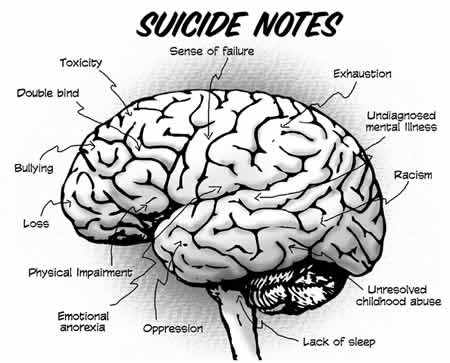
suicideI noticed something strange in my blog referrals. There is an upsurge of suicide image searches in my blog which points to the Suicide Prevention page. Thank you Google. That has been the trend for many months now but in the past two days, there is just way too much reference to it.
I recall the same upsurge when someone surfed on the sensational suicide death in 2008 of 19 year old boy Abraham K. Biggs which was viewed on justin.tv. He took a fatal drug overdose in front of an Internet audience. Although some viewers contacted the web site to notify police, authorities did not reach his house in time.

In this news article, Webcam of son’s death appalls dad , Abraham Biggs Sr. said those who watched and the Web site operators share some blame in his 19-year-old son’s death.

“I think they are all equally wrong,” he said. “It’s a person’s life that we’re talking about. And as a human being, you don’t watch someone in trouble and sit back and just watch.”

I know for a fact that these kids were taught to report any suicide thoughts of their peers to their teacher or school authorities. For some reason, they did not take him seriously because he had threatened suicide on the site before but this is actually a clue already. Most suicidal people give warning signs in the hope that they will be rescued, because they are intent on stopping their emotional pain, not on dying. But not many know that.

My heart goes out to the father.

“It’s a shame I wasn’t there to help him. It’s a big loss to me. I wish I was there to help him–since nobody else would.”

If parents of suicide victims only knew that their children would kill themselves, I am sure they would have done all they can to save their lives. Suicide is a significant cause of death in many western countries, in some cases exceeding deaths by motor vehicle accidents annually.

I have met a few parents who lost their children to suicide and never did they imagine that their child would kill themselves. They often ask themselves ” How could I have prevented it? or I didn’t know”

If you are a parent, you can read through this Suicide Prevention page.

Typical warning signs which are often exhibited by people who are feeling suicidal include:

    – Withdrawing from friends and family.
    – Depression, broadly speaking; not necessarily a diagnosable mental illness
    such as clinical depression, but indicated by signs such as:
    – Loss of interest in usual activities.
    – Showing signs of sadness, hopelessness, irritability.
    – Changes in appetite, weight, behavior, level of activity or
    sleep patterns.
    – Loss of energy.
    – Making negative comments about self.
    – Recurring suicidal thoughts or fantasies.
    – Sudden change from extreme depression to being `at peace’ (may
    indicate that they have decided to attempt suicide).
    – Talking, Writing or Hinting about suicide.
    – Previous attempts.
    – Feelings of hopelessness and helplessness.
    – Purposefully putting personal affairs in order:
    – Giving away possessions.
    – Sudden intense interest in personal wills or life insurance.
    – `Clearing the air’ over personal incidents from the past.

The presence of one or more of these warning signs is not intended as a guarantee that the person is suicidal: the only way to know for sure is to ask them.

I hope the boy’s death is not in vain. The boy’s father believes the webcast was a cry for help.

“But rather than get help, he was ignored,” Biggs said. “I would not want to see anything like that on the Internet and not try and get help for that young man. I think that’s what the average person would do. Any normal person would do. I’m really appalled.”

An average person really does not know when a suicide is about to happen. If most of us knew, then there would have been very minimal suicide deaths.

Somehow, I hope my Suicide Prevention page can help save a life in the future.

A final word: if you have a suicidal friend or family member, please don’t use the line Kasalanan yan (Thinking about suicide is a sin). The suicidal person needs medical help NOW. NOT a lecture, please.

Suicide prevention is everybody’s business. Suicide should no longer be considered a taboo topic, and that through raising awareness and educating the public, we can SAVE lives.

Suicide Prevention Hotline Numbers

USA Suicide Prevention hotline
In an emergency, call the National Suicide Prevention Lifeline 1-800-273-TALK

Philippine Suicide Prevention Hotline

Office Address: 2/F, 48 McKinley Road, North Forbes Park, Makati City, Metro Manila, Philippines
Office Phones: +63 2 8931893 /8106233
Fax: +63 2 8931892
Website: www.in-touch.org
E-mail: intouch@i-manila.com.ph
Crisis Line: +63 2 8937603 /+63 2 8937606 (24/7)
Mobile Text messaging: type hello crisisline and send to 2333 (Globe) or 211 (Smart)

“There is sadness in parting, but it should fill us with new hope.” – Fr. Ambrose

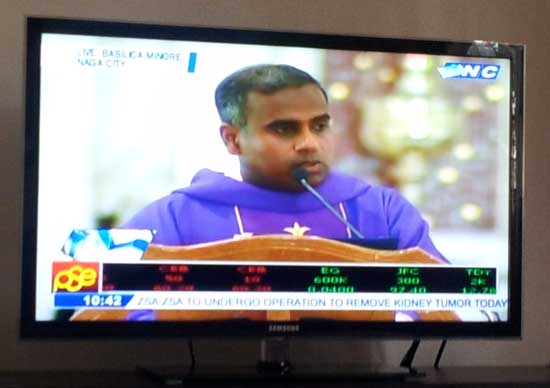
Fr. Kulandairaj Ambrose of Missionaries of the Poor delivered a beautiful homily for Secretary Robredo. I like this quote the most “Sec. Jesse passed away doing what he loved the most, going home.”

Here are some snippets which I culled from @piahontiveros and others from twitter. You can also watch the video below from @ancalerts:

Some quotable quotes from his homily:

“Ninoy said the Filipino is worthdyingfor. Today, another great Filipino, SecJesse hasshown every Filipino is worth dying for.”

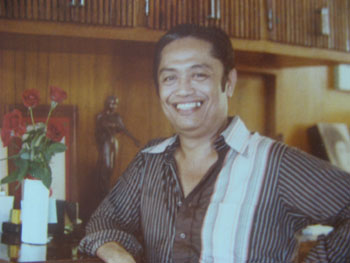
I met Jesse 20 years ago. 2 things impressed me about Mayor Jesse. He was a MAN OF THE FAMILY and a MAN OF THE POOR.

“Why me? When Atty Leni asked if I would celebrate the mass? A simple missionary priest…

“I am a priest of the missionaries of the poor from Jamaica.”

“I speak in behalf of the tsinelas people.”

Typhoon Reming, 2006. I was shocked when the Mayor’s car drove into our center. He came to find out if everyone was safe.

He was always there for us.He was there whenever we needed him. and even when we didn’t need him.

Who is the other woman in the life of Mayor Jesse, Bicolanos?? Ina! Viva la Virgen!

The VOPs. The very ordinary people. His “inclusivist” attitude.

to the family: in you we see Sec Jesse’s spirit of humility.

He was there for you. He was there for me. He was there for everyone. We all felt appreciated by Sec. Jesse.

in you we see Sec Jesse’s spirit of humility.

Sec. Jesse passed away doing what he loved the most, going home.

There is sadness in parting, but it should fill us with new hope.”

And finally, Atty. Leni Robredo speaks after accepting Legion of Honor for Sec. Robredo

Atty Leni Robredo says ” Maybe for him, it was the perfect end for a life well-lived.”

We are devastated by your loss but even as we grieve we will continue to live because your spirit lives with us

“I will not say goodbye because I know that you will never leave us. You are home now. We will love you forever.”

You are home now, where you truly belong. Rest now, we will love you forever.

Here are some heartfelt reactions on twitter.

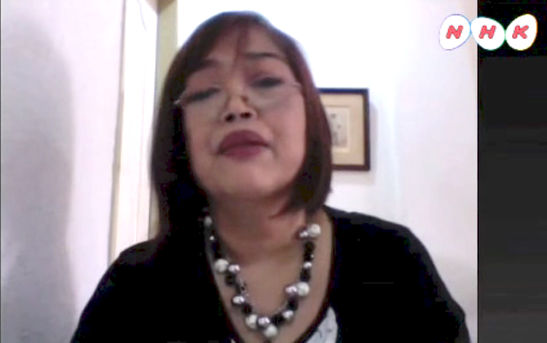
A few weeks ago, Japan Broadcasting Corporation , a TV and Online program on NHK, contacted me to participate on their monthly international debate program called “Global Debate WISDOM”. This month’s topic is about “What can the world do to stop bullying?”. I agreed to join this volunteer interview and let the Japanese audience hear my advice .

It is a fact that school Bullying is a world common problem. So far, we have seen so many different approaches and programs to end bullying. But yet, there is no perfect solution to end bullying since there are still millions of kids suffering from daily bullying at school and outside the school.

Last October, a middle school student in Shiga prefecture in Japan committed suicide after going through the intense bullying that included “practicing a suicide (choking a neck)” and “practicing a funeral”. After a boy killed
himself, school and educational board denied the fact that there were bullying. It created a huge social upheaval after many students testified that there was a bullying. By this incident, the Japanese public rediscovered the untrustworthiness in the school system in Japan.

NHK gave me the link to the Movie list interview and these two videos.

Video 1
Many US states have enacted a law that bans bullying and makes schools and teachers fully responsible for bringing in anti-bullying measures. Who should be ultimately responsible for establishing policies against bullying?

Video 2

To prevent bullying at schools, what measures should schools and teachers take?

NHK is going to introduce a part of my movie in their TV show tonight Saturday, August 25 Part1 22:00 – 22:50 and Part2 23:00 – 23:49 (JST). It is a LIVE show, so they apologize in advance if the VTRs cannot be played due to unavoidable circumstances.

Please check the timetables of broadcasts for Japan and overseas:
http://www.nhk.or.jp/wisdom/onair_en.html

Grief is in the news once again. Once in a blue moon (hopefully not often enough), you may encounter a friend or relative reeling in pain because they lost someone. It can be an awkward situation if you don’t know what to do or not do. There really are no words to convey how sorry you feel or show how you feel. But there are words that can hurt and will not help at all. Having been 7 years with the Compassionate friends , a grief support group…the most common complaint that I hear from bereaved parents is the insensitive comments that they have to hear in the early days of grief.

You have to remember their loss is devastating so the bereaved is a bit more sensitive.

Their grief is so fresh.

The pain is raw.

How does one comfort a newly bereaved parent? One of our mission in The Compassionate Friends is… to provide information to help others be supportive.

Let me give you a few examples of words that don’t help the newly bereaved. A lot have been written about words of comfort from other bereavement sites but others are also culled from experience. A compilation of some hurting words were based on a recent meeting of members of the Compassionate Friends.

It’s God’s will.
( Don’t they understand that I can’t accept this as God’s will? I have so many questions at this point of my grief)

Buti ka pa, may anghel ka na (Good thing you have an angel)
(Don’t they understand that I’d rather have my child with me.)

He’s in a better place.
( This is the better place. With me)

God needed another flower in His garden.
( What about MY garden?!)

She’s better off now/not in any pain
(Don’t they know I remember the pain my child might have suffered before she died?)

Your child wouldn’t want you to be so sad.
( How do you know?)

Magkaanak ka pa ( you will have another child)
(Maybe, but no one can replace my child.)

If there’s anything I can do, let me know.
(Can’t they understand that my mind is so numb I can’t even think of what needs to be done?)

Come on, get over his death already. Hope you get over the pain of his death.
( As if we can close the chapter of a child we loved dearly.)

Bakit malungkot ka pa? Pinaghirpan mo lang sarili mo (Why are you sad? You’re just making it difficult for yourself.)
(uhh… I don’t know … maybe it’s because my child died.)

Of course these wonderful, concerned, well-meaning friends don’t know. They can only guess how the newly bereaved feel. They haven’t personally known (thank God) the disbelief, the shock, the anger of losing a child. Instead of bringing relief, those words just seem to add to the hurt and the grief. There are no words that will make it all right that someone we loved has died. But there are words that can soothe the hurt, ease the loneliness and add to the healing.

Some words that might probably bring comfort are:

“I’m here and I don’t have a clue as to how to help, but I’m here, and together we’ll figure this thing out.”

““I know you must be hurting terribly. You had such a good life together, the pain must be awful. You need to express your anger, your frustration. I know it must be hard for you to believe that God is a loving God who will support you through this horrible tragedy.”

“Grieve well. One day you will cease to remember him with tears and instead remember him with smiles.”

In the end, words don’t take away the pain. It only eases the pain. Let them tell their story . Talk about their child. If they don’t want to talk, it’s alright to just be there. Sometimes saying nothing, giving a hug or holding their hand can bring comfort.

(For more information on how to help , here are some articles I’ve compiled on Helping Bereaved Family members.)

Articles on Coping with Grief during the Holidays
Helping bereaved parents
Handling the Holidays
How To Help Yourself Through The Holidays
Do I Celebrate the Holidays or Not?

““They say love beyond the world cannot be separated by it. Death cannot kill what never dies.” ~ William Penn

I know it was bound to happen. Nobody wanted to lose hope until the wreckage was found.

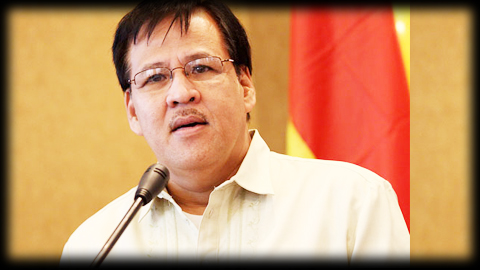
When I tuned in to ANC news, the face of Sec Mar Roxas told it all. At 7:45 AM, the fuselage was found with unidentified bodies in it. Mar Roxas brought the bad news slowly. His voice was filled with emotion when he announced that at 8:15 AM, the body of Secretary Robredo was clearly identified.

It is a sad day. The Philippines lost a good man. As TJ Manotoc said it in Twitter “Rest In Peace Sec Robredo. May your work inspire a generation to continue to serve this country full of heart & integrity just like you did”

Sec Robredo reminds me so much of my beloved brother Ruben who died so young too.

Let me share an email I received a few minutes after:

I had been praying that he survived the crash, just like millions of Filipinos did. But this morning, we lost the one honest and competent government official that this administration had.

I have never shed a tear for any government official or politician, not even during Ninoy Aquino’s death. But this morning, I shed tears for Sec. Robredo. I grieve for the many good things he could have done for the Filipinos.

He was 54 years old. May his soul be at peace and go straight to Heaven. May his family find comfort in the thought that he was a contemporary Filipino ‘hero’.

John Silva in facebook says it well “There was a good and upright man called Jesse. There will be others. Instead of mourning too long, let’s figure out what we can do to carry on his good work. ”

The Robredo family lost a family man, a father and a husband and so with the families of the pilots (Captain Jessup Bahinting and Nepalese flight student Kshitiz Chand)

Condolences, feelings of sadness now flood twitter. Tweeps share their condolences and give thanks to Sec. Robredo with the hashtag #SalamatSecJesse

I was four months pregnant in 1985 with my eldest child when I heard the devastating news that my father suffered a serious stroke at the age of 55 years old. Being in Manila while dad was in Cebu, I didn’t know if he’d recover from the massive stroke. I took a leave from work and flew to Cebu, crying all the way to the airport. I thought dad was going to die anytime soon so I needed to be there.

Dad did recover but he was not the father I knew. He had a foul temper. The stroke left him with a speech impairment called aphasia. He had difficulty expressing himself or comprehending spoken words. Words he spewed out could not be understood. When he meant a thousand pesos, he’s blurt out “A million pesos”. The good news was he could understand written words.

Looking at my once active father reduced to a frail man depressed me. I felt my father died because his personality changed. When a loved one dies, we mourn our loss and learn to move on with our new life soon after the funeral. Rituals of letting go help us in coping with the loss. Tears are shared during the wake. A eulogy helps us treasure memories. There are the anniversary dates to celebrate in the coming years. In the normal process of loss through death, most of us are able to support a bereaved friend or family member and help them find closure over their loss.

Ambiguous loss

Ambiguous loss is defined as ” the uncertainty that occurs when people must deal with the unresolvable physical or mental absence of a family member. ” According to social scientist Pauline Boss , there are “two kinds of ambiguity according to Boss. One kind is where the body is missing, as in a plane crash, and the other kind is where the mind is gone, as in Alzheimer’s disease.”

My dad was not struck with mental illness . The serious stroke that left him with a speech disability and at times his mental faculties appeared to be gone at times. We all experienced a loss of the dad we once knew. My siblings and I were left to cope with learning how to live with a father “who is physically present, but psychologically and emotionally different”. The question that often lurked in my mind was “What social rituals exist to deal with this loss that is so real, yet so difficult to grasp?”

I saw for myself how the number of “friends” slowly drifted apart. Dad was just too difficult to understand. Perhaps they did not have the patience to understand him. The few remaining friends (bless them) were always around when dad called for a birthday celebration or a small party at home. One indeed knows their friends when we are at our lowest.

Our energies were now focused on understanding aphasia and learning how to teach my father on how to communicate with us through written words instead of verbal communication.

This ‘ambiguous loss’ I felt in witnessing my dad grapple with his speech was mainly the loss of dealing with his ability to speak and coping with the pain of how his friends slowly left him. Feelings of sadness, anger and uncertainty overwhelmed me. I hovered between the hope and hopelessness of dad’s situation. Dad was there but not really there.

I never knew how my father felt but one thing he taught us was that there is life after a speech disability. While we coped with our ambiguous loss, dad helped us deal with it by learning to live a new life. This life now revolved around his grandchildren and our bakeshop, activities he would be too busy to handle if he were still an active businessman.

Dad lived for 18 more years after he suffered a stroke.

Most of us may face “everyday life and catastrophic versions of ambiguity”. For instance, family members may be mentally absent because they are busy with their computer work or addicted with computer games. The unncertainty is ” the stress of not knowing if a member is in or out of the family.”

Where is Robredo?

Now I see it in the news. The family members are dealing with the uncertainty of Sec. Robredo’s whereabouts. There is a feeling of hope and hopelessness because there is no closure yet. The nature of the loss is such that there is no possibility of closure or completion. No body has been found. At this point, presence of friends is comforting. Prayers offer consolation not only for the family members but for those who loved him. After posting the prayers of tweeps in BlogWatch.tv, I can see how concerned the citizens are over the safety of Sec. Robredo and the two pilots. It is the third day and hope is dimming fast.

Today I can only offer prayers of hope and a miracle.

My friend Cathy sent me this beautiful article , Butterfly Miracles, from Chicken Soup for the Soul: Grieving and Recovery by Jeanne Wilhelm. I know some of you who read my blog lost someone in their lives. I often use the butterfly as a symbol of hope . There is always a chance of a new life out there. This is what I often call the new normal, the life without our loved one. It takes time but life does move on to a new normal. These days you will catch me wear butterfly necklaces, butterfly earrings, butterfly on my dress or shirts.

To live in hearts we leave behind Is not to die.
~Thomas Campbell, “Hallowed Ground”

I rummaged through the small cardboard box that passed for my jewelry box. On a mission to get rid of anything unworn, I gasped as my hand touched the metal butterfly — no bigger than a half dollar. Clutching it to my aching chest, the tears streamed down my face as I remembered.

Vivid images of the day my eight-year-old son presented the butterfly pin he’d made for me — my Mother’s Day gift — rushed to mind. I could picture Mark, round face, straight blond hair, as he smiled up at me. “Here, Mom, I made this for you in art class. I painted a design on it, but they baked it and the paint all ran together. I think it turned out neat!”

I prepared myself to receive a gift of love more than beauty as I unfolded the paper wrapped by childish fingers. A witty, personable, and fun-loving child, Mark did not seem to possess artistic talent. The butterfly, to my surprise, emerged a masterpiece of swirling copper, blue and beige hues.

“It’s beautiful,” I said with complete honesty. He accepted my hug with eyes rolling, as I murmured, “Thank you, honey. I love it.” He beamed with pride. I wore the pin frequently for years, often receiving compliments on its artistry.

One day, the back fell from the butterfly as I rushed to pin it to my lapel. I dropped the butterfly into the box in my drawer as I hurried to my appointment. I’ll have it repaired later, I thought.

Life was filled with family, school and work. The butterfly rested, forgotten, in the bottom of the box for more than ten years.

This day, the full force of the painful loss pressed into my chest. Eighteen months earlier, as I cradled my husband in my arms, I felt half of me slip away as he died. Now, the rest of my heart had been ripped from my chest as my 22-year-old son died while I held his hand — helpless again to keep cancer from taking one I loved. Mark had fought the disease with great courage and confidence. In the end his body betrayed him when his spirit would have kept on fighting. The deep, painful cavity inside me screamed for relief.

How I’d longed for a part of Mark to keep near. His cap, his keychain — none of his possessions had provided comfort — only more pain. But this butterfly, a gift made by his loving hands, held the promise of his continued presence with me. His life changed, like the caterpillar to the butterfly. He was no longer bound by ill health and earthly trials. The butterfly reminded me of this truth. The miracle of this gift, rediscovered after so many years, soothed my grieving heart.

The butterfly, coupled with a gold cross and attached to a delicate gold chain (a gift from my daughter), traveled the journey through grief with me. I wore it constantly, even in the shower. Along the way, sometimes the telling of the story brought comfort to another traveler. It also held the promise of change and healing for me, but in some irrational way, I felt to take it off would be to forget Mark and stall the healing.

One night, about a year after his death, I, who almost never remember a dream, had a startling and memorable one. I found myself standing on my front porch looking for someone. I saw a young man in the distance and as he trudged nearer, I recognized Mark — tired, sick and dirty — but Mark without a doubt. Stunned, unable to move at first, I threw my arms around him as he came up onto the porch.

Holding tight, I cried, “Mark, oh Mark, it is so good to see you. You’re not dead. I thought you were dead and you’re not. Oh Mark, Mark, I love you son,” I babbled.

He pulled back from me and said, “Mom, I love you. I have to go now and you must let me go. You must let me go, Mom. You can’t keep hanging onto me. Let me go now.” With that, for just a second, he appeared healthy and vigorous — almost glowing — then vanished.

I woke up feeling his embrace and hearing his words echo in my mind. I clutched the butterfly as tears streamed down my face. I raced to the front door to look for him and saw only an empty street. I started to grasp it was only a dream, but a strange peace crept into my darkness.

As I pondered the dream, I realized that in order to heal, to move on, I had to let Mark go — not forget, but refuse to cling to what might have been. The butterfly became the symbol. I started by taking it off to shower, then to sleep. Little by little I accepted my son’s departure from my life, but never forgetting what we’d shared. The awful pain and emptiness declined as I persisted in enjoying the memories of the occasions we’d spent together — not dwelling on the times we’d never have.

As my journey continued, the butterfly reminded me of the new life that awaited me. But when would that lingering ache in my chest depart? Five years passed. I believed that as long as I lived, the ache would remain. After all, I’d shed tears with women who buried children 60 years before.

On a walk one day, as I mulled over this “fact,” a butterfly fluttered toward me as if heaven-sent. Healing in his wings, I thought. And suddenly the ache was gone, replaced by joy for Mark reveling in all the glories of heaven.

Do I miss him? Yes. Is there sadness or a tear now and then? Yes. But there is a difference. The sadness no longer steals the joy away. Now when I wear the butterfly it is a symbol of victory over death and a new life not just for Mark, but for me as well. Clearly, more than one butterfly miracle came my way.

Source : You can subscribe the best of the Chicken Soup for the Soul

family tree

When I was new in my grief, many well meaning friends and relatives advised me this and that. I don’t know who among them suggested the “Healing of the Family Tree” and gave me a prayer. Each night, I was to say this prayer hoping in the belief that the curse of family deaths would end . (My 2 brothers, and a mother died before my son’s death in 2000) . As if we don’t all die.

A part of this prayer goes:

“Heavenly Father, I ask You now to go back though all in my bloodline, my husband’s/wife’s bloodline, and the bloodlines connected to all of my family and relatives and forgive the wrongs, heal the illnesses, bind the evil deeds. I ask You Lord to break the chains, associations and links any of these may have to us here in the present. On their behalf Lord, I seek Your forgiveness, your healing and a pouring out of your Divine Love so that Your Love may now pour forth through the years and touch us in the here and now. So that Your Divine and Healing Love will take the place of all the past hurts, angers, hates, unlove of You, destructive emotions or actions and evil ties of our ancestors. So that Your Precious Blood and Divine Love and Healing will heal us of the residue we carry from our ancestors. In true faith I thank You Lord because You have said ‘Ask and you shall receive, seek and you shall find, knock and the door shall be opened to you’. Today Lord I knock, I seek, I ask. All praise and thanks to You my loving Father.”

Now being newly bereaved and distraught, I went along with the idea that my ancestors were so sinful that all these deaths were brought about by their sinful ways…. Yes, it must be a curse, “malas” “karma” or “gaba” until one day, I just had it.

Praying the “Healing of the Family Tree” is the most depressing thing ever. In the first place, before my son died, we underwent a public healing of our family tree at Christ the King Church through our “Couples of Christ” group. We prayed that all the cancers, diabetes , hypertension would not continue on our present generation. Also, we prayed that early death will be spared further in our families.

I believe that our families have patterns of behavior that are passed on from generation to generation. This is especially true for those with genetic predisposition to suicide, alcoholism . Some of these patterns are not coincidences. We are also adversely affected by the sins of parents, grandparents, and great-grandparents, and by the sins of the ancestors who adversely affected them.

Don’t be mistaken, I believe in the Healing of the family tree. What I find truly objectionable in the prayer is guilt feelings that most newly bereaved feels whenever a priest tells them about the “Family Tree”. Also, the prayer is so repititious like all Catholic prayers. Imagine praying that everyday for the rest of your lives. There is no meaning . No substance. We have no control over the sins of our ancestors. We did not cause their sins. A bereaved mother thinks her great grandfather who was a priest might have been the root cause for her son’s death. Another bereaved mother attributes the death of her daughter because her marriage was not blessed in Church. Is God truly vengeful? Why are others spared? We cannot cure the sins of our ancestors but we can truly change ourselves.

We heal our family trees primarily by changing ourselves to be better persons, even much better than our ancestors could ever be. We heal our family trees by taking care of our health so our predisposition to certain genetic diseaes will be curtailed. We heal our family trees by receiving a new nature through total commitment to God . Secondly, we heal our family trees by repentance and healing. The change starts in us. Healing starts in us. It’s time to stop looking back at the past and move forward now.